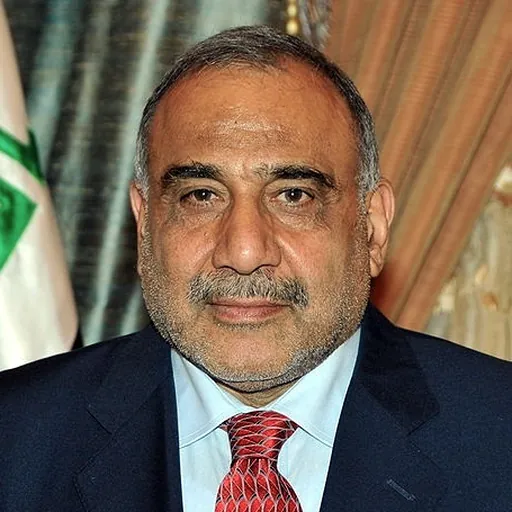
About Adil Abdul-Mahdi
Born 1942. Adil Abdul-Mahdi is an Iraqi politician and economist.
Adil Abdul-Mahdi al-Muntafiki (, born 1 January 1942) is an Iraqi politician who served as prime minister of Iraq from October 2018 until May 2020. Abdul-Mahdi is an economist and was one of the vice presidents of Iraq from 2005 to 2011. He formerly served as Minister of Finance in the Interim government and Oil Minister from 2014 to 2016.
Abdul-Mahdi is a former member of the powerful Shi'a party the Supreme Islamic Iraqi Council, or SIIC.
Background Mahdi was born in Baghdad in 1942, the son of a Shiite cleric, Abdul-Mahdi, originally from Dhi Qar Governorate, who was the Minister of Education in Iraq's monarchy, and a mother from Syria. He attended high school at Baghdad College, an elite American Jesuit secondary school. After graduating, he attended Baghdad University, where he earned a Bachelor of Arts degree in economics in 1963. He worked as a secretary for the Iraqi foreign ministry in 1965 and was an early supporter of the Iraqi Ba'ath Party, but left due to ideological disagreements. In 1969, he moved to France where he worked for French think tanks and edited magazines in French and Arabic. In 1972 he obtained another Master of Arts degree in political economy from the University of Poitiers. He later obtained a PhD in economics. Abdul-Mahdi is a French citizen, as are his children, and he returned to Iraq after the overthrow of Saddam Hussein in 2003.
Early career
In the 1970s, Abdul-Mahdi was a leading member of the Iraqi Communist Party. The party split into two separate factions, the ICP-Central Committee, which was more accommodating of the military governments that had ruled Iraq since 1958, and the ICP-Central Leadership, which rejected all forms of cooperation of what it regarded as anti-progressive regimes, in 1967. Abdul-Mahdi joined the ICP-Central Leadership, and continued being active until he was expelled in and formed his own splinter claiming to be the legitimate ICP-Central Leadership. Both the ICP-Central Leadership and Abdul-Mahdi's splinter gradually disappeared by the early 1980s. By that time, Abdul-Mahdi adopted Iranian Islamic ideas, eventually merging with the Islamists when Ayatollah Khomeini eradicated the communists and liberal opposition groups in Iran. Abdul-Mahdi continued his association with Iran and gradually amalgamated his group within the ICP-Central Leadership with the Iranians, rejecting his Marxist past and devoting all his group's time to propagating Khomeini's ideas in France, where he lived at the time. He eventually was made a member of the Supreme Council for the Islamic Revolution in Iraq, an exiled opposition party and militia that was formed by Iran in Tehran in 1982 but composed exclusively of Iraqi exiles. Vice-president In 2006, Abdul-Mahdi, outgoing Vice President in the transitional government, unsuccessfully ran for the United Iraqi Alliance's nomination for Prime Minister against incumbent Ibrahim al-Jaafari. He lost by one vote. He was reportedly considered to be a possibility for Prime Minister once again until Nouri al-Maliki became the UIA nominee. Subsequently, Abdul-Mahdi was re-elected as Vice President of Iraq. He exerted his limited authority in that role by delaying the first meeting of the National Assembly in March.
On 26 February 2007, he survived an assassination attempt that killed ten people. He had been targeted two times prior. Abdul-Mahdi meets with U.S. Secretary of State Michael R. Pompeo in Baghdad, Iraq on 9 January 2019. In 2009, his bodyguards were the perpetrators of a bloody bank robbery in Baghdad.
He resigned from his position as vice-president on 31 May 2011.
Prime minister On 2 October 2018, Iraqi president Barham Salih selected Abdul-Mahdi to be the Prime Minister of Iraq. Mahdi had 30 days to form a new government.
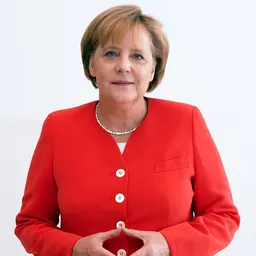
In April 2019, Abdul-Mahdi met with German Chancellor Angela Merkel in Berlin. He announced a $14 billion plan to upgrade Iraq's electricity infrastructure, with likely cooperation with German company Siemens. Merkel also pledged to strengthen economic and security cooperation between the two countries, and to continue German support for reconstruction efforts in Iraq.
On 29 November 2019, after weeks of violent protests, Mahdi stated that he would resign from his post. The Iraqi parliament approved his resignation on 1 December 2019. After leaving office, Abdul-Mahdi remained active in regional political affairs. In March 2025, he visited Sanaa, Yemen, to attend the Houthi-organized conference "Palestine: The Central Issue of the Umma". Asharq Al-Awsat reported that the visit prompted speculation in Iraq about its purpose and political meaning. The Washington Institute described the visit as part of Abdul-Mahdi's growing political role on behalf of Iraqi militias, particularly Kata'ib Hezbollah.
Don’t just read it —
keep it.
Full-length biographies made to live with: read them, listen on the way to work, watch them tonight.
- E-book
- Audio
- Video
Instant download · yours to keep · every purchase keeps this site free
Important facts
People in Adil Abdul-Mahdi's life
Named in this biography and alive at the same time

Related people
Same field, nearest in time





Contemporaries
People whose lives overlapped Adil Abdul-Mahdi's




Frequently asked questions
Who is Adil Abdul-Mahdi?
Iraqi politician
When was Adil Abdul-Mahdi born?
Adil Abdul-Mahdi was born on 1 January 1942 in Baghdad.
What is Adil Abdul-Mahdi's occupation?
Adil Abdul-Mahdi is a politician and economist.
What nationality is Adil Abdul-Mahdi?
Adil Abdul-Mahdi is Iraqi.
Sources & further reading
Cite this page
APA: Biography.guide. (2026). Adil Abdul-Mahdi. https://biography.guide/adil-abdul-mahdi/
MLA: "Adil Abdul-Mahdi." Biography.guide, https://biography.guide/adil-abdul-mahdi/.
Chicago: "Adil Abdul-Mahdi." Biography.guide. https://biography.guide/adil-abdul-mahdi/.
Data last updated: 2026-09-21 · Spot an error? Report a correction.
Portrait: Wikimedia Commons · author & licence
Page generated 2026-09-27 05:00 UTC