
Abu Baqar Siddique
Sufi saint and founder of Furfura Sharif
About Abu Baqar Siddique
Lived 1845 – 1939 (aged 93).
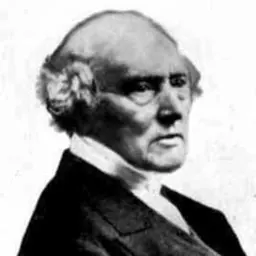
Moḥammad Abū Bakr Ṣiddīque al-Qurayshī (15 April 1845 – 17 March 1939) was a Bengali Islamic scholar and the inaugural Pir of Furfura Sharif in West Bengal. He is regarded by his followers, who are scattered across eastern India and Bangladesh, as a mujaddid (reviver) of Islam in the region, due to his significant contributions in religious propagation via the establishment of mosques and madrasas, publication of newspapers and education development in neglected areas. He was the founding president of the sociopolitical Anjuman-i-Wazin-i-Bangla organisation, which advocated for causes such as the Khilafat Movement and Pakistan Movement. Siddique died in 1943, and his shrine is greatly venerated as one of West Bengal's most prominent Sufi centres.
Early life and family Mohammad Abu Bakr Siddique was born on 15 April 1845, to a Bengali Muslim family in the village of Furfura, located in Hooghly district. His father, Haji Abdul Muqtadir Siddiqui, was a mawlana. The family was believed to have been descendants of Abu Bakr, the first Caliph of Islam and a member of the Banu Taym clan, part of the Arab tribe of Quraysh. Their ancestor, Mansur Baghdadi, left Baghdad in the Abbasid Caliphate in 741 AH (1340 CE) and settled in a village now known as Mollapara in Hooghly district, in the erstwhile Sultanate of Bengal. Mansur's descendant, Haji Mustafa Madani, pledged bay'ah along with Emperor Aurangzeb to Masum Sirhindi, the third son of Ahmad Sirhindi. Some letters of correspondence between Madani and Sirhindi are preserved in the Maktubat-e-Masumia in Rauza Sharif, Sirhind, and were published by Abdul Halim Arambagi in his biography of Mohammad Abu Bakr Siddique. In 1667, Mughal Emperor Aurangzeb gifted Madani tax-free land and an estate which included a mosque, and the area was named after him as Madanipur (Midnapore).
Siddique's father died when he was nine months old, and so he was raised by his mother, Mohabbat-un-Nesa Begum.
Then went to Calcutta city and enrolled in Jamaluddin Education Center in the then Sinduria Patti Masjid (now Kalutla, Kolkata). There, Hafez studied Hadith, Tafsir and Fiqh under Jamaluddin Mungeri. Hafez Jamal Uddin was the caliph of Syed Ahmad Barelvi. He then studied Hikmah and philosophy under Nazar Shah Belayati from Firangi Mahal. During this time he established his own library, where there were many rare books. The library is currently attached to the Furfura title madrasa he founded. In 1892 he traveled to Mecca and Medina. During his stay in Medina, he obtained the certificate of 40 Hadith books from the Muhaddith Syed Mohammad Amin Ibn Ahmad.
Contribution to education He established 1100 madrassahs and 700 mosques.
During his lifetime there was no teaching of Hadith in Alia Madrassah. He introduced this system, the practice of this system started in 1902 by teaching hadith in Kolkata Ghaspatti Mosque. Shamsul Ulama Shah Safiullah was appointed to this mosque to teach hadith on a salary of 20 rupees. He himself used to teach hadith in this mosque.
He acquired special erudition on hadith scriptures, his nephew Abu Jafar Siddique obtained the certificate of 20 hadith books from him. Maulana Mansoor Hussain, one of his relatives of Furfura village, received from him the recitation and attestation of the hadith book Musnad Abu Hanifa. Also many scholars learned hadith from him.
Spiritual experience Abu Bakr Siddique imbibed two methods of attaining nearness to Allah namely jizba and suluk. Much is said about his spiritual state during his student days at the Hooghly Madrassah, a four-way connection with his heart most nights. When this connection was associated with the Tariqa, he would eagerly chant that Tariqa. Also many times his apada-masat would be covered by a light and his self-forgetfulness would occur.
Influence At the end of the 19th century, when the intensity of the Faraizi and Tariqa-e-Muhammadiyah movements subsided, the Muslims were also somewhat weak. There were many divisions among the Muslims, Abu Bakr was worried when the Muslims adopted different religions in different places. He was determined to work for the unity of the Ummah, and tried to eliminate shirk, Bid'ah, superstition etc. from the two Bengals. Among the scholars who helped him in this work were Shamsul Ulama Ghulam Salmani (1854–1912), Allama Lutfur Rahman Burdwani (d. 1920), Allama Ishaq Burdwani (d. 1928), Belayat Hussain Birbhumi (1887), Abdul Wahid Chatgami (d. 1910), Muhammad Mangalkoti Burdwani (d. 1907) is notable. Abdul Awwal Jaunpuri and Karamat Ali Jaunpuri also helped in spreading various ahadith. Both of them were influential writers.
Don’t just read it —
keep it.
Full-length biographies made to live with: read them, listen on the way to work, watch them tonight.
- E-book
- Audio
- Video
Instant download · yours to keep · every purchase keeps this site free
Important facts
People in Abu Baqar Siddique's life
Named in this biography and alive at the same time


Contemporaries
People whose lives overlapped Abu Baqar Siddique's


Frequently asked questions
Who was Abu Baqar Siddique?
Sufi saint and founder of Furfura Sharif
When was Abu Baqar Siddique born?
Abu Baqar Siddique was born on 15 April 1845 in Furfura, Shrrerampur.
When did Abu Baqar Siddique die?
Abu Baqar Siddique died on 17 March 1939.
Sources & further reading
· Wikipedia: Abu Baqar Siddique
· DBpedia: Mohammad Abu Bakr Siddique
Cite this page
APA: Biography.guide. (2026). Abu Baqar Siddique. https://biography.guide/abu-baqar-siddique/
MLA: "Abu Baqar Siddique." Biography.guide, https://biography.guide/abu-baqar-siddique/.
Chicago: "Abu Baqar Siddique." Biography.guide. https://biography.guide/abu-baqar-siddique/.
Data last updated: 2026-09-20 · Spot an error? Report a correction.
Page generated 2026-09-27 05:26 UTC