
About Abraham Yahuda
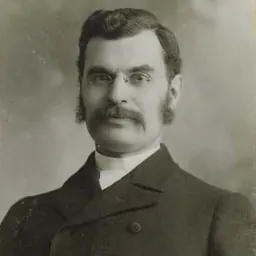
Lived 1877 – 1951 (aged 74). Abraham Yahuda was a Turkish writer, orientalist, professor, judaic scholar and university teacher.
Abraham Shalom Yahuda (; June 18, 1877 1951 ) was a Jerusalem-born American polymath, orientalist, teacher, writer, researcher, linguist, and collector of rare documents. After failing in his efforts to help steer the nascent Zionist movement into embracing attitudes of the Orient, he relocated to Europe and the United States, where he lectured at the New School for Social Research in New York.
Early life and education Abraham Shalom Yahuda was born in Jerusalem to the well-to-do Iraqi-Jewish Yahuda (Judah) family. His father emigrated to Ottoman Palestine from Baghdad at age 9 with his father , who in turn was the son of Ezekiel Judah, a communal leader, Talmudist and trader from Baghdad and Calcutta. His mother, Bekhora-Rivka Bergman, was from a Frankfurt Jewish family. The language spoken at home was Arabic. As a youth, he studied the works of Rashi and the Talmud under private tutors, later enrolling in his grandfather's yeshiva. He lectured there at the Complutense University of Madrid until 1920. Yahuda looked to historical al-Andalus as an example of how Judaic scholars contributed to Arab culture and language. He believed that certain classic works of Judaism from this periodsuch as Chovot HaLevavotcould only be fully understood with a proper knowledge of the Arabic language.
Attempts at Orientalizing Zionism In 1896, Yahuda met the founder of modern political ZionismTheodor Herzlfor the first time in London. He asked Herzl to establish relations with the Palestinians in order to secure their support for the Zionist project. Herzl replied that there was no need for that, since he was already engaging directly with the great powers. The following year, Yahuda attended the First Zionist Congress in Basel, Switzerland, where he repeated his request of Herzl to work with the Palestinians, and was again rebuffed. Reuven Snir explained Herzl's refusal by attributing it to Herzl's belief in the superiority of Western culture. In his memoirs, Yahuda expressed his disappointment with Herzl's reaction, interpreting it as another example of the arrogance of European Jews towards Arabs.
In 1920, Yahuda was invited by new mayor of Jerusalem Raghib al-Nashashibi to deliver a lecture in literary Arabic to an audience consisting of Muslims, Christians, and Jews. In attendance was Herbert Samuel, the newly appointed High Commissioner for Palestine. In his lecture, Yahuda discussed the golden age of Jewish culture in Spain, which he aimed to promote as a model for inter-religious relations within a modern political entity. Directing his attention towards the Palestinian Arabs in attendance, he encouraged their active involvement in shaping relations with Jews, in contradiction to the prevailing attitude which sought to deny or minimize their place in the new political structure of Mandatory Palestine. Referencing this lecture, Yuval Evri cited the various reactions it provoked, both positive and negative. While Muslim intellectuals embraced the acknowledgment of their culture, they generally objected to the Balfour Declaration of 1917. Within Zionist circles, Yahuda faced criticism for advocating the assimilation of Jewish culture into Arab culture, and his political vision for the revival of Judeo-Arabic culture was never realized. Disillusioned with the Zionist leadershipwho impeded his attainment of a professorship at the new Hebrew University of JerusalemYahuda returned to Europe. After falling-out with Chaim Weizmann over Zionist attitudes towards Arabs, Yahuda joined Zeev Jabotinsky's Revisionist Zionist Movement, and was thereafter actively sponsored by the latter.
Albert Einstein and Yahuda corresponded with each other intensively throughout the 1930s. In 1940, Einstein arranged for Yahuda and his wife to travel to New York. Later that summer, Yahuda visited Einstein at his Lake Saranac summer retreat in the Adirondack Mountains. Afterward, in September of the same year, Einstein sent a letter to Yahuda from Lake Saranac expressing his fascination for Isaac Newton's religious views and interpretations on the bible. Einstein's letter was likely inspired by his conversations with Yahuda at Lake Saranac. Yahuda settled in New York in 1942, where he became affiliated with the New School for Social Research.
Death and legacy Yahuda died in New York in 1951. Upon his death, much of Yahuda's vast collection of rare documents was donated to the Jewish National and University Library, amounting to about fifteen hundred documents. Much of the donated material was of Arabic origin. However, several hundred items were in ancient Hebrew as well. Also included were a number of documents from other countries, including a number of illuminated manuscripts and unpublished documents penned by Isaac Newton. The collection of 7,500 handwritten theological papers was granted recognition within UNESCO's Memory of the World International Register, recognizing documents which should be preserved for future generations.
In 1952, a posthumous work by Yahuda titled Dr. Weizmann's Errors on Trial was published. This work responded to Chaim Weizmann's memoir Trial and Error (1949). The work had a somewhat scathing tone as a result of the slight he felt in being anonymously referred to in Weizmann's memoir as a Spanish professor of marrano background. he was not the only one. Scholars like Moshe Behar and Zvi Ben Dor Benite associate him with other Palestinian Jews like Hayyim Ben Kiki (1887–1935), who authored a text in 1921 criticizing the behavior of European Zionists in The Question of All Questions: Concerning the Settling of the Land (in Hebrew), and Nissim Malul (1893–1957), a Palestinian Jewish Zionist who advocated for mandatory Arabic language education for European Jews settled in Palestine to improve relations with non-Jewish Palestinians.
Don’t just read it —
keep it.
Full-length biographies made to live with: read them, listen on the way to work, watch them tonight.
- E-book
- Audio
- Video
Instant download · yours to keep · every purchase keeps this site free
Important facts
People in Abraham Yahuda's life
Named in this biography and alive at the same time

Related people
Same field, nearest in time


Contemporaries
People whose lives overlapped Abraham Yahuda's




Frequently asked questions
Who was Abraham Yahuda?
Jewish Palestinian linguist (1877-1951)
When was Abraham Yahuda born?
Abraham Yahuda was born on 18 June 1877 in Jerusalem.
When did Abraham Yahuda die?
Abraham Yahuda died on 13 August 1951 in New Haven.
What was Abraham Yahuda's occupation?
Abraham Yahuda was a writer, orientalist, professor, judaic scholar and university teacher.
What nationality was Abraham Yahuda?
Abraham Yahuda was Turkish.
Sources & further reading
Cite this page
APA: Biography.guide. (2026). Abraham Yahuda. https://biography.guide/abraham-yahuda/
MLA: "Abraham Yahuda." Biography.guide, https://biography.guide/abraham-yahuda/.
Chicago: "Abraham Yahuda." Biography.guide. https://biography.guide/abraham-yahuda/.
Data last updated: 2026-09-20 · Spot an error? Report a correction.
Page generated 2026-09-27 05:23 UTC