
Abraham J. Cantú
Mexican vaudeville illusionist
About Abraham J. Cantú
Lived 1896 – 1949 (aged 52–53).
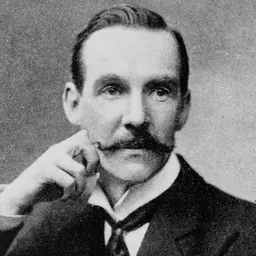
Abraham Juan Cantú (Monterrey, Mexico; November 24, 1896 – Tazewell County, Virginia; August 28, 1949), also known as Professor Tucan, was a Mexican vaudeville illusionist. He is known as the creator of dove magic, an act in which he would make birds in general appear, which inspired other illusionists such as Channing Pollock and Johnny Thompson. Due to his popularity, he performed in theatres and clubs in the United States, Mexico, and Europe. He also appeared in the film Politiquerías, the Spanish-language version of Laurel and Hardy's Chickens Come Home.
He died in an automobile accident while on his way to a performance in Morgantown, West Virginia. Although at first there was a rumor about his death, it was later confirmed, news that caused a stir at the time. He grew up in Mexico and did not develop any interest in magic in his youth; during World War I his family was living in San Antonio, Texas, and it was there that he began working as a barber. When his father died he suffered greatly, as he had been very close to him; Gunn recalled in an interview that at the funeral he was the only American present and everyone else was Latino.
Performances Cantú was the inventor of dove magic, an act in which he would make birds in general appear. Cantú performed in theatres and clubs in the United States, Mexico, England, Ireland, and France. He dressed in an elegant suit After World War II broke out he had to return to the United States, and during a period of rest, he created and perfected his bird-production technique, and for four nights was the venue's most successful performer, one of his performances was seen by journalist Walter Winchell, who praised his routine, which allowed the illusionist to secure engagements in other venues.
Media appearances Cantú was a technical advisor on the Marx Brothers film At the Circus, although he was not credited for this work. He appeared in the film Politiquerías (1931), the extended Spanish-language version of Laurel and Hardy's Chickens Come Home. Whenever he was interviewed, he was asked whether he "was Spanish?" to which he would reply "no, I am Mexican".
Death He died on August 27, 1949, in an automobile accident, The first to report the news was illusionist Martin Barnett, who mentioned the rumor to Kentucky police officer Lee Allen Estes during a gathering of magicians. His sudden death caused great controversy in the vaudeville world, and there were people who could not believe it, such as columnist Bill Sachs, who even asked his readers to deny it.
Legacy Cantú is considered the creator of the Buckle Count, a card trick which he taught to Charlie Miller in the late 1930s. He was the inventor of dove magic, in which he produced birds from handkerchiefs, hats, and other props, something that inspired other illusionists such as Channing Pollock and Johnny Thompson, who adapted it for their own shows. Due to his career and legacy in the world of magic, he was inducted into the Hall of Fame museum of the Society of American Magicians.
Don’t just read it —
keep it.
Full-length biographies made to live with: read them, listen on the way to work, watch them tonight.
- E-book
- Audio
- Video
Instant download · yours to keep · every purchase keeps this site free
Important facts
People in Abraham J. Cantú's life
Named in this biography and alive at the same time




Contemporaries
People whose lives overlapped Abraham J. Cantú's




Frequently asked questions
Who was Abraham J. Cantú?
Mexican vaudeville illusionist (1896–1949)
When was Abraham J. Cantú born?
Abraham J. Cantú was born in 1896 in Monterrey.
When did Abraham J. Cantú die?
Abraham J. Cantú died on 27 August 1949 in Atlanta.
Sources & further reading
Cite this page
APA: Biography.guide. (2026). Abraham J. Cantú. https://biography.guide/abraham-j-cantu/
MLA: "Abraham J. Cantú." Biography.guide, https://biography.guide/abraham-j-cantu/.
Chicago: "Abraham J. Cantú." Biography.guide. https://biography.guide/abraham-j-cantu/.
Data last updated: 2026-09-20 · Spot an error? Report a correction.
Page generated 2026-09-27 05:21 UTC