
About Abraham Bolden
Born 1935. Abraham Bolden is an u.S. Secret Service agent and writer.
Abraham W. Bolden (born January 19, 1935) is a former United States Secret Service agent. He was the first African American assigned to the presidential security detail, appointed in 1961 by John F. Kennedy. In 1964, Bolden was fired from the Secret Service after he was charged with accepting a bribe in relation to a counterfeiting case he had been investigating. Convicted by a jury, he was sentenced to six years in federal prison. Bolden always alleged that he had been framed by members of the government in order to intimidate and silence him. He was pardoned by President Joe Biden in April 2022.
Early life Bolden was born January 19, 1935 to Daniel and Ophelia Bolden in East St. Louis, Illinois. He attended Lincoln High School in East St. Louis, Illinois. As a result of this assignment, Bolden had the distinction of being the first African American to guard a U.S. president. According to Michael Torina who was then chief inspector of the Secret Service, Bolden's assignment was routine and "we aren't making anything of it or providing any biographical matter, as is the same for any other agent." According to Bolden, Kennedy personally invited him to join the White House detail as the first African American to protect the President. Bolden returned to Chicago as a field agent in the counterfeiting division where he built a record of success. He "won two commendations for cracking counterfeiting rings". Jet magazine reported that in 1962, he "ranked second in the nation in solving" counterfeit and check forging cases.
Bribery charges On May 12, 1964, Bolden was accused of attempting to sell a government file to Joseph Spagnoli Jr. in exchange for $50,000. The file was evidence for a case in which Spagnoli was named as the head of a counterfeiting ring. A federal grand jury returned a three-count indictment against Bolden, charging him with "seeking a bribe in violation of his official duty" (18 U.S.C. § 201), "corruptly obstructing the due administration of justice" (18 U.S.C. § 1503), and "conspiring with Frank Jones to commit the crimes defined in these sections" (18 U.S.C. § 371).
Allegations: framed for attempting to reveal Secret Service misconduct On May 20, 1964, Bolden held a news conference at his home on the South Side of Chicago and denied the charges. He asserted that he had been framed by the government because he intended to tell the Warren Commission about a pattern of misconduct on the part of agents assigned to protect Kennedy. According to the Associated Press, a Commission spokesman said they were considering calling Bolden but had made no decision.
On June 18, Rowley addressed Bolden's allegations in testimony before the Warren Commission. Rowley explained that Bolden was selected to rotate through the White House detail for 30 days in the summer of 1961 as part of an orientation program, and that the allegations referred to a five-day span in Hyannis Port. To raise money for his legal defense, Bolden had performed a series of piano recitals throughout Chicago in which he played his own compositions. The government's case relied on the testimony of two men, Frank Jones and Joseph Spagnoli Jr., both under indictment in Chicago for counterfeiting U.S. bonds. The main allegation against Bolden was that he used Jones as a go-between in an illegal moneymaking operation. Jones said that Bolden had shown him several documents stapled together and a small, typewritten piece of paper containing an excerpt from the Spagnoli investigation report. Bolden purportedly directed Jones to visit Spagnoli, show him the piece of paper, and offer to sell Spagnoli his entire file for $50,000 (according to Jones, Bolden told him they would split the money). Martineau added that his own investigation led him to Jones, who informed him of the illegal operation being orchestrated by Bolden. He said Bolden had driven him to a park where he showed him parts of a Secret Service file. Nevertheless, the jury remained deadlocked at 11-1 (in favor of conviction), and Perry declared a mistrial on July 11, 1964. Perry had the option to sentence him to 25 years and $165,000 ($15,000 plus three times the amount of the bribe). While his appeal was pending, Bolden was employed in Chicago by the Ingersoll Products Division of the Borg-Warner Corporation as an assembly line inspector of government ordered helmets and canteens. At Ingersoll, he was credited with starting a collection among fellow employees that raised enough money to send 75,000 cigarettes to American military forces in South Vietnam. He served thirty-nine months in prison and was released on two and a half years' probation. On April 26, 2022, it was announced that Bolden had been pardoned by President Joe Biden as part of "Second Chance Month".
Allegations of a "Chicago plot" to assassinate John F. Kennedy
Early reports On December 5, 1967, while Bolden was serving his sentence at the United States Medical Center for Federal Prisoners in Springfield, Missouri, he was visited by attorneys John Hosmer (Bolden's lawyer), Mark Lane (author of Rush to Judgment), and Richard V. Burnes (assistant to New Orleans District Attorney Jim Garrison). After the visit, the attorneys held a news conference in which they stated they had just learned from Bolden that three weeks prior to the assassination in Dallas, the Secret Service was aware of, and worked to thwart, a Chicago-based assassination plot against Kennedy. In a June 1971 article published in Computers and Automation, Bernard Fensterwald wrote: "As a result of this visit, Bolden's 'story' was given world-wide circulation; yet, instead of this resulting in his case getting a new hearing, he was put into solitary confinement." According to Bolden, the Chicago Secret Service office had received word from the FBI on Wednesday, October 30, 1963 that an attempt on the President's life would be made on Saturday, November 2. It would occur when Kennedy traveled in a motorcade from O'Hare Airport to Soldier Field to attend the Army-Air Force football game. The Chicago Secret Service convened an emergency meeting, led by Special Agent in Charge Martineau. Bolden was present at the meeting. As James W. Douglass writes based on his 2003 interview with Bolden: "Martineau told the agents the FBI had learned from an informant that four snipers planned to shoot Kennedy with high-powered rifles. Their ambush was set to happen along the route of the presidential motorcade, as it came in from O'Hare down the Northwest Expressway and into the Loop". The suit went on to say that because the President's visit was cancelled, the assassination was rescheduled for three weeks later in Dallas. Skolnick's key contention was that the Warren Commission had turned over documents to the National Archives, to be held in secret for 75 years, which showed among other things a connection between Thomas Arthur Vallee and Lee Harvey Oswald. The suit demanded all relevant materials be released. In response, the Department of Justice had "No comment" and National Archivist Marion Johnson said he'd seen nothing in the records that connected Vallee to an assassination attempt. Skolnick claimed the documents had been stolen from the Archives.
House Select Committee on Assassinations Established in 1976 to investigate the assassinations of President Kennedy and Martin Luther King Jr., the United States House of Representatives Select Committee on Assassinations (HSCA) stated that an essential part of its responsibilities was "n assessment of the performance of agencies such as the CIA, Secret Service, and FBI". The HSCA's final report included the finding that the "Secret Service was deficient in the performance of its duties" as it "possessed information that was not properly analyzed, investigated or used by the Secret Service in connection with the President's trip to Dallas." It said that Secret Service offices in Chicago and Miami failed to relay to the Dallas region two separate threats by individuals, the first by Vallee and the second by Joseph A. Milteer, to assassinate Kennedy with high-powered rifles in early November 1963. Allegations he made to the committee were discussed in its final report:
In addition [to the threat by Thomas Arthur Vallee], the committee obtained the testimony of a former Secret Service agent, Abraham Bolden, who had been assigned to the Chicago office in 1963. He alleged that shortly before November 2, the FBI sent a teletype message to the Chicago Secret Service office stating that an attempt to assassinate the President would be made on November 2 by a four-man team using high-powered rifles, and that at least one member of the team had a Spanish-sounding name. Bolden claimed that while he did not personally participate in surveillance of the subjects, he learned about a surveillance of the four by monitoring Secret Service radio channels in his automobile and by observing one of the subjects being detained in his Chicago office.
According to Bolden's account, the Secret Service succeeded in locating and surveillance two of the threat subjects who, when they discovered they were being watched, were arrested and detained on the evening of November 1 in the Chicago Secret Service office.
The committee was unable to document the existence of the alleged assassination team. Specifically, no agent who had been assigned to Chicago confirmed any aspect of Bolden's version. One agent did state there had been a threat in Chicago during that period, but he was unable to recall details. Bolden did not link Vallee to the supposed four-man assassination team, although he claimed to remember Vallee's name in connection with a 1963 Chicago case. He did not recognize Vallee's photograph when shown it by the committee.
The questionable authenticity of the Bolden account notwithstanding, the committee believed the Secret Service failed to make appropriate use of the information supplied it by the Chicago threat in early November 1963. In 2006, he was interviewed for the television documentary Conspiracy Files: The JFK Assassination based on information in Ultimate Sacrifice. The documentary asserted that mobster John Roselli was responsible for framing Bolden. In 2007, Bolden reiterated his allegations of the Chicago plot to Chuck Goudie of ABC News Chicago affiliate WLS-TV; ABC News ran the headline describing his claims as a "New Assassination Plot". Bolden was interviewed about the Chicago plot in Episode 5 of the History Channel series Breaking Mysterious, which first aired in 2017.
In 2025 Bolden testified at the second hearing of the House Oversight Committee's "Task Force on the Declassification of Federal Secrets".
Subsequent career Following his release from prison, Bolden worked as a quality control supervisor in the automotive industry until his retirement in 2001.
The Echo From Dealey Plaza In 2008, Bolden published his memoir, The Echo From Dealey Plaza. When interviewed about the book by NPR's Farai Chideya, Bolden said he believed there was a conspiracy to assassinate Kennedy and that he heard Secret Service agents displeased with the President's integration policies comment that they would not attempt to protect him in an assassination attempt. James Douglass reported a similar remark from Bolden during a 2001 interview. Bolden recollected how there were agents who joked "they would step out of the way" if an assassin shot at the President. Reviewing the memoir for The Washington Post, critic Bruce Watson called it "a shocking story of injustice", sometimes marred by "plodding prose and drab dialogue".
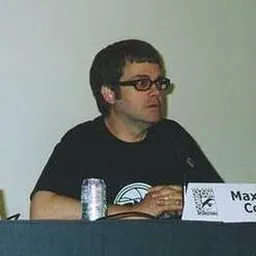
Portrayals in fiction Abraham Bolden appears in the 2011 television miniseries The Kennedys, portrayed by Rothaford Gray. He is depicted joining the President's protective detail. In the "Life Sentences" episode, President Kennedy turns to Bolden as a sounding board during the crisis surrounding the 1962 desegregation of the University of Mississippi. The character Eben Boldt in Target Lancer, a crime fiction novel by Max Allan Collins, is based on Abraham Bolden's role in an assassination attempt against John F. Kennedy in Chicago. Collins acknowledges this basis on Bolden in a postscript to the novel.
Don’t just read it —
keep it.
Full-length biographies made to live with: read them, listen on the way to work, watch them tonight.
- E-book
- Audio
- Video
Instant download · yours to keep · every purchase keeps this site free
Important facts
People in Abraham Bolden's life
Named in this biography and alive at the same time


Related people
Same field, nearest in time



Contemporaries
People whose lives overlapped Abraham Bolden's

Frequently asked questions
Who is Abraham Bolden?
American Secret Service agent
When was Abraham Bolden born?
Abraham Bolden was born on 19 January 1935.
What is Abraham Bolden's occupation?
Abraham Bolden is an u.S. Secret Service agent and writer.
Sources & further reading
Cite this page
APA: Biography.guide. (2026). Abraham Bolden. https://biography.guide/abraham-bolden/
MLA: "Abraham Bolden." Biography.guide, https://biography.guide/abraham-bolden/.
Chicago: "Abraham Bolden." Biography.guide. https://biography.guide/abraham-bolden/.
Data last updated: 2026-09-20 · Spot an error? Report a correction.
Page generated 2026-09-27 05:17 UTC