
Abigail Spanberger
American politician and former intelligence officer (born 1979)
About Abigail Spanberger
Born 1979. Abigail Spanberger is an American politician, postal inspector, intelligence officer and consultant.
Abigail Anne Spanberger ( ; ; born August 7, 1979) is an American politician and former intelligence officer serving since 2026 as the 75th governor of Virginia. A member of the Democratic Party, she served from 2019 to 2025 as the U.S. representative for .
Spanberger was born in New Jersey and moved frequently during her childhood before her family settled in Virginia. She earned degrees from the University of Virginia and Purdue University. From 2006 to 2014, she was an officer in the Central Intelligence Agency. She was elected to the U.S. House of Representatives in 2018, unseating incumbent Republican Dave Brat. She was reelected in 2020 and 2022 before leaving Congress to run for governor.
Spanberger was elected governor of Virginia in 2025, defeating the Republican nominee, Lieutenant Governor Winsome Earle-Sears. She is Virginia's first female governor. In her first months as governor, Spanberger signed an assault weapons ban, increased the state's minimum wage, vetoed a recreational cannabis retail market and collective bargaining legislation, and supported the 2026 Virginia redistricting referendum.
Early life and education Spanberger was born Abigail Anne Davis in Red Bank, New Jersey, on August 7, 1979, her father, Martin Davis, a police officer, and her mother, Eileen Davis, a nurse. She knew from a young age that she wanted to be a spy, writing her diary in code.
Spanberger earned a Bachelor of Arts from the University of Virginia in 2001 She received a conditional job offer from the Central Intelligence Agency (CIA) in December 2002.
In July 2006, after Spanberger's background check had been completed, she joined the CIA as a case officer, working to find, recruit, and build relationships with foreign nationals who could have had information of value to the U.S. government. She has publicly said that she gathered intelligence about nuclear proliferation and terrorism. Her first assignment was to Brussels, according to The Washington Post. After the 2016 presidential election, she began working with Emerge America to encourage women to run for state and congressional offices.
U.S. House of Representatives
Elections
2018
In July 2017, Spanberger announced her candidacy for the United States House of Representatives in in the 2018 election against incumbent Republican Dave Brat, a former Tea Party movement member. She had begun to consider challenging Brat after attending a town hall meeting he hosted in Nottoway County in February 2017 and made the final decision to run in May after the House voted to repeal the Affordable Care Act, texting her husband, "I'm gonna run and I'm gonna f---ing win".
In June, after winning the primary, while waiting for a train at the Richmond Staples Mill Road Amtrak station, Spanberger met William C. Mims, a justice on the Supreme Court of Virginia, who told her he was "impressed with her message".
In August, the Congressional Leadership Fund, a super PAC closely aligned with Republican House Speaker Paul Ryan, conducted a smear campaign against Spanberger. The campaign, which attempted to tie her to terrorism, was based on an SF-86 application she completed to obtain security clearance, which was released in breach of privacy rules. In a visit to the district, former Trump adviser Steve Bannon called the race "an absolute bellwether of the entire country" and said that losing it would mean Republican loss of control of the House.
Spanberger won the November 6 general election by about 6,800 votes. Brat won eight of the district's ten counties, but Spanberger dominated the two largest counties, Henrico and Chesterfield, by a combined margin of over 30,000 votes. Her campaign outraised Brat's, with $5.8 million to his $2.1 million . After winning the election, Virginia Supreme Court Justice Mims wrote her a letter extolling the virtues of public service, leadership, and civility, alongside a copy of former Czech President Václav Havel's essay "Politics, Morality, and Civility". Spanberger has said the letter and its impact on her leadership were crucial to her development as a politician. But until 1993, the 7th stretched from the outer Washington suburbs through the Shenandoah Valley and Charlottesville to the outer Richmond suburbs; the present 7th is geographically and demographically the successor to what was the 3rd district before 1993. That district had been in Republican hands since 1981; former House majority leader Eric Cantor represented it from 2001 until Brat ousted him in the 2014 Republican primary.
Spanberger and her colleagues Elissa Slotkin and Mikie Sherrill were described as the "mod squad", a moderate alternative to the progressive "squad". Spanberger and Sherrill shared a Capitol Hill apartment for four years while they served in Congress together. She was also boosted by Joe Biden narrowly carrying the district; Biden was the first Democrat to win what is now the 7th Congressional District since 1948.
On November 5, days after winning reelection by a margin of 1.8%, Spanberger criticized the Democratic Party's strategy for the 2020 elections in a phone call with other Democratic caucus members that was subsequently leaked. Calling the elections "a failure" from a congressional standpoint, she singled out Republican attack ads decrying "socialism" and the movement to "defund the police" as prime reasons the Democratic Party lost seats in swing districts. Spanberger argued that Democrats should watch Republican ads before deciding how to talk about issues and never "use the word 'socialist' or 'socialism' ever again".
After the 2020 elections, Spanberger criticized Democratic messaging, arguing that progressive slogans such as "defund the police" and "socialism" had hurt candidates in swing districts. CNN political editor Chris Cillizza called her comments "hard truth" for the Democratic Party, adding that for Democrats to succeed in the 2022 and 2024 elections, they should "listen to the likes of Spanberger" rather than push for "the boldest possible progressive legislation".
2022
For her first two terms, Spanberger represented a district that stretched from the Richmond suburbs to the fringes of the Shenandoah Valley. After the 2020 United States redistricting cycle, Spanberger's district was radically redrawn, and no longer included her home in Henrico County. She considered not running for reelection in the new district before deciding to do so. Spanberger defeated Vega, 52% to 48%, the largest margin at the time in any election Spanberger had run in.
Tenure Trump administration According to FiveThirtyEights congressional vote tracker, Spanberger voted with President Trump 8.7% of the time. In the 2016 presidential election, Trump won 50% of the vote to Hillary Clinton's 44% in Spanberger's future congressional district.
On September 23, 2019, Spanberger joined six other freshman House Democrats with national security backgrounds in calling for an impeachment inquiry into Trump. They co-wrote a Washington Post opinion piece explaining their support for an impeachment inquiry, writing: "Congress must determine whether the president was indeed willing to use his power and withhold security assistance funds to persuade a foreign country to assist him in an upcoming election." They wrote that, if the allegations were true, they amounted to a "flagrant disregard for the law" and a "threat to all we have sworn to protect". Spanberger later announced that she would vote in favor of impeachment, saying, "The President's actions violate his oath of office, endanger our national security, and betray the public trust".
On June 1, 2020, Spanberger tweeted criticism of Trump's reaction to the George Floyd protests, a series of protests against police brutality that began in Minneapolis on May 26. On June 2, The Washington Post and The New York Times quoted Spanberger and several other high-profile former CIA analysts' interpretations of Trump's reaction to the protests as reminiscent of the reaction of totalitarian dictators on the brink of losing control of their dictatorships. "As a former CIA officer, I know this playbook, and I know the president's actions are betraying the very foundation of the rule of law he purports to support, the U.S. Constitution", she said.
Spanberger opposed Democrats' attempts to amend the Insurrection Act of 1807, saying that amending the rarely used law would not accomplish what Democrats intended. In a November 2021 interview with the New York Times, Spanberger criticized Biden after the 2021 Virginia gubernatorial election, saying, "Nobody elected him to be F.D.R.; they elected him to be normal and stop the chaos." She also said the Democrats had not sufficiently recognized that inflation was problematic. In December 2023, she was one of six House Democrats to send Biden a letter criticizing Israeli Prime Minister Benjamin Netanyahu's Gaza military strategy.
Committee assignments Spanberger's committee assignments included:
Committee on Agriculture Subcommittee on Commodity Exchanges, Energy, and Credit Subcommittee on Conservation and Forestry (Chair) Committee on Foreign Affairs Subcommittee on Asia, the Pacific and Nonproliferation Subcommittee on Europe, Eurasia, Energy, and the Environment
Caucus memberships LGBT Equality Caucus New Democrat Coalition Problem Solvers Caucus Congressional Armenian Caucus Congressional Caucus for the Equal Rights Amendment Rare Disease Caucus
2025 gubernatorial election
In 2020, during a meeting with then-Governor of Virginia Ralph Northam, Northam suggested she should run for governor someday. She secured the uncontested nomination in April 2025.
In May 2025, while campaigning, Spanberger said she would not sign a bill to fully repeal Virginia's right-to-work law if elected governor.
Spanberger is one of the few Virginia gubernatorial candidates to refuse money from Dominion Energy, instead getting donations from the anti-Dominion watchdog Clean Virginia alongside her running mates, who defeated Dominion-backed candidates. Her priorities on immigration include scrapping Youngkin's immigration order allowing local police to help carry out Trump's ICE raids and deportation policy. She supports rejoining the Regional Greenhouse Gas Initiative, which Youngkin, a Republican, left after Northam had joined it.
Spanberger was elected in a landslide, securing 58% of the vote. The Republican nominee, incumbent lieutenant governor Winsome Earle-Sears, received 42%. It was the largest margin of victory for a Democratic gubernatorial candidate in Virginia since Albertis Harrison received just under 64% of the vote in 1961. The official vote margin was over 527,000. While Democrats won the three statewide races in Virginia in 2025, Spanberger's 15-point margin of victory was the largest. Spanberger outperformed Kamala Harris in the 2024 presidential election in the state by nearly 10 percentage points, while winning 99% of Harris's voters.
Governor of Virginia (2026–present)
Transition On November 5, Spanberger announced her transition team, which included Chris Lu, Daun Hester, and Yohannes Abraham. Honorary co-chairs of the team included many Democratic Party of Virginia leaders, such as Louise Lucas, Don Scott, Jennifer Wexton, and Rick Boucher. Spanberger's transition informally began on November 6 with a lunch with Governor Youngkin. On November 12, Spanberger asked the University of Virginia's board of visitors to pause its search for a new president until her transition was complete, drawing criticism from both Youngkin and conservative alumni of the university for supposed politicization of the board process. Spanberger said Youngkin had done the same during his tenure, and promised structural reform to prevent it. Spanberger made her first cabinet appointment on December 2, announcing Marvin Figueroa as Secretary of Health and Human Resources, and continued to make appointments throughout the month.
Inauguration
Spanberger was sworn in as governor on January 17, 2026. border_color1 = #000 office1 = Governor name1a = Abigail D. Spanberger term1a = 2026–present office2 = Lieutenant Governor name2a = Ghazala Hashmi term2a = 2026–present border_color3 = #000 office5 = Secretary of the Commonwealth name5a = Candi Mundon King term5a = 2026–present office6 = Chief of Staff for the Governor name6a = Bonnie Krenz-Schnurman term6a = 2026-present office7 = Secretary of Administration name7a = Traci Deshazor term7a = 2026–present office8 = Secretary of Agriculture and Forestry name8a = Katie K. Frazier term8a = 2026–present office9 = Secretary of Commerce and Trade name9a = Carrie H. Chenery term9a = 2026–present office10 = Secretary of Education name10a = Jeffrey O. Smith term10a = 2026–present office11 = Secretary of Health and Human Resources name11a = Marvin Figueroa term11a = 2026–present office12 = Secretary of Finance name12a = Mark D. Sickles term12a = 2026–present office13 = Secretary of Labor name13a = Jessica K. Looman term13a = 2026–present office14 = Secretary of Natural and Historic Resources name14a = David L. Bulova term14a = 2026–present office15 = Secretary of Public Safety and Homeland Security name15a = Stanley M. Meador term15a = 2026–present office16 = Secretary of Transportation name16a = Nick M. Donohue term16a = 2026–present office17 = Secretary of Veterans and Defense Affairs name17a = Timothy P. Williams term17a = 2026–present office18 = Chief Diversity Officer name18a = Sesha Joi Moon term18a = 2026–present office19 = Chief Energy Officer name19a = Josephus Allmond term19a = 2026–present office20 = Counsel to the Governor name20a = Matt McGuire term20a = 2026–present
First days and executive actions On January 17, 2026, her first day in office, Spanberger signed ten executive orders focusing primarily on affordability, healthcare, housing, education, and preparedness for potential federal policy changes under the Trump administration. Key orders included a statewide affordability directive requiring agencies to identify cost-reduction measures; establishment of task forces on health financing and economic resiliency amid federal cuts; a review of housing regulations and creation of a housing production commission; directives strengthening public education and inclusive practices; a review of university board appointment processes; expanded authority for the chief of staff; a non-discrimination and equal opportunity policy with affirmative recruitment measures; and rescission of former Governor Glenn Youngkin's Executive Order 47 requiring state and local law enforcement cooperation with federal civil immigration enforcement. and hundreds of traffic accidents. On January 22, she issued a state of emergency ordinance, mobilizing the Virginia Department of Emergency Management to work with state agencies, local governments, and private-sector partners to ensure preparedness during the winter storm, and promulgated guidelines for Virginians so that they could remain safe.
On January 30, Spanberger described the Virginia Leaders in Export Trade (VALET) program, promoting free trade in opposition to Trump's tariffs. The Virginia Port Authority is a major hub of international trade.
Address to the General Assembly On January 19, 2026, Spanberger delivered her first address to a joint session of the Virginia General Assembly, emphasizing affordability, bipartisanship, and pragmatic solutions. She committed to reentering the Regional Greenhouse Gas Initiative (RGGI), maintaining Virginia's right-to-work law, collaborating with the federal government where possible, and pushing back against policies harming Virginia jobs or families. She outlined legislative priorities including lowering healthcare and energy costs, protecting renters, expanding housing production, supporting agriculture amid tariffs, implementing pro-worker measures such as paid family leave and a higher minimum wage, and bipartisan gun safety bills. Republicans welcomed the calls for unity and right-to-work commitment but proposed alternative tax relief measures and cautioned against increased spending. Spanberger, who campaigned in support of these amendments, said she would campaign for their passage.
In the 2026 legislative session, the Democratic-controlled General Assembly worked to pass the entirety of this agenda, including renter protections, an energy efficiency task force, carbon tax-funded energy bill relief, child care employer/state cost sharing program to reduce costs for employees, regulations on the excess fees on premiums healthcare providers can charge for tobacco use, and allowing manufactured homes be installed in any residential zoning district that allows the construction of traditional homes, except historic districts.
On March 30, 2026, the Assembly passed the Affordable Medicine Act, which makes the "maximum fair prices" for select prescription drugs negotiated by the Centers for Medicare and Medicaid under the Inflation Reduction Act for Medicare enrollees apply to the same drug purchases by Virginia-regulated health plans and state employee plans, while allowing ERISA-regulated plans the option to opt in. The Act created a Prescription Drug Affordability Advisory Panel charged with developing policy recommendations and strategies to improve prescription drug affordability, and pharmacy benefit managers are required to report administrative fees, formulary management fees, rebate retention, and network access fees to the Panel.
Effective July 1, 2026, HB1214 reduces the price cap for a 30-day supply of insulin from $50 to $35, irrespective of the amount of insulin or its type, and sets an aggregate cost-sharing cap of $35 for a 30-day supply of diabetes equipment and supplies, including blood glucose meters and strips, continuous glucose monitors and supplies, and insulin pump supplies. HB736 limits prior authorizations for prescription medication that can lead to costly delays in care.
SB74 extends the state affordable housing program to all county-level jurisdictions and independent cities, and authorizes local authorities to ease single-family zoning and permit the construction of new duplexes, triplexes, and quadruplexes, allow the construction of accessory dwelling units, allow the conversion of office, light industrial, and commercial space to multi-family housing, encourage transit-oriented development, lower minimum lot sizes, and administer incentives/retract disincentives to spur affordable housing developments in areas where development would otherwise never happen, to increase housing density and supply to address the state's housing shortage and reduce prices. HB352 allows localities to incentivize affordable housing construction through a performance-based grant system, while HB594 allows local zoning administrators to expedite rezoning applications for housing developments consisting 75% of housing units affordable for households with incomes at or below the area median income, and allows the Department of Housing and Community Development to give localities priority for grants and loans issued therefrom for these projects.
On April 30, 2026, the Faith in Housing Act was signed into law. It eliminates the rezoning step for faith-based organizations and other tax-exempt nonprofits to develop affordable housing on their properties, allowing religious organizations to give their communities affordable housing with fewer regulatory restrictions.
To aggregate the state's distributed energy generation and storage resources into a centralized system, increasing the grid's reliability, flexibility, and cost efficiency, HB1467 and HB562 expand Virginia's virtual power plant pilot program, which previously had directed only Dominion Energy to participate, to include Appalachian Power and electric utility cooperatives. HB284/SB371 direct power utilities to establish a voluntary demand flexibility program for high-load energy users such as data centers, and incentivize reductions in energy use during times of high demand and offloading energy use to lower-demand periods to lower bills for all other ratepayers, alongside reducing the need to construct new, expensive power plants and attenuating grid stress at peak demand. SB377 allows utilities to cooperate with high-load energy users to build new substations that exclusively serve them, at the expense of the energy user, to shield other ratepayers from increased costs incurred by their intensive consumption.
The Fair and Affordable Electric Rates and Reliability Act extended Dominion Energy and Appalachian Power's weatherization and bill assistance programs for low-income, elderly and disabled customers, and capped ratepayer costs to fund Dominion's electric line undergrounding program at 4% of the rate base. Spanberger returned the bill to the legislature with amendments on April 13, 2026. One amendment modified the language of a provision that directed the State Corporation Commission to discretionarily approve or deny measures to prevent certain high-load customers of 25 megawatts or greater from shifting the cost of new electricity distribution infrastructure onto other ratepayers with more stringent language to "take all measures" to reasonably ensure that other ratepayers are not subsidizing costs associated with this energy usage with rate hikes. Another amendment removed an exemption for high-load projects approved before July 1, 2026. The General Assembly accepted these amendments while rejecting a number of other amendments to the bill. A provision of a budget bill passed in late February directed state agencies to repeal the RGGI exit regulation and reinstate the previous framework governing its participation by June 2026, while HB397 amends state law to clarify a statutory requirement compelling the state to participate in the interstate cap-and-trade program.
In March 2026, Spanberger hosted the 2026 Governor's Environmental Excellence Awards, where she discussed the importance of responsible stewardship of the environment and announced award winners across eleven conservancy groups for their actions in preserving and protecting the state's natural resources and population from harmful development and disasters. On April 8, she signed into law HB507, which prohibits the Virginia Department of Environmental Quality from issuing air permits to data centers with backup diesel gen-sets that do not satisfy the Environmental Protection Agency's tier 4 emission standards.
On April 22, to commemorate Earth Day, Spanberger signed an executive order committing Virginia to the United States Climate Alliance, a bipartisan coalition of governors committed to sustaining America's fight against climate change with state-led action. In May, she signed a slate of legislation aimed at preserving the state's natural resources and treating drinking water for PFAS compounds.
During her campaign, Spanberger committed to expanding the state's solar and wind energy capacity. In office, she has worked to promote nuclear power and novel innovations such as next-generation nuclear reactors and nuclear fusion, but she has acknowledged the need to continue to invest into natural gas power generation to preserve the cost of living for ratepayers and meet the state's short-term energy needs. She also signed HB395, which prohibits landlords with more than four housing units and local governments preventing tenants from installing plug-in solar devices, and prevents investor-owned or municipal utilities and electric cooperatives from imposing interconnection requirements, charging any fee related to the device, or requiring that customers obtain the utility's approval before installing or using the device, allowing apartment residents to generate their own solar power. The bipartisan Distributed Generation Expansion Act, also signed in April, increases Virginia's solar potential by expanding the distributed generation carveout of the Virginia Clean Economy Act from 1% to 4.5% from 2026 to 2030 compliance years, then 5% from 2031 to 2045 compliance years, boosting the development of residential and distributed solar.
On March 25, Spanberger created the cabinet-level position of Chief Energy Officer via executive order, appointing Southern Environmental Law Center attorney Josephus Allmond to the position. The office is tasked with cooperating with the Virginia Secretary of Commerce and Trade, the Virginia Department of Energy, PJM Interconnection, and energy utility providers to address rising energy costs, expand clean energy generation, and develop a statewide energy strategy.
On April 9, Spanberger signed a bill instructing the Department of Energy to identify and develop training resources and curricula to expand the workforce allocated to projects relating to the offshore wind industry, prioritizing training for veterans, local workers, and people from historically economically disadvantaged communities. She later signed HB1444, formally codifying the Clean Energy Innovation Bank that had been trialed by the Virginia Department of Energy in 2024, which financed clean energy projects, greenhouse gas emissions reduction projects, and other similar projects.
Immigration On her first day in office, Spanberger signed the recission of an executive order issued by Glenn Youngkin directing local and state law enforcement agencies to enter 287(g) memoranda of agreement with United States Immigration and Customs Enforcement, deputizing federal immigration law enforcement authority to local officers. The recission order does not force local departments to exit existing agreements with ICE. Nevertheless, the order has been criticized by Republicans and ICE officials, who have called it a "sanctuary state" policy that has led to an increase in immigrant crime.
On May 20, 2026, Spanberger signed into law HB1482, which makes it a class 1 misdemeanor for ICE officers to wear facial coverings or mask except to protect them from infection or ingesting toxic substances, and directs the Department of Criminal Justice Services to develop a model policy for and restrictions on the use of facial coverings by law-enforcement officers, while noting that only 30% of people held in ICE detention centers in Virginia have criminal backgrounds. At the same time, she vetoed a law that would have prevented ICE from conducting civil arrests at courthouses, schools, and healthcare facilities.
Spanberger simultaneously issued Executive Order 16, which directs state-level executive branch agencies to ascertain that federal immigration law enforcement officers entering, accessing, or using nonpublic areas possess a valid warrant authorizing their access to these properties; prevents federal immigration officers from using those properties as a staging area, processing location, or operations base for law enforcement; and provides guidance for courtroom, education, health and election officials in engaging with immigration officers in order to curtail attempts to intimidate citizens of Virginia.
Reproductive rights The Virginia House of Delegates voted to approve an amendment enshrining abortion access for all Virginia citizens shortly before Spanberger took office. The Senate followed suit shortly thereafter. Spanberger signed the bill and sent it to the voters for final approval on February 6, 2026. If passed by voters, the measure will amend the state constitution to provide that "every individual has the fundamental right to reproductive freedom and that such right shall not be, directly or indirectly, denied, burdened, or infringed upon."
On April 8, Spanberger signed the Right to Contraception Act, enshrining Virginians' right to obtain and use contraceptive drugs or devices and healthcare providers' right to provide them. On April 22, she signed the Contraception Equity Act, which requires that health insurers cover the cost of Food and Drug Administration-approved contraceptive drugs or devices on an outpatient basis, prohibits them from imposing copayments or other cost-sharing fees onto the insured except in certain circumstances, and requires that any insurance plan provide point-of-sale coverage without cost-sharing at in-network pharmacies for hormonal contraceptives available over the counter.
Labor and employment On April 6, 2026, Spanberger signed into law HB1, which would increase the state's hourly minimum wage from $12.77 to $13.75 by January 1, 2027, and $15 by 2028; thereafter the minimum wage will be indexed to increases in the consumer price index and hiked incrementally every year. Two days later, she signed HB20, which rescinded a statutory exemption from the state minimum wage law for farm laborers and employees, which would go into effect on January 1, 2027.
Also on April 6, Spanberger signed SB149, which expands Virginia's state-run individual retirement savings program, RetirePath, to an estimated 357,000 private-sector workers employed by businesses that do not offer qualified workplace retirement plans by lowering the full-time or part-time business employment minimum for enrollment in the program to five employees from 25. The law also drops the requirement that employees work at least 30 hours weekly. Contemporaneously, Spanberger signed a bill expanding workers compensation for first responders experiencing post-traumatic stress disorder.
In April 2026, Spanberger also signed laws heavily restricting non-compete agreements, including SB170, which makes non-compete agreements unenforceable if an employee is fired "without cause" unless the employer provides severance benefits or another monetary payment, which must be disclosed upon the agreement's execution. On April 22, she signed the Equal Pay Act, which prohibits employers from asking prospective workers about their pay history and using that data in considering whether to hire them or in determining their salary unless they voluntarily provide their pay history. She also signed a bill that expands legal protections against wage theft.
On May 11, Spanberger signed a bill establishing a Paid Family and Medical Leave Insurance program administered by the Virginia Employment Commission, set to go into effect in 2028. It guarantees that employers pay at least $1,500 in wages per quarter; provide up to 12 weeks of paid family leave to enrolled employees to take care of a relative or a child or 12 weeks of safety service leave for victims or relatives of victims of domestic violence, harassment, sexual assault, or stalking; and replace at least 80% of the claimant's weekly wages, up to 100% of the statewide average weekly net earnings, or $1,507. The program is funded by a trust fund financed by remittances from employers deducted from employee payrolls and, for employers of more than ten workers, employer contributions.
On May 14, Spanberger vetoed SB378 and HB1263, collective bargaining legislation backed by the Virginia Service Employees International Union (SEIU) and various labor groups. The legislation would have granted state and municipal employees collective bargaining rights, and was supported by all of the state legislature's Democrats. Spanberger proposed amendments that would have weakened the legislation by permitting rather than requiring state agencies to bargain with workers, exempting the state's Port Authority and universities from bargaining, and delaying the law's implementation until the end of her term. When the General Assembly rejected these amendments, Spanberger vetoed the bills.
On June 26, Spanberger signed legislation raising benefits for unemployment claims filed after July 5 of that year by 11.2%, from $430 to $478 per week.
Cannabis HB542 was the state legislature's most recent effort to expand the commercial sale of recreational cannabis. It would have established a framework for the creation of a cannabis retail market administered and regulated by the Virginia Cannabis Control Authority and partially liberalized certain restrictions on sales quantities. Spanberger referred the bill back to the General Assembly with recommendations that would have delayed the retail market's launch by six months, increased civil penalties for illegal cannabis use to a class 4 misdemeanor, raised the excise tax on cannabis production to 8%, and reduced the number of cannabis dispensaries to be authorized by regulators to 200. The General Assembly rejected these recommendations.
As a result, Spanberger vetoed the bill on May 19, 2026, despite supporting the creation of a retail cannabis market as long as it had strong labeling and regulation. She cited the bill's "rushed timeframe", which she said gave the state too little time to design comprehensive strategies for regulating the market or to learn from the successes and errors of other states that liberalized cannabis retailing. Negotiations continued in the following weeks, and they reached a compromise on June 16.
Concurrently, Spanberger supported and signed legislation that strengthened cannabis users' parental rights by restricting authorities' power to infringe upon custody or visitation of a dependent child on the basis of cannabis possession, implementing protections for health professionals at hospices, nursing homes and assisted living facilities that aid terminally ill patients in using medical cannabis treatment from punishment, as well as a bill that reduces the sentences of people with cannabis use convictions for crimes that are no longer chargeable offenses under current law since the full legalization of cannabis use in 2021.
Gun control On May 14, 2026, Spanberger signed an "assault weapons" ban, making it a class 1 misdemeanor to import, sell, manufacture, purchase, or transfer certain semi-automatic pistols, shotguns and high-capacity magazines after July 1, 2026, and defines penalties for breaching this law, with exceptions for law enforcement officers and members of the United States Armed Forces. Semi-automatic shotguns for hunting are not considered assault weapons, and semi-automatic firearms owned before July 1 may be retained. The law was subject to litigation immediately after being enacted.
In April, Spanberger signed bills strengthening regulations requiring firearms sellers to prevent the illegal distribution of weapons to arms traffickers, straw purchasers, or people forbidden from owning a gun under state or federal law; prohibiting the carry of firearms or explosive material on college campuses or in the vicinity of public educational institutions, with exemptions for Reserve Officers' Training Corps cadets, military personnel, and law enforcement; and raising the minimum age to purchase a gun to 21. She signed other restrictions relating to the possession of firearms in hospitals, the presence of polling places, and laws relating to gun owners' responsibility to keep their firearms secure.
Election integrity On March 24, 2026, Spanberger issued an executive order authorizing Virginia's reentry into the Electronic Registration Information Center, a nonprofit, nonpartisan organization with 26 member states that share voter registration and identification data to better keep accurate voter rolls, from which Governor Youngkin withdrew the state in 2023. The executive order requires the Virginia Department of Motor Vehicles to coordinate with the Department of Elections to conduct thorough voter roll maintenance operations, prohibits the purge of ineligible voters from the rolls within 90 days of a primary or general election, requires local registrars to ascertain reported election results' integrity after each election, and directs the Commissioner of the Department of Elections to verify that ballot chain of custody procedures are followed and voting equipment is certified according to federal standards, properly tested before each election, and never connected to the Internet.
2026 Virginia redistricting amendment
Until 2020, the General Assembly was responsible for delineating the boundaries of congressional districts, but this process was amended by a ballot measure approved by voters on November 3, 2020, which referred redistricting authority from the state legislature to a bipartisan redistricting commission staffed by eight legislators and eight citizens and tied the redistricting process to the decennial census. Bypassing the commission would require another amendment to the Constitution of Virginia. The General Assembly can pass amendments through a majority vote by the House of Delegates and the Senate in two consecutive legislative sessions, which would send the amendment to be approved by the voters as a ballot measure.
Despite Spanberger's August 2025 pledge to make no attempt to redraw Virginia's congressional map if elected, in late October state Democratic leaders announced a plan to redraw the state's map through a constitutional amendment that would temporarily suspend the bipartisan commission's authority to permit a one-time mid-decade redistricting session, which she said she would not oppose. A corresponding resolution was adopted by the Assembly in October that allows the Virginia General Assembly to consider constitutional amendments related to redistricting during a special session, which was agreed to by the House on the 29th and by the Senate on the 31st. Both floors reapproved the amendment after the beginning of 164th General Assembly, and Spanberger signed the legislation that sent it to the voters.
The amendment was ultimately approved, 51.69% to 48.31%. It was struck down by the Supreme Court of Virginia on May 8, a ruling appealed by state Democrats. The U.S. Supreme Court rejected the appeal on May 15.
Other actions On February 24, 2026, Spanberger delivered the Democratic response to Trump's 2026 State of the Union Address from the chamber of the House of Burgesses in the reconstructed Capitol in Williamsburg, Virginia. In February 2026, Spanberger signed legislation sending three constitutional amendments to voters for referendums later in 2026: again, the Right to Reproductive Freedom Amendment, enshrining reproductive rights, the Repeal Same-Sex Marriage Ban Amendment, which rescinds the longstanding state same-sex marriage ban that will go into effect if Obergefell v. Hodges is overturned, and the Voting Rights Restoration Amendment, which restores voting rights to formerly incarcerated people who completed felony sentences.
The 2026 legislative session concluded on March 14 with sine die adjournment without a final biennial budget agreement, due to a dispute over data center tax exemptions.
In early April, Spanberger signed bipartisan legislation establishing a High School Certified Nurse Aide Training and Certification Program, administered by the Board of Education and Virginia Board of Nursing for the purpose of creating a pathway for qualified high school students to prepare for and obtain certification as a certified nurse aide; allowing high school students to serve in an apprenticeship program relating to the culinary arts or information technology; a schoolground cellphone ban; and a bill that codifies and expands statewide the Roanoke Community Builders Pilot Program that seeks to reduce youth violence by providing educational opportunities for secondary-school-aged children.
In April 2026, Spanberger signed a bill that eliminates tax breaks for organizations related to the Confederate States of America, and a package of legislation relating to maternal healthcare and telemedicine. Other major bills passed and sent to Spanberger's desk include the legalization of adult-use cannabis sales (effective January 1, 2027), regulation of "skill" games, authorization of collective bargaining for public employees, and a sweeping gun-safety package (including an assault weapons ban, large-capacity magazine restrictions, and expanded industry liability). Most bills would take effect on July 1, 2026.
Public image Very early in Spanberger's governorship, opinion polls showed that her job approval rating was fairly stable and similar to the average of previous Virginia governors. A poll by the Institute for Policy and Opinion Research at Roanoke College in early February showed that 53% of Virginians gave her high marks for her job performance, while 38% disapproved.
By April, her approval rating had dropped significantly, with a Washington Post–Schar School poll finding that 47% of voters approved of Spanberger and 46% disapproved. This marked the worst net approval rating for a governor in the early months of their term in Washington Post polls since the early 1990s. Similarly, a State Navigate poll conducted on April 10–13 showed her net approval rating to be breaking even. But after the 2026 Virginia redistricting amendment, a Public Sentiment Institute poll found that 52% of voters approved of Spanberger and 41% disapproved, as in earlier polls. Her net approval rating fell back to -2% by July, according to a poll by Virginia Commonwealth University.
In June 2026, Vox described Spanberger as polarizing, attempting to placate both businesses and Democrats, while being viewed negatively by Republicans.
Political positions
Spanberger positions herself as a moderate Democrat and has called herself a "passionate pragmatist". Virginia NPR affiliate WCVE-FM called Spanberger's legislative voting record "typical in this highly partisan era" and said she has always voted for Biden's agenda while still being the fifth-most bipartisan House member when it came to cosponsoring legislation and opposing one of Biden's executive orders on immigration. In the 2019 speaker of the United States House of Representatives election on the opening day of the 116th United States Congress, Spanberger voted for Representative Cheri Bustos, an Illinois Democrat, joining 11 other Democrats who did not back Nancy Pelosi.
Abortion Spanberger supports abortion rights. She opposed the U.S. Supreme Court's decision in Dobbs v. Jackson Women's Health Organization, overturning the right to abortion established by Roe v. Wade, saying that "it undermines the right to privacy and a woman's right to choose". She opposes legislation to restrict abortion, saying that the government should not "mandate a pregnancy". During her gubernatorial campaign, Spanberger said she would support a constitutional amendment to restore "the Roe standard" and that she supported Virginia's existing laws requiring minors seeking abortions to receive parental consent, and certain limitations on third-trimester abortions.
COVID-19 In February 2023, Spanberger was one of 12 House Democrats who voted in favor of H.J. Res. 7, a Republican-sponsored resolution to terminate the national emergency concerning COVID-19 declared in March 2020.
During her 2025 campaign for governor of Virginia, a January 6, 2021, photograph of Spanberger wearing an emergency escape hood inside the Capitol was circulated online by critics, who misrepresented it as COVID-19 protective gear and mocked her. The hoods, which protect against smoke and chemical irritants, were distributed to members of Congress by Capitol Police during the attack on the Capitol; the misrepresentation was widely noted and debunked online, with some observers saying that the circulation of the image drew attention to the events of January 6.
Criminal justice In 2023, Spanberger voted against overturning the District of Columbia's revision of its criminal code, which reduced the maximum penalties for burglary, carjacking, and robbery. Virginia Attorney General Jason Miyares said, "This is one of the most extreme criminal-first, victim-last measures we've seen across the nation."
Spanberger opposes defunding the police, and has supported bills that would increase the ability of local police departments to hire and train more officers.
Economy Although she was not a member of Congress when it passed, Spanberger criticized the 2017 Tax Cuts and Jobs Act supported by President Donald Trump, arguing that its permanent tax cuts for corporations would increase the national debt. Spanberger opposed Trump's tariffs during her 2025 gubernatorial campaign.
In May 2020, Spanberger voted against the HEROES Act, a proposed $3 trillion stimulus package in response to the COVID-19 pandemic. She said the bill went "far beyond" pandemic relief and had no chance of passing the Republican-controlled Senate. In November 2020, Spanberger led a bipartisan effort to secure the 340B Drug Pricing Program against changes that would lead to significant increases in prescription medication costs.
Spanberger supports banning members of Congress from trading stocks. She has introduced legislation that would require lawmakers, as well as their spouses and dependent children, to place assets in a blind trust while in office.
In September 2025, Spanberger wrote an opinion article in The Washington Post opposing DOGE for conducting mass layoffs of federal workers in 2025 which particularly affect Virginia, as many federal workers live there. Spanberger focused her 2025 gubernatorial campaign on affordability and jobs.
Education Through her "Strengthening Virginia Schools Plan", Spanberger announced she would make higher education more affordable and accessible and make it easier for high school students to take college-level courses. She supports allowing teachers to deliver instruction and manage curriculum without interference from political bodies or agendas. Spanberger has emphasized strengthening public schools by hiring and fairly compensating teachers, rather than supporting private schools and school choice.
Spanberger called the Green New Deal proposed by Alexandria Ocasio-Cortez a "bold compilation of ideas meant to address global climate change" but criticized it for allegedly including unrelated policy proposals and not identifying specific resolutions to the problems that it identifies. "Overall I am not a supporter of the Green New Deal", she said.
Foreign affairs In February 2023, during the Russo–Ukrainian War, Spanberger signed a letter advocating that President Biden give Ukraine F-16 fighter jets.
In June 2025, Spanberger supported the U.S. strikes on Iranian nuclear sites.
Gun control Spanberger has called for a new version of the Federal Assault Weapons Ban that expired in 2004. She favors requiring background checks on private gun sales and supported a ban on bump stocks.
Immigration Spanberger objected to President Trump's travel bans from certain predominantly Muslim countries and argued that they would aid jihadist propaganda by allowing a portrayal of the U.S. as an anti-Muslim country. She has voiced her support for stronger border security measures but opposes Trump's proposed wall. In 2019, she voted in favor of the Equality Act, which has not yet become law. In 2022, she voted in favor of the Respect for Marriage Act.
When Spanberger ran for governor in 2025, she was endorsed by the Human Rights Campaign, an LGBTQ advocacy group.
Personal life In April 2006 she married Adam Spanberger, a University of Virginia-trained engineer, and her high school sweetheart. They have three daughters together.
Spanberger is a Protestant.
During her time in Congress, Spanberger roomed with colleague Mikie Sherrill, who was elected governor of New Jersey on the same day Spanberger was elected governor of Virginia.
2020
2022
2025
Don’t just read it —
keep it.
Full-length biographies made to live with: read them, listen on the way to work, watch them tonight.
- E-book
- Audio
- Video
Instant download · yours to keep · every purchase keeps this site free
Important facts
People in Abigail Spanberger's life
Named in this biography and alive at the same time
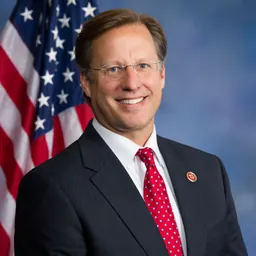






Related people
Same field, nearest in time
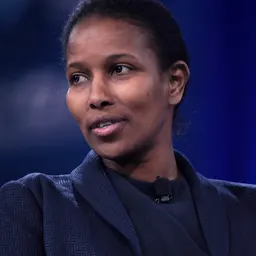
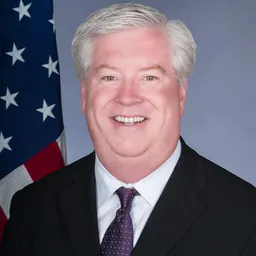


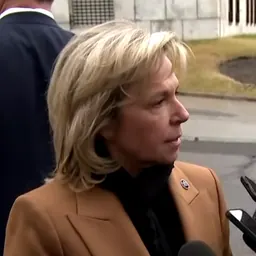
Contemporaries
People whose lives overlapped Abigail Spanberger's




Frequently asked questions
Who is Abigail Spanberger?
American politician and former intelligence officer (born 1979)
When was Abigail Spanberger born?
Abigail Spanberger was born on 7 August 1979 in Red Bank.
What is Abigail Spanberger's occupation?
Abigail Spanberger is a politician, postal inspector, intelligence officer and consultant.
What nationality is Abigail Spanberger?
Abigail Spanberger is American.
Sources & further reading
· Wikipedia: Abigail Spanberger
Cite this page
APA: Biography.guide. (2026). Abigail Spanberger. https://biography.guide/abigail-spanberger/
MLA: "Abigail Spanberger." Biography.guide, https://biography.guide/abigail-spanberger/.
Chicago: "Abigail Spanberger." Biography.guide. https://biography.guide/abigail-spanberger/.
Data last updated: 2026-09-20 · Spot an error? Report a correction.
Page generated 2026-09-27 05:24 UTC