
About Abena Oduro
Born 1959. Abena Oduro is a Ghanaian economist, known for Gender analysis and International economics.
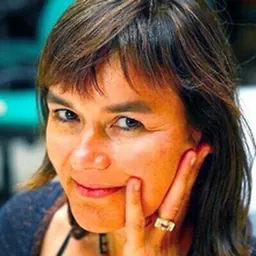
Abena Frempongmaa Daagye Oduro (born 10 February 1959) is the Vice Dean of the Faculty of Social Science at the University of Ghana where she also holds the position of Associate Professor of the Department of Economics. Having had 30 years of experience teaching, her areas of specialization are centred around gender and asset management, international economics, poverty analysis, macroeconomic theory and trade policy. Abena Oduro is the first Vice President of the Association for the Advancement of African Women Economists (AAAWE) where Professor of Economics in University of Kansas, Elizabeth Asiedu, is the founder and president. She is also the president elect of the International Association for Feminist Economics (IAFFE), her tenure will be 2021 to 2022.
Education Abena Oduro, a Ghanaian national, obtained her O-levels and A-levels at Aburi Girls Secondary School and Wesley Girls High School respectively, both located in Ghana. In 1978, she went on to further her education at the University of Glasgow, where she received an M.A.(Hons) First Class in Political Economy and Geography. She then stayed on in the University of Glasgow to obtain an M.Litt in Economics in 1982 and started her PhD program (1983–1987) which she did not complete. Oduro was awarded for her academic performance through The Royal Scottish Geographical Medal for Outstanding Performance (1982) and the University of Glasgow Scholarship (1983). and the Co-Director for the Merian Institute for Advanced Studies in Africa (MIASA) which is an organization setup to create a platform for scholars within the Social Science field in Sub Saharan Africa to share and popularize their research. She is also the associate editor of Feminist Economics and a co-editor for the Engendering Economic Policy in Africa issue (2015).
Oduro is part of the African Economic Research Consortium, American Economic Association and the International Association for Feminist Economics where she holds active membership roles in all of these groups respectively.
"Ethnicity and Wage Determination in Ghana" (2000) In this paper, Oduro and Abigail Barr explore the relationship between a worker's ethnic group and their earnings. They also investigate any forms of pay discrimination by virtue of relations between the worker and the employer, ethnic group and their work experience. This research is part of the World Bank's Policy Research under "The Economics of Ethnicity and Entrepreneurship in Africa." Their findings saw that there were pay differentials by ethnic group- the Northerners were typically earning less mainly because of the average level of education people from that part of Ghana have in a lifetime thereby reducing their earning power and employment mobility. Their paper also showed that relatives of employers were also paid more and there is a preference of inexperienced workers from the same ethnic group than other ethnic groups.
"Gendered Paths to Asset Accumulation: Markets, Savings and Credit in Developing Countries" (2019) This paper, written by Carmen Diana Deere, Abena Oduro, Hema Swaminathan, Zachary Catanzarite and J.Y. Suchitra, was published in the Feminist Economics journal and explores the gender disparity in asset ownership and accumulation. Funding and owning assets such as houses, land, real estates, businesses and agriculture have shown to be more difficult for women than it is for men in the case study countries which are Ecuador, Ghana and Karnataka, India. Abena Oduro provides her research findings within the Ghanaian context which share the same aforementioned trend and problems. The paper suggests that, in order to bridge this gap in capital and land accumulation, there is a need to promote financial inclusion which focuses on both savings and credits.
"Closing the Gender Gaps in Ghana" (2017) Abena Oduro and Charles Ackah explore gender gaps in asset accumulation, education and employment through a historical sense. They propose that although there have been policy changes to address this issue, they have not been effective enough to cause a dramatic change especially in educational levels of women in Ghana. With respect to wages, there is a fairly large gender wage gap especially when taking into account domestic work of women. Oduro and Ackah propose the need to have stronger policies centred around changing values and certain cultural norms to address this problem and reduce this gender gap.
Notable conferences and seminars Oduro has held talks at the International Association for Feminist Economics on:
Teaching African women in the development context: Home ownership in Ghana The Primacy of Gender in Education: Gender analysis of delayed enrollment in Ghana: Universal primary education Gender in Post conflict and post-shock contexts: Intra-household analysis of shocks and coping strategies: Ghana and India context Savings and Control over resources: Women who save comparative analysis of Ecuador, Ghana and India International Trade and Migration: Gender, remittances and asset accumulation in Ecuador and Ghana
Oduro has also held seminars at the Global Studies Programme (GSP), where she spoke on:
"The Gender Gap in Asset Ownership in Ghana"
Oduro presented at a World Bank conference on the topic:
"The World Bank in Ghana", with E. Aryeetey (1996) "A Note on the Nature and Structure of Poverty" (1999) "The WTO and Agriculture: A Ghana Case Study" (2002)
Publications
Books
Papers
Report Presented to Foundation for Advanced Studies on International Development (FASID) and the African Economic Research Consortium (AERC) as part of the Africa-Asia Research & Capacity Building Network for African Development Project, AERC Nairobi. Special Paper No. 46
Chapters in books
Oduro, Abena D. (2009), "African Countries and the green box", in Oduro, Abena D.; Aryeetey, Ernest; Osei-Akoto, Isaac; Osei, Robert Darko (2010), "An investigation into the gender dimensions of taxation in Ghana", in
Journal articles
Don’t just read it —
keep it.
Full-length biographies made to live with: read them, listen on the way to work, watch them tonight.
- E-book
- Audio
- Video
Instant download · yours to keep · every purchase keeps this site free
Important facts
People in Abena Oduro's life
Named in this biography and alive at the same time

Related people
Same field, nearest in time




Contemporaries
People whose lives overlapped Abena Oduro's




Frequently asked questions
Who is Abena Oduro?
Ghanaian economist
When was Abena Oduro born?
Abena Oduro was born on 10 February 1959.
What is Abena Oduro's occupation?
Abena Oduro is an economist.
What is Abena Oduro known for?
Abena Oduro is known for Gender analysis and International economics.
What nationality is Abena Oduro?
Abena Oduro is Ghanaian.
Sources & further reading
Cite this page
APA: Biography.guide. (2026). Abena Oduro. https://biography.guide/abena-oduro/
MLA: "Abena Oduro." Biography.guide, https://biography.guide/abena-oduro/.
Chicago: "Abena Oduro." Biography.guide. https://biography.guide/abena-oduro/.
Data last updated: 2026-09-22 · Spot an error? Report a correction.
Page generated 2026-09-27 05:33 UTC