
About Abdullah el Baqui
Lived 1886 – 1952 (aged 65–66). Abdullah el Baqui was an Indian and Pakistani writer and politician.
Muhammad Abdullah al-Baqi was a Bengali Islamic scholar, writer and politician. As a member of the Central Legislative Assembly, he played an active role in the Indian independence movement. He was a prominent leader of the Ahl-i Hadith movement in North Bengal, and played a significant roles in pre-partition Ahl-i Hadith conferences.
Early life Baqui was born into a Bengali Muslim family in the village of Tubgram in Burdwan district, Bengal Province, British Raj (present-day West Bengal, India). He later migrated to the neighbourhood of Nurul Huda in Dinajpur district at an early age. He completed his primary education at the Lalbari Madrasa in Badarganj, Rangpur District. After that, he enrolled at a madrasa in Kanpur where he completed his education in Islamic studies and Arabic language.
Career In 1907, he founded the Nurul Huda Minor School and Nurul Hua Junior Madrasa. From 1951 to 1962, it became known as Nurul Huda High Madrasa. At an Islamic conference in Bogra in March 1913, he co-founded the Anjuman-i-Ulama-i-Bangala alongside Mohammad Akram Khan, Maniruzzaman Islamabadi and Muhammad Shahidullah.
Baqi was also the president of the Indian National Congress's Dinajpur branch. He took part in the Khilafat Movement and the Non-cooperation movement. Baqi was imprisoned twice for his involvement in the civil disobedience movements. In 1935, he was the president of the North Bengal Ahl-e-Hadith Conference in Haragach, Rangpur District. As a member of the Constituent Assembly of Pakistan, he contributed to the Pakistan Movement.
After the independence of Pakistan in 1947, he helped to establish the East Bengal Jamiat-e-Ahl-e-Hadith. He also associated with the Bengali language movement very early on, joining the East Bengal Language Committee and signing a twelve-member memorandum requesting the government to recognise and promote an official standardised Bengali language based on Eastern Bengali. Among those that signed the letter are Mohammad Akram Khan, Muhammad Shahidullah, Habibullah Bahar Chowdhury, Syed Muhammad Afzal, Mizanur Rahman (Deputy Minister of Education), Syed Abul Hasnat Muhammad Ismail (Deputy Inspector-General of Police), Ajit Kumar Guha, AQM Adamuddin (Professor, Naogaon Islamic Intermediate College), Abul Kalam Shamsuddin, Shamsunnahar Mahmud and Shaikh Sharafuddin (Professor, Islamic Intermediate College). Baqi also became a member of the 1st National Assembly of Pakistan and the East Pakistan Legislative Assembly. He also served as president of the Muslim League's East Bengal branch.
Don’t just read it —
keep it.
Full-length biographies made to live with: read them, listen on the way to work, watch them tonight.
- E-book
- Audio
- Video
Instant download · yours to keep · every purchase keeps this site free
Important facts
People in Abdullah el Baqui's life
Named in this biography and alive at the same time
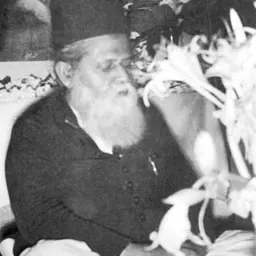



Related people
Same field, nearest in time




Contemporaries
People whose lives overlapped Abdullah el Baqui's


Frequently asked questions
Who was Abdullah el Baqui?
Bengali Islamic scholar
When was Abdullah el Baqui born?
Abdullah el Baqui was born in 1886 in Bardhaman district, Bengal Presidency, British Raj, Burdwan I.
When did Abdullah el Baqui die?
Abdullah el Baqui died on 1 December 1952 in East Bengal, Pakistan.
What was Abdullah el Baqui's occupation?
Abdullah el Baqui was a writer and politician.
What nationality was Abdullah el Baqui?
Abdullah el Baqui was Indian and Pakistani.
Sources & further reading
· Wikipedia: Abdullah el Baqui
Cite this page
APA: Biography.guide. (2026). Abdullah el Baqui. https://biography.guide/abdullah-el-baqui/
MLA: "Abdullah el Baqui." Biography.guide, https://biography.guide/abdullah-el-baqui/.
Chicago: "Abdullah el Baqui." Biography.guide. https://biography.guide/abdullah-el-baqui/.
Data last updated: 2026-09-20 · Spot an error? Report a correction.
Page generated 2026-09-27 05:20 UTC