
About Abul Kalam Shamsuddin
Lived 1897 – 1978 (aged 80). Abul Kalam Shamsuddin was a Bangladeshi, Indian and Pakistani journalist, politician and writer.
Abul Kalam Shamsuddin (3 November 18974 March 1978) was a journalist, writer and politician.
Early life Shamsuddin was born on 3 November 1897 in Trishal in the Mymensingh district of Bengal. Shamsuddin graduated from Dhaka College in 1919. He then went to Ripon College (now Surendranath College) in Kolkata for his higher studies. In 1921 he took the Upadhi examination from Gudiya Suvama Vidyayatan. He participated in Khilafat and the Non-Cooperation Movement as a student. He also was the editor of Daily Pakistan.
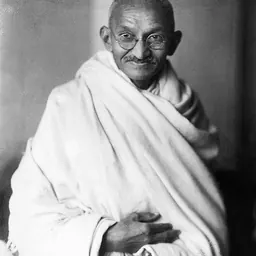
Politics Shamsuddin first took an interest in politics after the Jallianwalla Bagh Massacre in Punjab. He was inspired by Mahatma Gandhi and joined the Indian National Congress. In 1927 he joined the Muslim League. During the 1940s, while working for The Azad, he began agitating for "Purba Pakistan" , a Bengali term referring to a specific East Pakistan based upon Bengali Muslim culture. In doing so, he was often critical of the Indian National Congress, while supportive of Muhammed Ali Jinnah.
In 1946 he was elected to the Central Legislative Council. Shamsuddin became a member of Language Committee of East Pakistan Government in 1949. The editorial that he wrote criticised the police for created massive excitement among the youth.
Publications Shamsuddin wrote a number of books. He along with some other Islamist writers formed a domestic literature society named Raonok. Shamsuddin was the secretary of this 21 member society of Islamist writers. Of his books, his autobiography Atit Jiboner Smriti is considered as his masterpiece. His other works include: Podojomi Ba Anabadi Jami (1938) Trisrota (1939), storybook Kharataranga (1953), novel Anabadi Jami, Bengali translation of Turgenev's Virgin Soil Drishtikon (1961), literary criticism Natun Chin Natun Desh (1965) Digvijayi Taimur (1965) Iliad (1967), Bengali translation of Homer's ancient Greek epic poem Palashi Theke Pakistan (1968), history Atit Diner Smriti (1968), autobiography
Awards Shamsuddin received a number of awards in Pakistan and Bangladesh. In Pakistan he was awarded the Sitara-i-Khidmat in 1961 and Sitara-i-Imtiaz in 1967. In 1969 during the revolution of people he protested against the government and renounced his awards for the cause. He received the Bangla Academy Literary Award in 1970. After the independence of Bangladesh, he was honoured with the Bangladesh's highest honour, Ekushey Padak, in 1976.
Don’t just read it —
keep it.
Full-length biographies made to live with: read them, listen on the way to work, watch them tonight.
- E-book
- Audio
- Video
Instant download · yours to keep · every purchase keeps this site free
Important facts
People in Abul Kalam Shamsuddin's life
Named in this biography and alive at the same time

Related people
Same field, nearest in time



Contemporaries
People whose lives overlapped Abul Kalam Shamsuddin's


Frequently asked questions
Who was Abul Kalam Shamsuddin?
Bengali politician and journalist (1897–1978)
When was Abul Kalam Shamsuddin born?
Abul Kalam Shamsuddin was born on 3 November 1897 in Trishal Upazila.
When did Abul Kalam Shamsuddin die?
Abul Kalam Shamsuddin died on 4 March 1978.
What was Abul Kalam Shamsuddin's occupation?
Abul Kalam Shamsuddin was a journalist, politician and writer.
What nationality was Abul Kalam Shamsuddin?
Abul Kalam Shamsuddin was Bangladeshi, Indian and Pakistani.
Sources & further reading
· Wikipedia: Abul Kalam Shamsuddin
· DBpedia: Abul Kalam Shamsuddin
Cite this page
APA: Biography.guide. (2026). Abul Kalam Shamsuddin. https://biography.guide/abul-kalam-shamsuddin/
MLA: "Abul Kalam Shamsuddin." Biography.guide, https://biography.guide/abul-kalam-shamsuddin/.
Chicago: "Abul Kalam Shamsuddin." Biography.guide. https://biography.guide/abul-kalam-shamsuddin/.
Data last updated: 2026-09-20 · Spot an error? Report a correction.
Page generated 2026-09-27 05:09 UTC