
About Abdul Sattar
Lived 1931 – 2019 (aged 87–88). Abdul Sattar was a Pakistani and Indian diplomat and foreign minister.
Abdul Sattar (1931 – 23 June 2019) ( ; ), was a Pakistani political scientist, career foreign service officer, diplomat, author of foreign policy, and nuclear strategist.
Biography Foreign service career Abdul Sattar started his career in foreign service in the mid-1950s, first working closely with Agha Shahi, on foreign service issues. He was one of the foreign service diplomats assisting the implementation of the Simla Agreement in 1972. On multiple occasions, he had discussions with Munir Khan on topics involving physics and nuclear strategic issues. In the 1980s, he helped resolve possible nuclear restraint issue with India, after directing message to Munir Khan to hold meeting with Raja Ramanna in Vienna. In the 1980s, his direct involvement and assisting the government on shaping the nuclear policy resulting in declaring the official adoption of nuclear ambiguity on Pakistan's nuclear deterrence program.
In 1995, Sattar maintained that India and Pakistan's "attainment of nuclear weapons had promoted stability and prevented dangers of war despite the crises that has risen time and time...". In 1999, he provided his expertise to Government of Pakistan for negotiating the terms of Comprehensive Nuclear-Test-Ban Treaty (CTBT) and Nuclear Non-Proliferation Treaty (NPT), initially defusing the pressure on Pakistan in 1999. He was one of the earliest members in (now defunct establishment) National Security Council (NSC), a personal directive issued by Pervez Musharraf in 1999. Sattar worked on normalizing relations with the United States even as before 9/11 attacks in the United States in 2001. After the US demands to Pakistan to provide utmost co-operation on War on terror, Sattar later described the co-operation policy as: "We agreed that we would unequivocally accept all US demands, but then we would express our private reservations to the US, and we would not necessarily agree with all the details." Another notable research paper of his, "Shimla Pact: Negotiating Under Duress", was published in journals in Islamabad and New Delhi in 1995. He also contributed the section on foreign policy in the book Pakistan in Perspective 1947–1997 published by Oxford University Press on the fiftieth anniversary of Pakistan.
Critical literature
Don’t just read it —
keep it.
Full-length biographies made to live with: read them, listen on the way to work, watch them tonight.
- E-book
- Audio
- Video
Instant download · yours to keep · every purchase keeps this site free
Important facts
People in Abdul Sattar's life
Named in this biography and alive at the same time



Related people
Same field, nearest in time
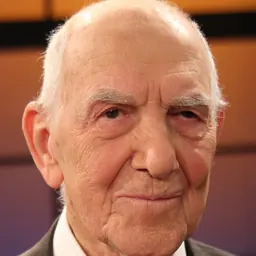
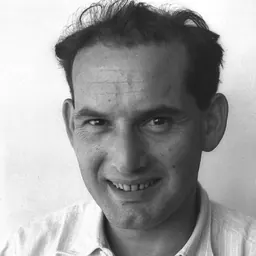
Contemporaries
People whose lives overlapped Abdul Sattar's
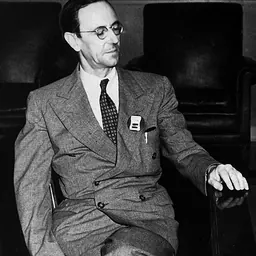
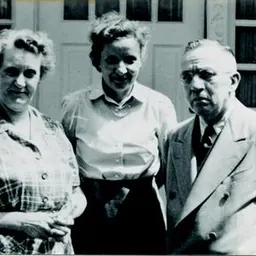

Frequently asked questions
Who was Abdul Sattar?
Pakistani diplomat
When was Abdul Sattar born?
Abdul Sattar was born in 1931.
When did Abdul Sattar die?
Abdul Sattar died on 23 June 2019 in Islamabad, Islamabad Capital Territory, Pakistan.
What was Abdul Sattar's occupation?
Abdul Sattar was a diplomat and foreign minister.
What nationality was Abdul Sattar?
Abdul Sattar was Pakistani and Indian.
Sources & further reading
· DBpedia: Abdul Sattar (diplomat)
Cite this page
APA: Biography.guide. (2026). Abdul Sattar. https://biography.guide/abdul-sattar/
MLA: "Abdul Sattar." Biography.guide, https://biography.guide/abdul-sattar/.
Chicago: "Abdul Sattar." Biography.guide. https://biography.guide/abdul-sattar/.
Data last updated: 2026-09-20 · Spot an error? Report a correction.
Page generated 2026-09-27 05:24 UTC