
Abdul Razzaq Gilani
Persian Sunni Sufi theologian and jurist
About Abdul Razzaq Gilani
Lived 1134 – 1207 (aged 72).
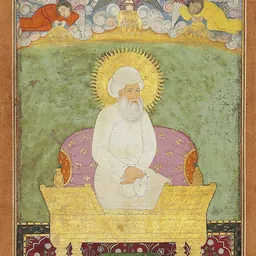
ʿAbd al-Razzāq b. ʿAbd al-Qādir al-Jīlānī (c. Dhu al-Qi'dah 528 AH – 6 Shawwal 603 AH/9 September 1134 – 7 May 1207), also known as Abū Bakr al-Jīlī or ʿAbd al-Razzāq al-Jīlānī (often simplified as Abdul-Razzaq Gilani) for short, or reverentially as Shaykh ʿAbd al-Razzāq al-Jīlānī by Sunni Muslims, was a Persian Sunni Muslim Hanbali theologian, jurist, traditionalist and Sufi mystic based in Baghdad. He received his initial training in the traditional Islamic sciences from his father, Abdul-Qadir Gilani (d. 1166), the founder of the Qadiriyya order of Sunni mysticism, prior to setting out "on his own to attend the lectures of other prominent Hanbali scholars" in his region. He is sometimes given the Arabic honorary epithet Tāj al-Dīn (Crown of the Religion) in Sunni tradition, due to his reputation as a mystic of the Hanbali school. His father Abdul Qadir Gilani was regarded as a Hasani and Husayni Sayyid, i.e. his maternal and paternal ancestry included Hasan and Husayn ibn Ali, the sons of Ali, cousin of Muhammad, and Fatimah, Muhammad's daughter.
Name His full name is, Sultan-ul-Faqr IV Abu Bakr Taj-ud-Din Shaikh Syed Abdul Razzaq Jilani, the word Syed denotes his descent from Muhammad. The name Taj-ud-Din describes him as a "crown of religion" as he was the Mufti of Iraq. The phrase, al-Jilani refers to Gilan, the place of his father's birth and he carried the family name. However, Abdul Razzaq also carried the epithet, Sultan ul Faqr IV, referring to his spiritual status. His patronymic is Abu Bakr although rarely included as part of his name.
Life He received religious and spiritual education directly from his father. He gained knowledge of hadith and Fiqh from his father, muhaddiths and a learned group of scholars. Being a Mufti of Iraq and due to his excellence as a jurist and scholar, he received the title of ‘Taj-ud-Din’ which literally means ‘the crown of religion’. He was known for his abstinence and renunciation spending most of his time in prayers and dhikr. He only met people to preach, turning many devotees into notable scholars and mystics.
Hafiz Imad-ud-Din Ibn-e-Kathir wrote: "Hazrat Abdul Razzaq was a perfectly accomplished mystic, ascetic and pious person. No one among the children of Shaikh Abdul Qadir Jillani was more learned and accomplished than he. He rejected worldly riches, status and high posts. He was least interested in worldly pleasures and always looked forward to the hereafter. He listened and learnt Hadith from many scholars and many people learnt Hadith from him".
The Incident of Celestial Beings One day Shaikh Abdul Razzaq was present in the assembly of his father. Some mysterious and invisible beings were flying across the sky. When he feared what he saw, but Abdul Qadir Gilani told him not to worry as he was one of them. Hazrat Abu Zura'a Zahir Bin Al-Muqqadas Al-Dari was reported to have said:
Descendants Syed Khair ud Din noted that Abdul Razzaq Gillani had five sons;
Syed Imaad ud deen Abu Saleh Abdullāh Nasr Jilani Syed Abul Qasim Abdul Raheem Jilani Syed Abu Muhammad Ismāeel Jilani Syed Abu Mohsin Fazlullāh Jilani Syed Jamalullāh Jilani (famous as Hayat Al Meer)
Syed Abdul Razzaq Jilani is the ancestor of the Jilanis of Afghanistan, Sindh, Khyber Pakhtunkhwa, Kashmir and in some other parts of India.
Spiritual Sufi Order The founder of the Qadiriyya, Abdul Qadir Gilani, was a respected scholar and preacher. Having been a pupil at the school (madrasa) of Abu Saeed Mubarak Makhzoomi he became the leader of this school after Makhzoomi's death in 1119. Being the new sheikh, he and his large family lived comfortably in the madrasa until his death in 1166, when his son, Abdul Razzaq, succeeded his father as the sheikh. The Qadiriyya flourished and remained an influential Sunni institution. By the end of the fifteenth century the Qadiriyya had distinct branches and had spread to present-day Morocco, Spain, Turkey, India, Ethiopia, Somalia and Mali.
On the Indian subcontinent, Sultan Bahoo spread the Qadiriyya order. His method of spreading the teachings of the Sufi doctrine of Faqr was through his Punjabi couplets and through his more than written works. He used the method of Dhikr and stressed that the way to reach Divinity was not through asceticism or excessive or lengthy prayers but through selfless love carved out of annihilation in Allah called Divine Love.
Spiritual Lineage The saintly lineage of Faqr reached Syed Abdul Razzaq Gilani in the following order: Muhammad 'Alī bin Abī Ṭālib al-Ḥasan al-Baṣrī Habib al Ajami Dawud Tai Maruf Karkhi Sirri Saqti Junaid Baghdadi Abu Bakr Shibli Abdul Aziz bin Hars bin Asad Yemeni Tamimi Abu Al Fazal Abdul Wahid Yemeni Tamimi Mohammad Yousuf Abu al-Farah Tartusi Abu-al-Hassan Ali Bin Mohammad Qureshi Hankari Abu Saeed Mubarak Makhzoomi Shaikh Abdul Qadir Gilani Shaikh Abdul Razzaq Gilani
Shaikh Abdul Razzaq Gilani led the Qadiriyya order after his father and Shaikh Abdul Razzaq Gilani granted khilafat of Faqr to his grandson Abdul Jabbar Gilani.
Works The following book is found to be Shaikh Abdul Razzaq’s work: Jala-ul-Khawatir : "(The Removal of Cares)"
Don’t just read it —
keep it.
Full-length biographies made to live with: read them, listen on the way to work, watch them tonight.
- E-book
- Audio
- Video
Instant download · yours to keep · every purchase keeps this site free
Important facts
People in Abdul Razzaq Gilani's life
Named in this biography and alive at the same time
Contemporaries
People whose lives overlapped Abdul Razzaq Gilani's






Frequently asked questions
Who was Abdul Razzaq Gilani?
Persian Sunni Sufi theologian and jurist (1134–1207)
When was Abdul Razzaq Gilani born?
Abdul Razzaq Gilani was born on 9 September 1134.
When did Abdul Razzaq Gilani die?
Abdul Razzaq Gilani died on 7 May 1207.
Sources & further reading
· Wikipedia: Abdul Razzaq Gilani
· DBpedia: Abdul Razzaq Gilani
Cite this page
APA: Biography.guide. (2026). Abdul Razzaq Gilani. https://biography.guide/abdul-razzaq-gilani/
MLA: "Abdul Razzaq Gilani." Biography.guide, https://biography.guide/abdul-razzaq-gilani/.
Chicago: "Abdul Razzaq Gilani." Biography.guide. https://biography.guide/abdul-razzaq-gilani/.
Data last updated: 2026-09-20 · Spot an error? Report a correction.
Page generated 2026-09-27 05:19 UTC