
About Abdul Rahman Munif
Lived 1933 – 2004 (aged 70). Abdul Rahman Munif was a Jordanian and Saudi economist, journalist, intellectual, literary scholar, critic and autobiographer.
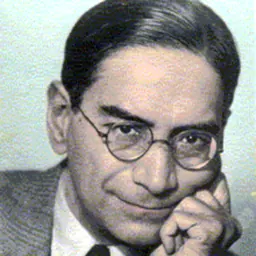
Abdul Rahman bin Ibrahim al-Munif (; May 29, 1933 – January 24, 2004), also known as Abdelrahman Munif, was a novelist, short story writer, memoirist, journalist, thinker, and cultural critic. He is considered one of the most significant authors in the Arabic language of the 20th century. His novels include strong political elements as well as mockeries of the Middle Eastern elite classes. He is best-known for Cities of Salt, a quintet of novels about how the discovery of oil transformed a traditional Bedouin culture. Munif's work offended the rulers of Saudi Arabia, which led to the banning of many of his books and the revocation of his Saudi Arabian citizenship.
Biography Munif was born in 1933 in Amman, Jordan, to a Nejdi merchant family. His grandmother was Iraqi. His Story of a City: A Childhood in Amman describes his upbringing there.
In 1952, he moved to Baghdad to study law and later moved to Cairo. He received a law degree from the Sorbonne and a PhD in oil economics from the University of Belgrade's Faculty of Economics. He later returned to Iraq to work in the oil ministry and became a member of the Ba'ath Party. During this time he edited an industry journal called al-Naft wa al-Tanmiya "Petroleum and Development".
He began writing in the 1970s after he left his job with the Iraqi ministry, quit the Ba'ath party, and moved to Damascus, Syria, removing himself from a regime he opposed. He quickly became known for his scathing parodies of Middle Eastern elites, especially those of Saudi Arabia, a country which banned many of his books and stripped him of his Saudi citizenship. He used his knowledge of the oil industry to full effect, criticizing the businessmen who ran it and the politicians they served.
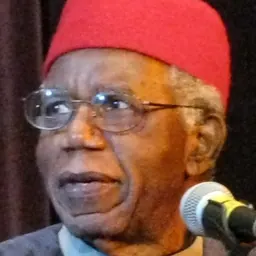
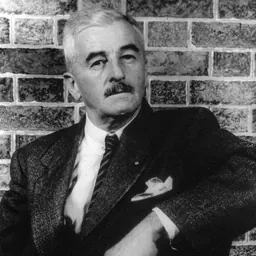
Munif was the author of fifteen novels. The Cities of Salt quintet followed the evolution of the Arabian Peninsula as its traditional Bedouin culture was transformed by the oil boom. The novels portray the history of a broad region, evoking comparisons to William Faulkner's Yoknapatawpha County. The quintet begins with Mudun al-Milh (مدن الملح, Cities of Salt, 1984), depicting the desert oasis of Wadi al-Uyoun as it is transformed and destroyed by the arrival of Western oilmen, a story similar to that of the disrupted village of Chinua Achebe's Things Fall Apart. Much as Achebe described the effects of the arrival of powerful missionaries on a traditional African village, so Munif chronicles the economic, social, and psychological effects of the promise of immeasurable wealth drawn from the deserts of nomad and oasis communities. The quintet continues with Al-ukhdud (1985;The Trench), Taqasim al-layl wa-al-nahar (1989; Variations on Night and Day), Al-munbatt (1989; The Uprooted), and Badiyat al zulumat (1989; The Desert of Darkness). Daniel Burt ranked the quintet as the 71st greatest novel of all time. The last two novels in the series have not been translated into English. In a doctoral study conducted at the University of Oxford, Suja Sawafta argues that Abdulrahman Munif was and remains the only modern Arab novelist to bridge a discursive gap between the literature and culture of the Arab Mediterranean and the Arab Gulf states, owing to his upbringing and intellectual formation in the Levant, his Saudi- Iraqi familial roots, and his work as an oil specialist in Syria and Iraq.
His first novel to appear in English was Endings. The translator claimed it was the first Saudi Arabian novel to be translated into English, and hailed its innovative portrayal of rural life and environmental challenges in an Arabic genre which had, until then, focused mostly on urban, middle-class experiences.
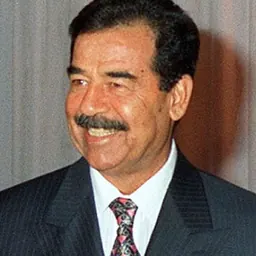
While he was one of the fiercest critics of Saddam Hussein and his regime, he was utterly opposed to the American invasion of Iraq and spent the last two years of his life working on non-fiction projects to oppose what he saw as renewed imperialism. He died in Damascus at the age of 70, of kidney and heart failure.
Don’t just read it —
keep it.
Full-length biographies made to live with: read them, listen on the way to work, watch them tonight.
- E-book
- Audio
- Video
Instant download · yours to keep · every purchase keeps this site free
Important facts
more
Abdel-Rahman Munif, Abdul Rahman MouneefPeople in Abdul Rahman Munif's life
Named in this biography and alive at the same time


Related people
Same field, nearest in time




Contemporaries
People whose lives overlapped Abdul Rahman Munif's




Frequently asked questions
Who was Abdul Rahman Munif?
Saudi writer (1933-2004)
When was Abdul Rahman Munif born?
Abdul Rahman Munif was born on 29 May 1933 in Amman.
When did Abdul Rahman Munif die?
Abdul Rahman Munif died on 24 January 2004 in Damascus.
What was Abdul Rahman Munif's occupation?
Abdul Rahman Munif was an economist, journalist, intellectual, literary scholar, critic and autobiographer.
What nationality was Abdul Rahman Munif?
Abdul Rahman Munif was Jordanian and Saudi.
Sources & further reading
· Wikipedia: Abdul Rahman Munif
Cite this page
APA: Biography.guide. (2026). Abdul Rahman Munif. https://biography.guide/abdul-rahman-munif/
MLA: "Abdul Rahman Munif." Biography.guide, https://biography.guide/abdul-rahman-munif/.
Chicago: "Abdul Rahman Munif." Biography.guide. https://biography.guide/abdul-rahman-munif/.
Data last updated: 2026-09-20 · Spot an error? Report a correction.
Page generated 2026-09-27 05:05 UTC