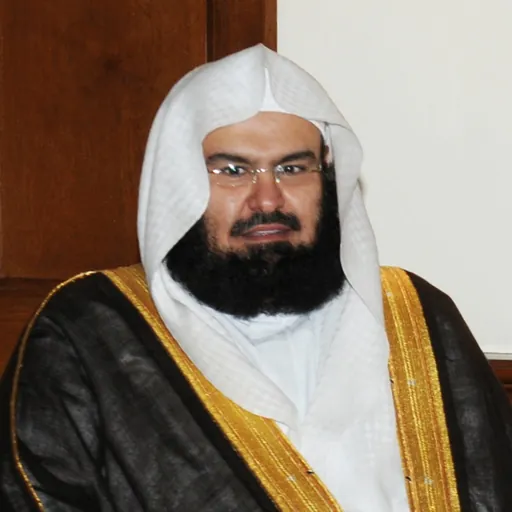
Abdul Rahman Al-Sudais
Imam and preacher at the Grand Mosque in Mecca
About Abdul Rahman Al-Sudais
Born 1962. Abdul Rahman Al-Sudais is a Saudi imam, islamic jurist and professor.
Abdul Rahman ibn Abdul Aziz al-Sudais , better known as al-Sudais, is the Chief Imam of the Grand Mosque, Masjid al-Haram in Makkah and the President of the Affairs of the Two Holy Mosques. A renowned Qāriʾ; In 2005 he was chosen the Dubai International Holy Qur'an Award's "Islamic Personality Of the Year".
Al-Sudais has preached Islam's opposition to "explosions and terrorism", and has called for peaceful inter-faith dialogue, but also been criticized for vilifying non-Muslims. He has denounced the treatment of Palestinians by Israeli settlers and the state of Israel, and called for more aid to be sent to Palestinians. In 2016, he delivered the very important Hajj sermon to a multitude of pilgrims gathered at Arafat after prayers.
Life and career Al-Sudais comes from the Anazzah clan, and he had memorized the Quran by the age of 12.
Al-Sudais with Indian Health Minister Ghulam Nabi Azad in 2011.
From 2010 to 2012, he visited India, Pakistan, Malaysia and Britain. Among his activities was hosting a seminar at the Higher Institute for Advanced Islamic Studies in Malaysia in 2011, where he spoke about Islamic civilization against the backdrop of modern challenges. He is also a member of the Arabic Language Academy at Mecca.
Abdul Razzaq al-Mahdi, Nabil al-Awadi, Tariq Abdelhaleem, and Hani al-Sibai who are linked to al-Qaeda, in addition to others like Adnan al-Aroor, Abd al-Aziz al-Fawzan, Mohamad al-Arefe, Abdul Rahman al-Sudais, Abdul-Aziz ibn Abdullah al-Shaykh and others were included on a death list by ISIS.
In 2017, al-Sudais supervised the film One Day in the Haram, a film about the Haram in Makkah, told through the eyes of the workers.
Views, statements, prayers
Conflict resolution among Muslims In 2003, Sudais stated that he believes that youth need to be taught Islamic law, including the precepts of the prohibition on killing oneself and the prohibition against attacking non-Muslims living in Islamic countries. Sudais has also said that Islamic youth should not "indiscriminately hurl the label of atheism and not to confuse between legitimate jihad and...the terrorizing of peaceable people."
Sudais has said that there is no room for extremism and sectarianism in Islam and that Islam teaches a moderate path. He said the solution to problems that Muslims face in Palestine, Somalia, Iraq, Kashmir, Yemen and Afghanistan lies in following the teachings of Islam in letter and spirit. He called for resolution of conflicts through dialogue and negotiations taking into consideration the social and economic benefits that can be achieved by resolving these disputes.
Sudais also criticized the Lal Masjid administration during the 2007 Red Mosque crisis in Islamabad, Pakistan. He urged the militants and the government to agree to a peaceful resolution through dialogue and urged both parties to protect peace.
Sudais is also known for his sermons calling on believers to help other Muslims in war-torn regions. and the behavior of women in the kingdom who allegedly were "unveiling, mingling with men, and being indifferent to the hijab".
Prayers for inter-faith peace In June 2004, Sudais led a following of 10,000 in prayers for inter-faith peace and harmony in London. Racial Equality Minister Fiona Mactaggart attended Sudais' sermon at the East London Mosque. Prince Charles, who was in Washington, took part by a pre-recorded message
Remarks on Jews In his sermon of April 19, 2002, broadcast on Saudi 1, al-Sudais referred to the story in the Quran 2:65 which the Jews turned into "monkeys and pigs". Read the history and you will know that yesterday's Jews were bad predecessors and today's Jews are worse successors. They are killers of prophets and the scum of the earth. God hurled his curses and indignation on them and made them monkeys and pigs and worshippers [sic] of tyrants. These are the Jews, a continuous lineage of meanness, cunning, obstinacy, tyranny, evil, and corruption....May God's curses follow them until the Day of Judgement....Thus, they deserve the curse of God, His angels, and all people. In 2007, Sudais prayed to God to "terminate" the Jews and has claimed that the Israelis aspired to tear down the al-Aqsa mosque and build their temple upon its ruins. The sermon came just a few weeks after the UAE normalized relations with Israel.
Call for all-out war against Iran On 31 March 2015, an audio recording of al-Sudais was circulated online, accompanied by a photo with a caption stating "Imam of the grand mosque in Mecca calls for all-out war against Shiites." In the recording al-Sudais called for an all-out war against the Shia:
In view of these statements by al-Sudais, Ahmed Abdul Hussein, the editor-in-chief of an Iraqi news agency, stated, "Remember the date 3/31/2015, the day the Shiite-Sunni war was announced. It will last more than crusade wars."
Controversy
Antisemitism Following his 2002 speech, al-Sudais has been described as an antisemite for publicly praying to God to 'terminate' the Jews, whom he called "the scum of humanity... the rats of the world... prophet killers... pigs and monkeys",
In a May 2003 interview with NBC's Tim Russert, the foreign policy adviser to the Saudi crown prince, Adel al-Jubeir, confirmed Al-Sudais's statements, agreed that they were "clearly not right", and stated that he was reprimanded, but was still allowed to preach. He also said that "if he [Sudais] had a choice he would retract these words – he would not have said these words."
Al-Sudais has not only criticised Jews, but other non-Muslims, such as Hindus and Christians. John Ware on the BBC program Panorama entitled "A Question of Leadership" from August 21, 2005, cited Al-Sudais referring to Christians as "cross-worshippers" and Hindus as "idol worshippers". The council urged caution, and while condemning any form of antisemitic remarks, requested verification that these words were indeed spoken by al-Sudais. After a series of exchanges, the BBC's Panorama editor, Mike Robinson, posted a response to each of the Muslim Council's allegations, accusing them of "unwarranted and wildly inaccurate attacks" and "bad faith allegations".
In August 2009, the Board of Deputies of British Jews protested a visit by al-Sudais to Britain in which he gave lectures at several mosques and attended an event with Tory MP Tony Baldry. Baldry subsequently defended his decision to work with al-Sudais, stating that "If I had written a text of what a moderate Muslim would say, his would have been a word-perfect example."
Don’t just read it —
keep it.
Full-length biographies made to live with: read them, listen on the way to work, watch them tonight.
- E-book
- Audio
- Video
Instant download · yours to keep · every purchase keeps this site free
Important facts
People in Abdul Rahman Al-Sudais's life
Named in this biography and alive at the same time




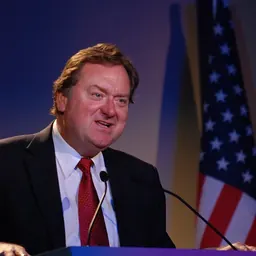
Related people
Same field, nearest in time
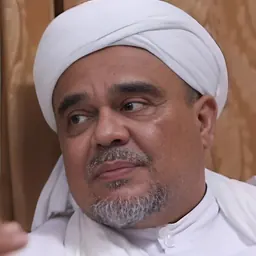

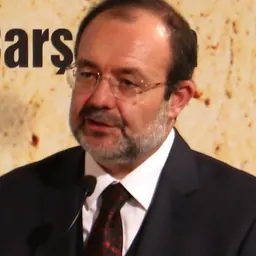
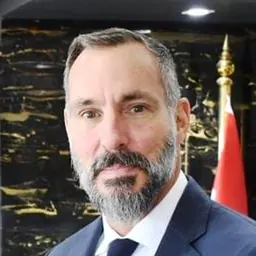
Contemporaries
People whose lives overlapped Abdul Rahman Al-Sudais's





Frequently asked questions
Who is Abdul Rahman Al-Sudais?
imam and preacher at the Grand Mosque in Mecca
When was Abdul Rahman Al-Sudais born?
Abdul Rahman Al-Sudais was born on 22 November 1962 in Ral.
What is Abdul Rahman Al-Sudais's occupation?
Abdul Rahman Al-Sudais is an imam, islamic jurist and professor.
What nationality is Abdul Rahman Al-Sudais?
Abdul Rahman Al-Sudais is Saudi.
Sources & further reading
· Wikipedia: Abdul Rahman Al-Sudais
· DBpedia: Abdul-Rahman Al-Sudais
Cite this page
APA: Biography.guide. (2026). Abdul Rahman Al-Sudais. https://biography.guide/abdul-rahman-al-sudais/
MLA: "Abdul Rahman Al-Sudais." Biography.guide, https://biography.guide/abdul-rahman-al-sudais/.
Chicago: "Abdul Rahman Al-Sudais." Biography.guide. https://biography.guide/abdul-rahman-al-sudais/.
Data last updated: 2026-09-20 · Spot an error? Report a correction.
Page generated 2026-09-27 05:10 UTC