
About Abdul Muis
Lived 1883 – 1959 (aged 75). Abdul Muis was an Indonesian journalist, politician and writer.
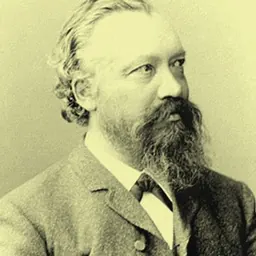
Abdul Muis (also spelt Abdoel Moeis; 1886–1959), was an Indonesian writer, journalist and nationalist. He advocated for Indonesia's independence from the Netherlands. He was the first person to be named an Indonesian national hero.
Biography Born in Sungai Puar in 1886 to a leading member of the Minangkabau, Muis received a western education and studied medicine
Muis first found employment in the civil service, as a clerk at the Department of Education, but was discriminated by his Dutch colleagues, leaving in 1905, switching to journalism and becoming involved in nationalist publications such as Kaoem Moeda, a paper he co-founded in 1912.
Muis ran into trouble with the Dutch administration a number of times. He was arrested in 1919 following the murder of a Dutch Controleur in North Sulawesi just after Muis had completed a speaking tour there. The Western-oriented Hanafi and the feisty, liberal Corrie represent the conflict pre-independent Indonesia faced in choosing either to adhere to traditional values, or to adopt Western notions of modernity. The novel was one of several Indonesian classics to be included in the Indonesian Cultural Heritage Series published by Balai Pustaka in 2009. and, in 2010, an English translation (Never the Twain) was also published by the Lontar Foundation as part of the Foundation's Modern Indonesia Series. Muis also published three other major novels, among them Pertemuan Jodoh (The Destined Marriage Partners), published in 1932, and four novels in Indonesian translation.
He spent the latter part of his life in Bandung, and was involved in the establishment of the Bandung Institute of Technology. After Independence he founded Persatuan Perjuangan Priangan, the focus of which was the development of West Java and the Sundanese.
Muis died in Bandung in 1959, and is today seen as an important freedom fighter in Indonesia's history. In 1959, in recognition of his dedication to the nationalist cause he was named a national hero by President Sukarno.
Selected novels Salah Asuhan (A Wrong Upbringing), Jakarta : Balai Pustaka, 1928 Pertemuan Jodoh (The Destined Marriage Partners), Jakarta : Balai Pustaka, 1932 Surapati, Jakarta : Balai Pustaka, 1950 Hendak Berbakti, Jakarta, 1951 Robert Anak Surapati, Jakarta : Balai Pustaka, 1953
Don’t just read it —
keep it.
Full-length biographies made to live with: read them, listen on the way to work, watch them tonight.
- E-book
- Audio
- Video
Instant download · yours to keep · every purchase keeps this site free
Important facts
People in Abdul Muis's life
Named in this biography and alive at the same time
Related people
Same field, nearest in time



Contemporaries
People whose lives overlapped Abdul Muis's


Frequently asked questions
Who was Abdul Muis?
Indonesian writer, journalist and nationalist (1883-1959)
When was Abdul Muis born?
Abdul Muis was born on 3 July 1883 in Sungai Puar.
When did Abdul Muis die?
Abdul Muis died on 17 June 1959 in Bandung.
What was Abdul Muis's occupation?
Abdul Muis was a journalist, politician and writer.
What nationality was Abdul Muis?
Abdul Muis was Indonesian.
Sources & further reading
Cite this page
APA: Biography.guide. (2026). Abdul Muis. https://biography.guide/abdul-muis/
MLA: "Abdul Muis." Biography.guide, https://biography.guide/abdul-muis/.
Chicago: "Abdul Muis." Biography.guide. https://biography.guide/abdul-muis/.
Data last updated: 2026-09-20 · Spot an error? Report a correction.
Page generated 2026-09-27 05:32 UTC