
Abdul Basit 'Abd us-Samad
Quran reciter
About Abdul Basit 'Abd us-Samad
Lived 1927 – 1988 (aged 60–61). Abdul Basit 'Abd us-Samad was an Egyptian qāriʾ.
'Abdul Basit 'Abd us-Samad (1927 – 30 November 1988) was an Egyptian Quran reciter and Hafiz. He is part of a quadrumvirate, along with Siddiq Al-Minshawi, Mustafa Ismail, and Al-Hussary, which are considered to be the most important and famous Qurra of modern times to have an outsized impact on the Islamic World. He was the first president of the Reciter's union in Egypt. He is known by the titles 'Golden Throat', 'A voice from Heaven' and 'Voice of Mecca' due to his melodious style, breath control, and unique emotional and engaging tone.
Early life Abdul Basit Abdul Samad was born in 1927 to an Saīdi Upper Egyptian family, in Armant, Egypt. From a very early age, he was committed with the memorization and recitation of the Quran. His grandfather, Sheikh Abdul Samad, was a popular reciter in Upper Egypt and he was well-known for his memorization of the Quran and also his ability to memorize the Quran according to tajwid.
Abdul Basit Abdul Samad had two elder brothers, Mahmoud and Abdul Hamid, who studied Quranic memorization at a madrasa. He joined them at the age of six. His teacher observed that Abdul Basit demonstrated a strong aptitude for memorization, as well as attentiveness to Tajwid. The teacher also recognized his vocal ability and talent for Quranic recitation. They both agreed and sent him to the city of Tanta (Lower Egypt) to study the Quranic recitations under the tutelage of Sheikh Muhammad Salim, a well known teacher of recitation of that time.
When Abdul Basit reached the age of twelve, he was requested from all the cities and villages of Qena Governorate Egypt, especially Asfun Al-Matanah, with the help of Sheikh Muhammad Salim, who recommended Abdul Basit everywhere he went, as Sheikh Salim's testimony was trusted by all people.
Following this event, Abdul Basit considered applying to the national radio station as a Qur’an reciter, though he initially hesitated due to his background in Upper Egypt. He later decided to pursue the opportunity and, in 1951, was appointed as a Qur’an reciter for Egyptian radio. 1960, Moscow: Accompanied President Gamal Abdel Nasser on his visit to the Soviet Union and became the first Qari to recite the Quran in the Kremlin. 1961, Morocco: Spent a month during Ramadan visiting at the invitation of King Mohammed V, who offered him Moroccan citizenship and position as a reciter at the royal court, both of which he declined. The visits reflected his close personal relationship with the king, reinforced Egypt–Morocco ties, and were widely celebrated by Egyptian media. Pakistan: Made several visits during his career, including 1961 and 1987 recitations at the Badshahi Mosque in Lahore, and a 1967 performance in the presence of Sheikh Khalil al-Husary. 1963, Algeria: Visited post-independence Algeria, where he was received by President Ahmed Ben Bella at Martyrs’ Square in Algiers and recited at the Ketchaoua Mosque following its rededication from a cathedral. 1966, South Africa: Arrived in Johannesburg after a year of preparation by the local Islamic community; his performances included Surah Al-Hujurat (verse 13) which carried a subtle social message, while he maintained an apolitical stance during his one-month visit. 1980, India: Visited Darul Uloom Deoband during its centenary celebrations, reciting the Quran before audiences including Prime Minister Indira Gandhi. thumb Abdul Basit 'Abd us-Samad reciting at Centenary Celebration of Darul Uloom Deoband, with former Prime Minister of India Indira Gandhi in the background. 1985, Paris, France: Held a one-hour event at the Palais de Congrès Theater attended by approximately 4,000 people, half of whom were non-Muslims and the rest French Muslims, Moroccans, Tunisians, and Egyptians; he noted in interviews that he wore a suit for the first time in his life to move around the city discreetly. National Order of the Cedar from Lebanon The Order of Merit from the Senegalese President in 1975. The Order of Scholars from Pakistani President Zia-ul-Haq in 1984. Order of Merit (Egypt) from the former Egyptian President Hosni Mubarak during the celebration of the Day of Preachers in 1987. The Golden Medal from Malaysia. A Medal from the Prime Minister of Syria in 1959. A Medal from the Prime Minister of Malaysia in 1965. The Golden Medal from Pakistan in 1980. The Egyptian Radio Medal on its fiftieth anniversary. In 1990, he received the last honours after his departure from former President Mohamed Hosni Mubarak in the celebration of Laylat al-Qadr. He has won three world Qira'at competitions in the early 1970s.
Illness and death In his later years, Abdul Basit suffered from complications of diabetes, and over time he also developed liver problems, which made his health more difficult to manage. Less than a month before his death, he contracted hepatitis, which caused his condition to deteriorate further. He was admitted to hospital, but his doctors and family encouraged him to seek medical treatment abroad. Following their advice, he travelled to London for care and stayed there for about a week. His son Tareq accompanied him during this time and was eventually advised to bring him back to Egypt as his health continued to decline.
He died on Wednesday, November 30, 1988. His funeral prayer was held the following day, after Zuhr Prayer. The attendants of his funeral included ambassadors of various countries, as well as kings and heads of state. He was laid to rest in City of the Dead near the Mausoleum Imam Shafi, Egypt.
Children and Legacy Abdul Basit was survived by his three sons: Yasir, Hisham, and Tareq. Yasir and Tareq pursued careers as Qurrā, following their father’s path in Qur’anic recitation. Tareq Abdul Basit also gave several interviews about his father’s life and career. In 2006, a mosque in his hometown of Armant, in the Luxor Governorate, was inaugurated in his name.
Don’t just read it —
keep it.
Full-length biographies made to live with: read them, listen on the way to work, watch them tonight.
- E-book
- Audio
- Video
Instant download · yours to keep · every purchase keeps this site free
Important facts
more
‘Abdul-Basit ‘Abdus-Samad, Golden throat, Golden voice, Abd El-Baset Abd El-Samad, Voice of HeavenPeople in Abdul Basit 'Abd us-Samad's life
Named in this biography and alive at the same time

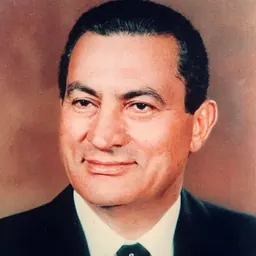
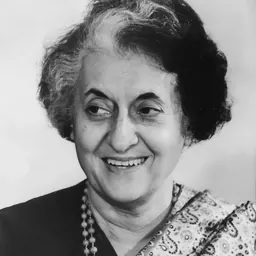
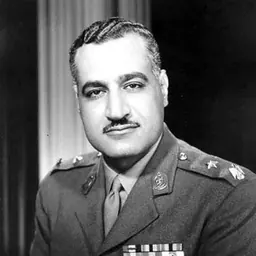

Related people
Same field, nearest in time
Contemporaries
People whose lives overlapped Abdul Basit 'Abd us-Samad's


Frequently asked questions
Who was Abdul Basit 'Abd us-Samad?
Quran reciter (1927–1988)
When was Abdul Basit 'Abd us-Samad born?
Abdul Basit 'Abd us-Samad was born in 1927 in Armant.
When did Abdul Basit 'Abd us-Samad die?
Abdul Basit 'Abd us-Samad died on 30 November 1988 in Agouza.
What was Abdul Basit 'Abd us-Samad's occupation?
Abdul Basit 'Abd us-Samad was a qāriʾ.
What nationality was Abdul Basit 'Abd us-Samad?
Abdul Basit 'Abd us-Samad was Egyptian.
Sources & further reading
· Wikipedia: Abdul Basit 'Abd us-Samad
· DBpedia: Abdul Basit 'Abd us-Samad
Cite this page
APA: Biography.guide. (2026). Abdul Basit 'Abd us-Samad. https://biography.guide/abdul-basit-abd-us-samad/
MLA: "Abdul Basit 'Abd us-Samad." Biography.guide, https://biography.guide/abdul-basit-abd-us-samad/.
Chicago: "Abdul Basit 'Abd us-Samad." Biography.guide. https://biography.guide/abdul-basit-abd-us-samad/.
Data last updated: 2026-09-20 · Spot an error? Report a correction.
Page generated 2026-09-27 05:25 UTC