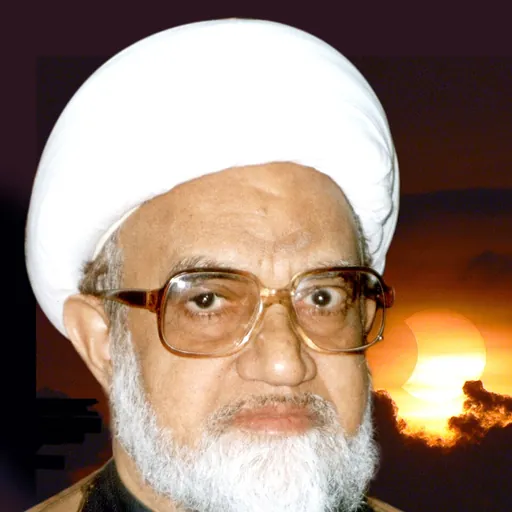
About Abdul Amir al-Jamri
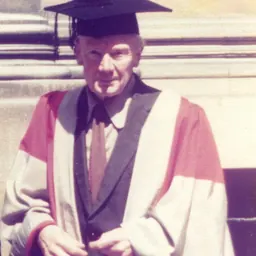
Lived 1938 – 2006 (aged 68). Abdul Amir al-Jamri was a religious leader.
Sheikh Abdul Amir al-Jamri ( ; ; 1 March 1938 – 18December 2006) was one of the most prominent Shia clerics and opposition leaders in Bahrain. He was also a writer and a poet.
Born in the village of Bani Jamra, al-Jamri became a Hussaini khatib (Shia preacher) after finishing primary school. At the age of 21, he began his Islamic studies, first in Bahrain and later in the religious institute of Al Najaf, Iraq, where he remained for 11 years. He returned to Bahrain in 1973 and was elected to the newly formed parliament. The parliament was dissolved two years later by the Emir, Isa bin Salman al-Khalifa, after it had rejected the State Security Law. In 1977, al-Jamri was appointed as a judge at the High Religious Court of Bahrain. He held the position until 1988, when he was briefly arrested due to his criticism of the government.
Al-Jamri is most notable for his role during the 1990s uprising in Bahrain. As the lead figure of the opposition, he succeeded in bringing Islamists, liberals and leftists together against the monarchy. The events began in the form of petitions in 1992 and 1994 calling for restoration of the parliament and reinstatement of the suspended constitution, but led to widespread violence and the death of 40 individuals. Due to his civil rights activity, al-Jamri was imprisoned between April and September 1995, before being arrested again in January 1996 and imprisoned until July 1999, which was followed by a year and a half of house arrest.
In January 2001, al-Jamri was released along with other opposition activists. The new emir, Hamad bin Isa Al Khalifa, proposed a reform plan, the National Action Charter of Bahrain, which was accepted by the opposition and later gained widespread popular support. A year later, Hamad issued a new constitution which al-Jamri said fell short of the opposition's demands. Disappointed, al-Jamri soon fell ill, suffering from a series of strokes and eventually dying of multiple organ failure.
Early life and Islamic studies
Al-Jamri was born in the village of Bani Jamra, Northern Bahrain, on 1 March 1938. His father (known as Mansoor or Nasir) was a Quranic teacher, owner of a textile workshop, Al-Jamri's father taught him the Quran and basics of Islamic prayer when he was six, although died four years later. learning from other well-known khatibs in his village such as his cousin, the Shia khatib Mulla Atiya al-Jamri. In his book The Story of My Life, al-Jamri devoted a section to speak about his marriage, in which he described it as a happy one and praised his wife for her patience and loyalty. One of their sons is Mansoor Al-Jamri, editor-in-chief of Al-Wasat newspaper. The pseudonym also helped him evade Iraq's Ba'athist regime of Saddam Hussein following an anti-Ba'athist speech which al-Jamri gave in 1970. Spending 11 years in Iraq, al-Jamri returned to Bahrain in 1973. Like his study colleague Isa Qassim, al-Jamri initially wanted to complete his religious studies and did not care much about politics. by the Emir, Isa bin Salman al-Khalifa, after it had rejected the State Security Law. Al-Jamri was a member of a foreign relations committee,
Violence broke out in June 1994 when riot police used tear gas on 1,500 demonstrators who had organised a sit-in in front of the Ministry of Labor. The protesters were campaigning against the increasing rate of unemployment, which had reached 15 percent. Al-Jamri, himself a Shia Islamist, had good relations with secular and liberal opposition forces and united them into "an effective opposition movement". That day became known locally as the Black Saturday. The arrests provoked further unrest. Al-Jamri was sentenced to 10 years imprisonment and fined BD5.7 million (US$15 million). led campaigns in solidarity with al-Jamri. The latter also named him a prisoner of conscience.
Release, reconciliation and disappointment
Emir Isa bin Salman died suddenly on 6 March and was succeeded by his eldest son, Hamad bin Isa al Khalifa. The new emir pardoned al-Jamri and released him a day after his conviction (8 July), but placed him under house arrest until 23 January 2001. Repeated meetings between commissioners of the Emir and al-Jamri were held during the house arrest period.
The Charter called for the introduction of a constitutional monarchy, an independent judiciary, and a bicameral legislature composed of a lower house of elected representatives and an upper house of appointed legislators. The Charter also granted equal rights between men and women, and recognised all Bahraini citizens as having equal political rights, including the entitlement to elections and political candidacy. In the 8 February meeting, the government promised that "the new political arrangements will not invalidate the 1973 constitution and that the upper appointed house will be for consultation only." The next day, after leading Friday prayer, al-Jamri delivered a famous speech, starting with "Allah is my witness, I have missed you as much as Jacob missed Joseph", before Abdulwahab announced that the opposition had decided to accept the reform plan. The National Action Charter was voted on in a referendum on 14 and 15 February, gaining massive popular support (98.4%). but shortly after suffered a second stroke, resulting in internal bleeding, where his medical condition improved slightly. His medical condition deteriorated again as he suffered from repeated respiratory problems and another stroke, and in the end he lost the ability to speak. The cause of death was heart and kidney failure. The funeral course was changed several times.
Publications Al-Jamri wrote several books and poems (in Arabic). His books include: Women in Islam Islamic Duties Islamic Teachings The Story of My Life
Don’t just read it —
keep it.
Full-length biographies made to live with: read them, listen on the way to work, watch them tonight.
- E-book
- Audio
- Video
Instant download · yours to keep · every purchase keeps this site free
Important facts
People in Abdul Amir al-Jamri's life
Named in this biography and alive at the same time



Related people
Same field, nearest in time


Contemporaries
People whose lives overlapped Abdul Amir al-Jamri's



Frequently asked questions
Who was Abdul Amir al-Jamri?
Bahraini opposition leader and Shia cleric (1938–2006)
When was Abdul Amir al-Jamri born?
Abdul Amir al-Jamri was born on 1 March 1938 in Bani Jamra.
When did Abdul Amir al-Jamri die?
Abdul Amir al-Jamri died on 18 December 2006.
What was Abdul Amir al-Jamri's occupation?
Abdul Amir al-Jamri was a religious leader.
What nationality was Abdul Amir al-Jamri?
Abdul Amir al-Jamri's recorded nationality: Bahrain.
Sources & further reading
· Wikipedia: Abdul Amir al-Jamri
· DBpedia: Abdul Amir al-Jamri
Cite this page
APA: Biography.guide. (2026). Abdul Amir al-Jamri. https://biography.guide/abdul-amir-al-jamri/
MLA: "Abdul Amir al-Jamri." Biography.guide, https://biography.guide/abdul-amir-al-jamri/.
Chicago: "Abdul Amir al-Jamri." Biography.guide. https://biography.guide/abdul-amir-al-jamri/.
Data last updated: 2026-09-23 · Spot an error? Report a correction.
Portrait: Wikimedia Commons · author & licence
Page generated 2026-09-27 05:07 UTC