
About Abdol-Hossein Farmanfarma
Lived 1857 – 1939 (aged 81–82). Abdol-Hossein Farmanfarma was an Iranian politician.
Abdol-Hossein Farman Farma (; 1857 – 21 November 1939) was an Iranian prince and politician. A prominent member of the Qajar dynasty as well as one of the most influential political figures in Iran during the Qajar era, he was a member of the right-wing Moderate Socialists Party, and served as the 11th prime minister of Iran from 1915 till 1916. He previously served as Iran's minister of war from 1896 till 1897, during which he took over the government as a self-appointed premier.
During his political career, Farman Farma successfully westernised the Iranian legal system of the time, establishing Iran's first office charged with drafting a judiciary law. He also established the country's first ministry of Health in 1904 and founded the Pasteur Institute of Iran in 1920, whose first action was to introduce a smallpox vaccine in the country. Farman Farma furthermore played a crucial role in the rise of Reza Shah, whose initial career started as a private under his command.
Farman Farma was Born in Tabriz to Prince Nosrat Dowleh Firouz in 1857, he was the 16th grandson of the Qajar crown prince Abbas Mirza. He fathered 26 sons and 13 daughters by 8 wives. He lived to see four sons of his first wife die within his lifetime. The wealthy Farmanieh district in the north of Tehran is named after him.
Biography
Prince Abdol-Hossein Farman Farma was born to Prince Nosrat Dowleh Firouz and Hajieh Homa Khanoum in 1858 in Tabriz, and was a grandson of the Qajar crown prince Abbas Mirza.
He was extensively educated at home by private tutors in traditional subjects such as poetry, literature, mathematics, Arabic, and religion, along with modern sciences and Western languages. In 1878, at age 21, he continued his education at the Austrian Military Academy in Tehran, where he distinguished himself as a soldier and strategist.
After the death of his father in 1885, he assumed his father's former title of "Nosrat-ed-Dowleh". In 1891, as commander of the Azerbaijani troops, he received the title "Salar Lashgar", and subsequently in 1892 he received the title "Farman Farma" upon the death of his elder brother.
In 1885 he married Ezzat ed-Dowleh Qajar, daughter of Mozaffar ad-Din Shah Qajar. Following the marriage, out of respect for Ezzat ed-Dowleh and also due to her high social rank, he took no other wives for the next twenty years.
Following the accession of Mozaffar ad-Din Shah in 1896, Farman Farma led the entourage of the new Shah from Tabriz to Tehran and firmly established himself within Iranian politics. He was appointed Commander-in-Chief of the army and Minister of War and quickly took over the government as a self-appointed premier and emerged as the real power behind the throne. It is said "he acted as the true sovereign". During this time he drafted the first laws relating to national conscription and worked towards establishing a military academy in Iran.
Farman Farma's power grab was resented by many within the court and ultimately resulted in the Shah dismissing him and assigning him to govern the province of Fars, and eventually sending him into exile in 1898. He went to Egypt, and then to Baghdad in Ottoman Mesopotamia. His wife Princess Ezzat ed-Dowleh, voluntarily followed him and stayed with him for four years until she was able to orchestrate his return to court life.
During the constitutional revolution, Farman Farma, like many of the landed aristocracy, tried to balance the demands of the constitutionalists against the royalists. His deft manoeuvring allowed him to take the post of the minister of justice in the new constitutional government. In the same year he was appointed governor general of Azerbaijan where with considerable personal courage, he took action against an incursion of Kurdish and Ottoman forces into Iran.
In 1909, Farman Farma was also appointed minister of the interior and once again as minister of justice. In his role as Minister of Justice he introduced the Western custom of secular court trials into the Iranian legal system. Farman Farma with his sister, Malek-Taj Najm-al-Saltaneh (mother of Mohammad Mossadegh). The photograph was taken at Najm-al-Saltaneh’s home by Abd-al-Hossein Khan Seghat-ol-Dowleh in 1923 In 1912, the Majlis dispatched Farman Farma as commander-in-chief of the army to reassert the authority of the constitutional government and repel royalist forces in Kurdistan and Kermanshah. In this expedition, Reza Khan, who would later become the Shah of Iran, served under Farman Farma's command. Farman Farma returned to Tehran to become the minister of interior a second time.
Throughout most of World War I, Farman Farma sided with the British and worked closely with them, receiving numerous payments and subsidies for his activities. He was awarded the Knight Grand Cross of the Order of St. Michael and St. George in 1916. During this time he also became Prime Minister, but resigned within the first three months. In his short tenure as Prime Minister, he established the Ministry of Health. He would later go on to found the Pasteur Institute of Iran in 1920 whose first action was to introduce a smallpox vaccine in the country.
The Shah appointed Farman Farma as governor general of Fars for a second time in 1916. His time in Fars coincided with a widespread famine as well as the Great Influenza Pandemic. He successfully managed both events and in the process organised Iran's first agricultural cooperative. He remained in Fars for four years until he was replaced by his nephew Dr. Mohammad Mosaddegh.
In 1921, a successful coup d'état organised by Sayad Zia-al-Din Tabatabai took place and effectively ended Qajar rule, bringing Reza Khan to power. Farman Farma was arrested with his two eldest sons, Nosrat-ed-Dowleh who was the Minister of Foreign Affairs at the time, and Abbas Mirza Salar-Lashgar. Nosrat-ed-Dowleh was a leading candidate for accession to the Qajar throne after Ahmad Shah Qajar's exile and the new government kept all three in the Qasr-e Qajar Prison until it could consolidate its power base. Farman Farma paid a significant ransom in order to secure the safe release of his two sons and himself.
After his release, Farman Farma made several gestures of support towards Reza Khan. Reza Khan had previously served under Farman Farma as head of a machine gun detachment and had earned the nickname "Reza Maxim". Perhaps uncomfortable that he had once served under Farman Farma's command, and certainly resentful of his wealth, Reza Khan did not reciprocate, and even confiscated numerous assets belonging to Farman Farma. The first being Farman Farma's family home and garden in Palace Street, Tehran. The family was given only 24 hours to vacate the colossal property, which then went on to become the primary residence of Reza Khan.
In 1937, Farman Farma's son, Nosrat-ed-Dowleh, was arrested and ultimately assassinated. The demise of Nosrat-ed-Dowleh was a deep personal blow for Farman Farma from which he never truly recovered. Farman Farma had by then retired from politics and dedicated himself to managing his estate and overseeing the education of his surviving children. He also channelled a significant portion of his personal wealth into philanthropic activities.
Farman Farma died in November 1939 at the age of 81 and is buried in the Shah Abdol-Azim Shrine. He fathered 26 sons and 13 daughters by 8 wives. One his daughters married to Mohsen Rais, a diplomat.
Historical anecdote Among the Cossacks accompanying Farman Farma during the 1912 campaign to Kermanshah was an officer known as "Reza Maksim" because he was good at maneuvering a Maxim gun. This was none other than Reza Khan Mirpanj, who would become known as Sardar Sepah, and then as Reza Khan Pahlavi, the founder of the Pahlavi dynasty. Later Reza Khan, leader of the Cossacks brigade, became involved in a British operation and shortly afterwards in a British backed coup, to establish himself as the new Shah in 1921. The once friendly relationship between Farman Farma and Reza Khan, who had once been his subordinate, became more tenuous as Reza rose in stature and power, first as minister of war and then as shah.
Name and title His full official name and title was Hazrat Aghdas Vala Shahzadeh Abdol Hossein Mirza Farman Farma. This translates approximately as "His Highness, Prince Abdol Hossein, the Eminent and Exalted One, the Greatest of All Commanders". When surnames became compulsory he took his last title as his family name, viz. Farman Farma, which literally translates as "giver of an order", and is roughly equivalent to "viceroy".
The title "Farman Farma" did not originate with Prince Abdol-Hossein Mirza Farman Farma. It was first held by his grand-uncle Hossein Ali Mirza Farman Farma, a son of Fath-Ali Shah Qajar. Prince Abdol Hossein's father, Prince Firouz, would battle his own uncle, Prince Hossein Ali Farman Farma, in support his brother Prince Mohammad (later Mohammad Shah Qajar) and win the right to the succession for Prince Mohammad. Forty years later, Naser al-Din Shah, Firouz Mirza's nephew, would bestow the title Farman Farma on Prince Firouz in gratitude for his role in consolidating the succession to the Qajar (Kadjar) throne. The title Farman Farma then passed on to his son Prince Abdol Hossein Mirza, during the reign of Naser ed-Din Shah. Naser ed-Din Shah and Prince Abdol Hossein were cousins, but Naser ed-Din Shah was about thirty years his senior. Only Prince Abdol Hossein carried the title "Farman Farma", while most of his offspring carry the family name derived from the former title "Farman Farmaian" (lit. Those belonging to Farman Farma). His elder son Firouz Nosrat-ed-Dowleh III however chose the family name "Firouz", which is carried by his offspring.
Non-Persian honors He was awarded the following honors outside of Iran: Knight Grand Cross of the Order of St Michael and St George (British) ) Minister of Justice (1907), (1909) Minister of War (1896–1897) Minister of Interior (1910), (1915) Prime Minister (1915–1916)
Don’t just read it —
keep it.
Full-length biographies made to live with: read them, listen on the way to work, watch them tonight.
- E-book
- Audio
- Video
Instant download · yours to keep · every purchase keeps this site free
Important facts
People in Abdol-Hossein Farmanfarma's life
Named in this biography and alive at the same time


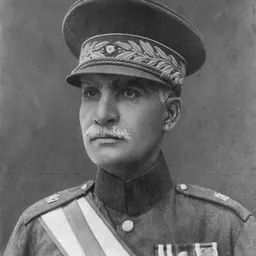
Related people
Same field, nearest in time
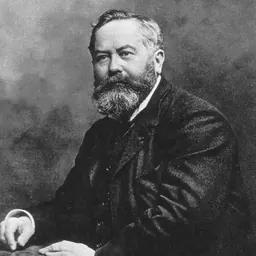

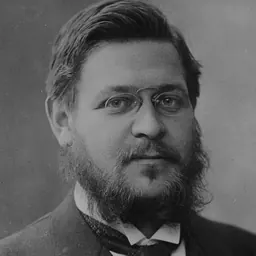

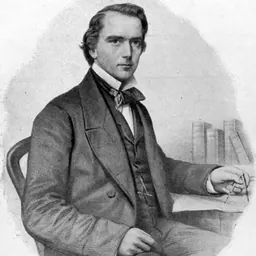
Contemporaries
People whose lives overlapped Abdol-Hossein Farmanfarma's






Frequently asked questions
Who was Abdol-Hossein Farmanfarma?
Qajar prince (1857-1939)
When was Abdol-Hossein Farmanfarma born?
Abdol-Hossein Farmanfarma was born in 1857 in Tabriz.
When did Abdol-Hossein Farmanfarma die?
Abdol-Hossein Farmanfarma died on 21 November 1939 in Tehran.
What was Abdol-Hossein Farmanfarma's occupation?
Abdol-Hossein Farmanfarma was a politician.
What nationality was Abdol-Hossein Farmanfarma?
Abdol-Hossein Farmanfarma was Iranian.
Sources & further reading
· Wikipedia: Abdol-Hossein Farmanfarma
· DBpedia: Abdol-Hossein Farman Farma
Cite this page
APA: Biography.guide. (2026). Abdol-Hossein Farmanfarma. https://biography.guide/abdol-hossein-farmanfarma/
MLA: "Abdol-Hossein Farmanfarma." Biography.guide, https://biography.guide/abdol-hossein-farmanfarma/.
Chicago: "Abdol-Hossein Farmanfarma." Biography.guide. https://biography.guide/abdol-hossein-farmanfarma/.
Data last updated: 2026-09-20 · Spot an error? Report a correction.
Page generated 2026-09-27 05:25 UTC