
About Abd Allah ibn Sa'ad
Lived 650 – 656 (aged 5–6). Abd Allah ibn Sa'ad was a military leader and wali.
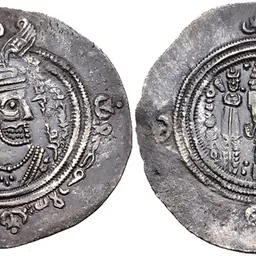
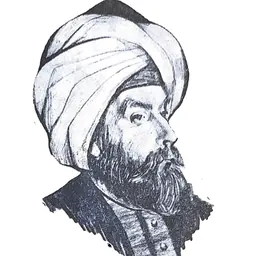
Abd Allah ibn Sa'd ibn Abi al-Sarh was an Arab administrator, scribe, and military commander, who was an early convert to Islam. He was a scriber of the Quran (كاتب الوحي) and governor of Upper Egypt for the Muslim caliphate during the reign of ʿUthmān (644–656). He was also the co-founder (with the future caliph Muʿāwiyah I) of the Islamic navy which seized Cyprus (647–649) and defeated a Byzantine fleet off Alexandria in 652.
Origin Al-Sarh came from the Banu Amir ibn Lu'ayy clan of the Quraish tribe and was an adopted brother of the caliph Uthman. Abi Saleh, narrated from Ibn Abbas, recorded that:
"the Messenger of Allah invited him so that he could write him the revelation, so when the verse 23:12 ("And certainly did We create man from an extract of clay") was revealed, the Prophet called Ibn Abi al-Sarh, and dictated it to him and when the Prophet reached the end of 23:14 ("...Thus, We formed him into a new creation") Abdullâh said in amazement ("فتبارک اللّٰہ احسن الخالقین So blessed be Allah, the Best of creators!"). The Prophet said:" Write these words too (i.e., فتبارک اللّٰہ احسن الخالقین "So blessed be Allah, the Best of creators!"), as these words have also been revealed to me."
Al-Sarh claimed that this made him doubt, and he is recorded as having said: "If Muhammad is truthful then I (am also a prophet, as I also) received the revelation, and if Muhammad lied, then I say of the like of his speech (i.e. neither his speech nor mine speech are the words of Allah)". Al-Sarh further tested his doubts, with Muslim historians Waqidi, Ibn al-Athir and Tabari writing that Muhammad dictated him: "عليم حکيم" i.e. "Allah is All Knowing All-Wise", which al-Sarh deliberately wrote in the opposite order, i.e. "حکيم عليم, All-Wise All Knowing". He then recited it to Muhammad, who did not detect any changes. The report was narrated by Muhammad bin al-Sa'ib al-Kalbi from Abi Saleh, who attributed it to Ibn Abbas. Al-Kalbi was unanimously deemed weak in hadith, labelled a liar and a fabricator. He was noted to be forgetful, shunned for narrating multiple fabrications, and regarded as one of the great liars in Kufa. Similar narrations face the same challenges with transmission reliability. Despite Muhammad Ibn ‘Umar al-Waqidi being praised and acknowledged for his extensive knowledge of the maghazi, he is widely deemed weak (da'if) by the hadith scholars and all authors of the Kutub al-Sittah.
Flight to Mecca After leaving Islam, al-Sarh told the Meccans "دينكم خير من دينه" (i.e. "your religion is better than Muhammad's religion"). When Muhammad learned of this, it was soon thereafter revealed Quran 6:93; "And who is more unjust than one who invents a lie about Allah or says, "It has been inspired to me," while nothing has been inspired to him, and one who says, "I will reveal [something] like what Allah revealed."
Ibn Jarir al-Tabari recorded in his Tafsir of the Quran;
"Al-Qasim told us... "I can reveal like what Allah hath revealed" was revealed about Abdullah bin Sa'd bin Abi Al-Sarh, the brother of Bani (children of) Amir bin Lu'ai. He [Abdullah] used to write for the Prophet (SAW), and while he [Mohammad] was dictating "Exalted in power, full of Wisdom", he [Abdullah] would write it "Oft-Forgiving, Most Merciful", thus changing it. Then he [Abdullah] would read the changed verses to him [Mohammad], and he [Mohammad] would say, "Yes [in approval], it's like this". So, he [Abdullah] reverted from Islam and followed Quraysh telling them, "He [Mohammad] used to recite to me Exalted in power, full of Wisdom', and I would change it when I write it down, and he would tell me, 'Yes [in approval], it's the same [meaning]."
When Muhammad had gathered enough troops to besiege Mecca, he issued an order to his followers that Abdallah al-Surh was to be killed. Al-Sarh fled to his adopted brother Uthman ibn Affan to plead for help, knowing Uthman to be an important ally for Muhammad. Sunan Abu Dawud, Hadith 2683 records that:
"on the day when Mecca was conquered, the Messenger of Allah gave protection to the People except four men and two women and he named them. Ibn AbuSarh was one of them. He then narrated the tradition. He said: Ibn AbuSarh hid himself with Uthman ibn Affan. When the Messenger of Allah called the people to take the oath of allegiance, he brought him and made him stand before the Messenger of Allah. He said: Messenger of Allah, receive the oath of allegiance from him. He raised his head and looked at him thrice, denying him every time. After the third time he received his oath."
After Uthman and al-Surh had left, Muhammad turned to his Companions and said:
"Is not there any intelligent man among you who would stand to this (man) when he saw me desisting from receiving the oath of allegiance, and kill him?" and that "I kept silent so that one of you might get up and strike off his head!". They replied: We do not know, Messenger of Allah, what lies in your heart; did you not give us a hint with your eye? He said: It is not proper for a Prophet to have a treacherous eye.
Regardless, Al-Sarh's life was thus spared with the aid of Uthman's intervention, and he came back into the fold of Islam. In his History, al-Tabari briefly records about Abd Allah and Muhammad that "Abd Allah b. Sa`d b. Abi Sarh used to write for him. He apostatised from Islam and later returned to Islam on the day of the conquest of Mecca".
During Umar's era Umar appointed him as second-in-command (lieutenant) to Amr ibn al-As for the campaign of conquest of Egypt. He played a major role as a military commander in the conquest of Egypt. He was commander of the right flank of Amr's army and participated in all the battles fought during the conquest of Egypt under Amr's command.
During Uthman's era When Uthman became caliph in 644 CE, he appointed Abd Allah governor of Egypt replacing 'Amr ibn al-'As, with Muhammad ibn Abi Hudhayfa as his aide. Abd Allah brought over a large foreign entourage and established the diwan, "and commanded that all the taxes of the country should be regulated there".
The protests against Abd Allah appear to have been instigated by his aide, Muhammad ibn Abi Hudhayfa. Muhammad's father (Abi Hudhayfa) was an early convert to Islam who died in the Battle of Yamama. Muhammad was raised by Uthman. When he reached maturity he participated in the foreign military campaigns and accompanied Abd Allah to Egypt as an aide. Muhammad ibn Abi Hudhayfa admonished Abd Allah, recommending changes in the government but Abd Allah did not respond. After continuous efforts to persuade Abd Allah to make changes in the government, eventually Muhammad ibn Abi Hudhayfa lost patience and turned from sympathetic admonisher to a disillusioned opponent; first of Abd Allah and later of Uthman for appointing him. Abd Allah wrote to Uthman claiming that Muhammad was spreading sedition and that if nothing was done to stop him, the situation would escalate. Uthman attempted to silence Muhammad's protests with 30,000 dirhams and expensive presents. Uthman's gifts were perceived as a bribe and backfired with Muhammad bringing the money and presents into the Great Mosque saying;
"Do you see what Uthman is trying to do? He is trying to buy my faith. He has sent these coins and these goods to me as a bribe."
Uthman sent numerous placatory letters to Muhammad, but he continued building community opposition against Abd Allah. In 656 Egyptian community leaders decided to send a delegation to Medina to demand Abd Allah's dismissal. Abd Allah also left for Medina to defend himself at the court of the caliph. In his absence, Muhammad ibn Abi Hudhayfa assumed charge of the government.
When Abd Allah reached Ayla, he was told that Uthman's house was under siege (Siege of Uthman) and decided to return to Egypt. At the border he was informed that Muhammad ibn Abi Hudhayfa had given orders to prevent him from entering Egypt. He then went to Bilād al-Shām (the territory of the Eastern Mediterranean) awaiting the outcome of events in Medina. In the meantime, Uthman was assassinated in Medina, and when Abd Allah heard the news, he left Bilād al-Shām, and went to Damascus (in Jund Dimashq, and the capital at that time) to live under the protection of Muawiyah I.
Don’t just read it —
keep it.
Full-length biographies made to live with: read them, listen on the way to work, watch them tonight.
- E-book
- Audio
- Video
Instant download · yours to keep · every purchase keeps this site free
Important facts
People in Abd Allah ibn Sa'ad's life
Named in this biography and alive at the same time

Related people
Same field, nearest in time


Frequently asked questions
Who was Abd Allah ibn Sa'ad?
Arab governor of Egypt from 646 to 656
When was Abd Allah ibn Sa'ad born?
Abd Allah ibn Sa'ad was born in 650 in Mecca.
When did Abd Allah ibn Sa'ad die?
Abd Allah ibn Sa'ad died in 656 in Ashkelon.
What was Abd Allah ibn Sa'ad's occupation?
Abd Allah ibn Sa'ad was a military leader and wali.
Sources & further reading
· Wikipedia: Abd Allah ibn Sa'ad
Cite this page
APA: Biography.guide. (2026). Abd Allah ibn Sa'ad. https://biography.guide/abd-allah-ibn-sa-ad/
MLA: "Abd Allah ibn Sa'ad." Biography.guide, https://biography.guide/abd-allah-ibn-sa-ad/.
Chicago: "Abd Allah ibn Sa'ad." Biography.guide. https://biography.guide/abd-allah-ibn-sa-ad/.
Data last updated: 2026-09-20 · Spot an error? Report a correction.
Page generated 2026-09-27 05:10 UTC