
Abd Allah ibn Amir
Rashidun Arab governor of Basra from 647 to 656
About Abd Allah ibn Amir
Lived 622 – 678 (aged 55–56). Abd Allah ibn Amir was an Arab military personnel, amir and conqueror.
ʿAbd Allāh ibn ʿĀmir ibn Kurayz (; ) was a prominent Arab general and statesman who served as the governor of Basra under both the Rashidun Caliphate and the Umayyad Caliphate. A maternal cousin of the third Rashidun caliph Uthman ibn Affan, he was appointed to the governorship around 650 CE, where he initiated major infrastructure projects and transformed Basra from a temporary camp into a permanent administrative hub. He is best known for overseeing the pacification of the Sasanian Empire, leading successful campaigns to reconquer and subdue territories in Fars, Kerman, and Khorasan, alongside extending Muslim control into Sistan and parts of Central Asia.
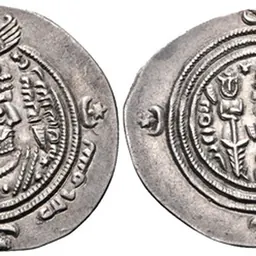
During the First Fitna, Ibn Amir was a key supporter of the Uthmaniyya, providing critical financial resources and a operational base in Basra for the rebellion of Aisha, Talha, and Zubayr against the fourth Rashidun caliph Ali. Following the Umayyad victory in the civil war and the ascension of Mu'awiya I to the caliphate, he served as one of Mu'awiya's negotiators during the abdication of Hasan ibn Ali and was subsequently reappointed as the governor of Basra to stabilize the region. During his second administration, his lieutenants reconquered territories that had slipped from Arab control during the civil war and struck Sasanian-style coinage. He was replaced in 664 CE due to his leniency toward local tribesmen and spent his final years in retirement in Mecca, where he died around 679 or 680 CE.
Early life and lineage Abd Allah ibn Amir was born in Mecca in 626 CE (4 AH), four years after the Hijrah (Muhammad's migration from Mecca to Medina). He belonged to the Banu Abd Shams clan of the Quraysh. His father was Amir ibn Kurayz, who converted to Islam on the day of the conquest of Mecca in 630 CE. His mother was Dujaja bint Asma ibn al-Salt.
Through his paternal grandfather Kurayz ibn Rabi'a, Ibn Amir shared lineage with several prominent branches of the Quraysh. Kurayz had married Umm Hakim al-Bayda, who gave birth to his aunts Arwa and Umm Talha, and his uncle Talha. Furthermore, Umm Hakim was the daughter of Abd al-Muttalib, establishing a direct blood connection between Ibn Amir's paternal family and Muhammad. Additionally, his paternal aunt, Arwa, was married to Affan ibn Abi al-As, giving birth to the third Rashidun caliph, Uthman, which made Ibn Amir a maternal cousin of the caliph.
Ibn Amir contracted multiple marriages with women from prominent tribal backgrounds and had a large family consisting of twelve sons and six daughters. His wives and unions included Kayyasa bint al-Harith (mother of Abd al-Malik and Zaynab), Umm Habib bint Sufyan (mother of Abd al-Hakim and Abd al-Hamid), Hind bint Suhayl (mother of Abd al-Karim, Abd al-Jabbar, and Amat al-Hamid), Amatu'llah bint al-Warith (mother of Umm Kulthum), and Umm Aban bint Maklaba (mother of Amat al-Ghaffar), alongside several children born to ummahat walad (slave concubines), including Abd al-Rahman (who was killed at the Battle of the Camel), Abd al-Majid, Abu'l-Sanabil, Abd al-Salam, Abu'l-Nadr, Abd al-A'la, and Amat al-Wahid. Another daughter, Umm Abd al-Malik, was born to a woman from the Banu Uqayl.
First governorship of Basra Uthman appointed Abd Allah ibn Amir as the governor of Basra around 650 CE when he was twenty-five years old. Uthman faced mounting pressure in Iraq driven by the constant influx of Arab tribesmen into the garrison towns of Kufa and Basra. To alleviate domestic tensions and consume the energies of these tribesmen, the caliph opened new fronts in the east, backing Ibn Amir with expanded authority. Uthman substantially bolstered Ibn Amir's administrative power by consolidating the governorships of Oman and Bahrayn under his command, placing their respective military garrisons (jund) under his direct control. Additionally, Uthman granted him large date plantations in the vicinity of Basra.
Upon taking up his post, Ibn Amir shifted Basra from a temporary military encampment into a permanent administrative hub. He oversaw the digging of new irrigation canals to expand agriculture and water access for the growing urban population, alongside improving water supplies for pilgrims traveling through the region toward Mecca. His father, Amir ibn Kurayz, later joined him in Basra, where he resided and ultimately passed away during Uthman's caliphate.
Military campaigns and eastern expansion Prompted by the instigation of the fugitive Sasanian king Yazdegerd III, the province of Fars rose in revolt, resulting in the death of the Arab governor Abdallah ibn Mamar al-Tamimi in Istakhr. Ibn Amir moved quickly to restore order, successfully conquering Jur (modern Firuzabad) before turning his forces back toward Istakhr, which had broken its initial peace treaty. Surrounding the city with his Basran cavalry and utilizing heavy siege engines (manjaniq), Ibn Amir crushed the rebellion after fierce fighting. Traditional accounts record that forty thousand Persians perished in the fallback, including members of noble houses and elite Aswaran commanders.
In 653, a subsequent localized uprising broke out in Istakhr over non-payment of the jizya. During this flare-up, his vanguard commander Ubaydallah ibn Mamar al-Taymi was ambushed and killed at Ramjird. Ibn Amir immediately mobilized, organized his army with designated wing commanders, appointing Abu Barza Nadla ibn Abd Allah al-Aslami over the right wing, Maqil ibn Yasar al-Mazani over the left, Imran ibn al-Husayn over the cavalry, and Muhammad ibn Muammar al-Dhuhli over the infantry, and routed the rebels, killing massive numbers before recapturing Darabgerd.
Following these victories, Ibn Amir pressed forward into Kerman. The province, which had revolted after Yazdegerd's flight, was systematically brought back under caliphal control between 651 and 652 by an expeditionary force under Mujashsha ibn Musa al-Sulami, causing local defenders to abandon their properties and scatter southward toward Hormuz.
He encamped near Merv, where the local dehqan, Baraz ibn Mahruya, initially welcomed Arab troops into the city to shelter them from the harsh winter. When urban factions and market traders later conspired to launch a surprise attack, Baraz warned the Muslim vanguard commander, Umayr ibn Ahmar. Ibn Amir swiftly intervened to suppress the urban insurrection, a harsh punitive measure that later drew a rebuke from Caliph Uthman.
As Ibn Amir's main force withdrew toward the west, an Iranian notable named Qarin raised a massive insurrection across Quhistan, rallying tens of thousands of recruits from Herat, Tabasain, and Badghis with the backing of local Hephthalite forces. The rebels drove Arab garrisons out of Nishapur and Zaranj. To counter this, Ibn Amir dispatched Abd Allah ibn Khazim al-Sulami with a strike force to eliminate Qarin, successfully crushing the rebellion and neutralizing the persistent Sasanian-Hephthalite coalition along the eastern frontier.
Parallel to the northern operations, Ibn Amir oversaw the securement of Sistan and the western borders of Afghanistan, regions that had slipped from control following initial conquests under Caliph Umar. He sent Rabi ibn Ziyad al-Harithi to lead military campaigns into the region in 651. Rabi secured a victory at Zaliq during a regional festival, accepted the peaceful surrender of Qarquqya, and advanced deep into the frontier territories of modern Afghanistan.
First Fitna During the growing crisis surrounding Caliph Uthman, Abd Allah ibn Amir attended a governors' council in Medina, where he advised Uthman to suppress dissent firmly and meet the rebels with the sword. He subsequently left for Mecca to perform the Hajj, distinguishing himself during the pilgrimage by his lavish munificence to the Meccans and the Ansar. While returning toward Medina, he learned of Uthman's assassination. He departed for Basra, leaving his deputy Abd Allah ibn Amr al-Hadrami behind before the new governor Uthman ibn Hunayf arrived and took control of the city.
When Aisha bint Abi Bakr, Talha, and Zubayr gathered to organize resistance against Ali, Ibn Amir played a critical role in the war council by advising the movement to target Basra, arguing that he commanded strong local loyalty and offering to fund the expedition with his personal wealth. He actively supported Aisha, Talha, and Zubayr in organizing the Basran opposition against Ali.
Following the defeat of the rebels at the Battle of the Camel and Ali's assumption of control over Basra, Ibn Amir's allegiance remained uncertain, and he likely went into hiding before slipping away to join Mu'awiya in Syria, where he fought on the Umayyad side at the Battle of Siffin.
After the assassination of Ali in 661, when Ali's eldest son Hasan ibn Ali succeeded him, Ibn Amir served alongside Abd al-Rahman ibn Samura as one of Mu'awiya's primary delegates sent to negotiate the terms of surrender and abdication with Hasan.
Second governorship of Basra With the abdication of Hasan, Mu'awiya became the first caliph of the Umayyad dynasty. Following the transitional tenure of Busr ibn Abi Artat, Abd Allah ibn Amir was appointed as the governor of Basra under the Umayyad Caliphate. During this brief rule, he struck Sasanian-style coinage imprinted with the portrait of the Sasanian emperor Khosrow II that bore the name Apdula-i-Amiran and dates ranging from 41 to 44 AH.
During his second administration, Ibn Amir heavily invested in regional development and infrastructure. He dug new canals, erected houses, built palaces, and acquired extensive estates, properties, and gardens across Basra, Mecca, and al-Ta'if. Simultaneously, his lieutenants reconquered Khorasan and Sistan, territories that had slipped from Arab control during the civil war, while an expedition was dispatched into Sind.
However, his leniency toward the powerful Arab tribesmen eventually appeared too politically dangerous to Mu'awiya. Prompted by rising crime rates and the failure of interim figures like al-Harith ibn Abd Allah al-Azdi to maintain public order, a breakdown later curbed through draconian security measures and the establishment of the shurta by Ziyad ibn Abihi, Mu'awiya replaced Ibn Amir with a more energetic governor in 44 AH (664 CE).
Following his dismissal, Ibn Amir lived in retirement until his death in Mecca. While traditional sources offer varying dates for his passing, placing it in 57, 58, or 59 AH (679 to 680 CE), specific accounts note that he died a year before Mu'awiya.
Don’t just read it —
keep it.
Full-length biographies made to live with: read them, listen on the way to work, watch them tonight.
- E-book
- Audio
- Video
Instant download · yours to keep · every purchase keeps this site free
Important facts
People in Abd Allah ibn Amir's life
Named in this biography and alive at the same time



Related people
Same field, nearest in time






Contemporaries
People whose lives overlapped Abd Allah ibn Amir's





Frequently asked questions
Who was Abd Allah ibn Amir?
Rashidun Arab governor of Basra from 647 to 656
When was Abd Allah ibn Amir born?
Abd Allah ibn Amir was born in 622 in Mecca.
When did Abd Allah ibn Amir die?
Abd Allah ibn Amir died in 678 in Medina.
What was Abd Allah ibn Amir's occupation?
Abd Allah ibn Amir was a military personnel, amir and conqueror.
What nationality was Abd Allah ibn Amir?
Abd Allah ibn Amir was Arab.
Sources & further reading
· Wikipedia: Abd Allah ibn Amir
Cite this page
APA: Biography.guide. (2026). Abd Allah ibn Amir. https://biography.guide/abd-allah-ibn-amir/
MLA: "Abd Allah ibn Amir." Biography.guide, https://biography.guide/abd-allah-ibn-amir/.
Chicago: "Abd Allah ibn Amir." Biography.guide. https://biography.guide/abd-allah-ibn-amir/.
Data last updated: 2026-09-20 · Spot an error? Report a correction.
Page generated 2026-09-27 05:24 UTC