
About ʿAbd al-Hamid Kishk
Lived 1933 – 1996 (aged 63). ʿAbd al-Hamid Kishk was an Egyptian ulema.
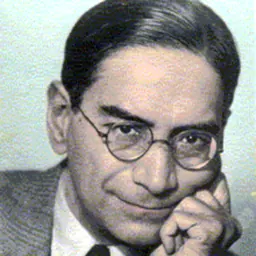
Abdul Hamid Kishk (10 March 1933 – 6 December 1996) was an Egyptian Islamic preacher and scholar. A graduate of the Al-Azhar University in Cairo, he was also a prominent activist and writer in Egypt as well as the Arab world known for his humour, popular sermons, religious books and for his outspoken stance against injustice and oppression in the world.
Biography Abdul Hamid Kishk was born in 1933 in Shubra Khit, a small village near Alexandria, Egypt. His father died before he reached schooling age. He joined one of the schools of Azhar and by the age of 8 he had memorized the Quran. It was at this time that he was inflicted by an illness which took his sight. However, rather than demoralize him, the loss of his sight encouraged him to learn more and persevere further. He graduated as a scholar from the faculty of Usoul al Din in Azhar and was appointed as an Imam, giving khutbas throughout Egypt. A French scholar noted:
In the last years of the Sadat's presidency, it was impossible to walk the streets of Cairo without hearing [Kishk's] stentorian voice. Climb into a collective service-taxi and the driver is listening to one of Sheikh Kishk's recorded sermons... They listen to Kishk in Cairo, in Casablanca, and in the North African district of Marseilles. A Saudi-funded magazine has dubbed him 'the star of Islamic preaching'... none commands his incomparable vocal cords, his panoramic Muslim culture, his phenomenal capacity for improvisation, and his acerbic humour in criticizing infidel regimes, military dictatorship, the peace treaty with Israel, or the complicity of al-Azhar... So great was his fame that the Ministry of Waqf had to build several annexes to the mosque to accommodate the Friday crowds. In 1981, however, even these were insufficient to shelter the approximately 10,000 people who regularly attended.
Kishk's audience grew across the Arab world with the distribution of over 2,000 of his sermons in audio cassettes.
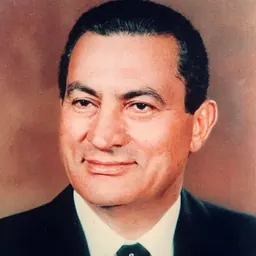
He was arrested again in 1981 shortly before Sadat's assassination, but was released by Egyptian President Hosni Mubarak in 1982 under the condition that he end his career as a public activist. His cassette tapes continued to be widely available thereafter, but the mosque in Cairo where he preached was converted into a public health center.
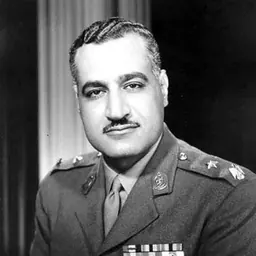
Beliefs and political activities As a preacher at 'Ain al-Hayat mosque he condemned the social conditions in Egypt and the suppression of the Islamic Movement. This did not stop him from having distinctly spiritual approach to life, something which his speeches reflect. He became a dissident under the tenure and government of Gamal Abdel Nasser, refusing to sanction the government's execution of Sayyid Qutb as well as assert compatibility between Islam and socialism. He was boycotted by the official media under the Anwar Sadat regime (1970–1981), but cassette tapes of his sermons were widely distributed all over Egypt and the Arab world. Kishk held political views opposed to the modern bureaucratic state, and emphasized personal and private piety in his speeches.
Greater jihad According to Kishk, the greater jihad is a continuous struggle aimed at subduing one’s baser nature and attuning oneself to Allah’s moral standards. It is the basis for personal moral development, creating pious and philanthropic activism, promoting justice and prosperity in society, while combating ignorance, injustice and oppression. As a result of this greater jihad, says Kishk, Islam "heals those societies which follows its guidance and are built on consciences which have been awakened and hearts which have been illuminated by the light of belief."
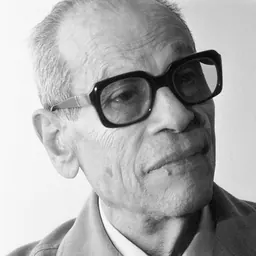
Naguib Mahfouz Kishk wrote "Our Response to Children of the Alley", attacking the controversial novel of Egyptian author Naguib Mahfouz for "violating Muslim sacred belief" and "supplanting monotheism with communism and scientific materialism". Mahfouz had won the 1988 Nobel Prize for Literature, (the only Arab ever to be awarded that Prize) for one of his "best known works", (Children of Gebelawi).
Books Outside his popularity due to his oratory skills he was also the author of nearly 30 books in Islamic cultures.
Don’t just read it —
keep it.
Full-length biographies made to live with: read them, listen on the way to work, watch them tonight.
- E-book
- Audio
- Video
Instant download · yours to keep · every purchase keeps this site free
Important facts
People in ʿAbd al-Hamid Kishk's life
Named in this biography and alive at the same time



Related people
Same field, nearest in time




Contemporaries
People whose lives overlapped ʿAbd al-Hamid Kishk's





Frequently asked questions
Who was ʿAbd al-Hamid Kishk?
Egyptian academic
When was ʿAbd al-Hamid Kishk born?
ʿAbd al-Hamid Kishk was born on 10 March 1933 in Beheira Governorate.
When did ʿAbd al-Hamid Kishk die?
ʿAbd al-Hamid Kishk died on 6 December 1996 in Cairo.
What was ʿAbd al-Hamid Kishk's occupation?
ʿAbd al-Hamid Kishk was an ulema.
What nationality was ʿAbd al-Hamid Kishk?
ʿAbd al-Hamid Kishk was Egyptian.
Sources & further reading
· Wikipedia: ʿAbd al-Hamid Kishk
Cite this page
APA: Biography.guide. (2026). ʿAbd al-Hamid Kishk. https://biography.guide/abd-al-hamid-kishk/
MLA: "ʿAbd al-Hamid Kishk." Biography.guide, https://biography.guide/abd-al-hamid-kishk/.
Chicago: "ʿAbd al-Hamid Kishk." Biography.guide. https://biography.guide/abd-al-hamid-kishk/.
Data last updated: 2026-09-20 · Spot an error? Report a correction.
Page generated 2026-09-27 05:21 UTC