
About Aaron Brown
Lived 1948 – 2024 (aged 76). Aaron Brown was an American broadcast journalist and university teacher.
Career
Early life and career Brown was born to a Jewish family in Minneapolis on November 10, 1948. He was the third of five children of Rose, a home-maker, and Morton, a scrap-metal dealer. In 1966, Brown dropped out of the University of Minnesota as a political science major and joined the U.S. Coast Guard reserves.
ABC Brown was brought to New York City to be the founding co-anchor, with Lisa McRee, of the late-night news program World News Now. He also worked as a reporter for ABC's news operation. In July 1993, he left World News Now He received international recognition as well as winning the Edward R. Murrow Award for his reporting of the attacks from CNN's rooftop in Manhattan, as well as the World Trade Center site and the areas surrounding the remains of the Twin Towers in New York City.
When the South Tower collapsed, Brown was listening to a report from the site of The Pentagon, where there was another attack. The building started to fall while Brown was offcamera, and he had to interrupt the reporter so he could report on what he had seen. Brown remarked that there was another massive explosion and that he could not see the building anymore (he was not aware that the entire building had fallen yet). As the second tower fell on live television, Brown fell silent, until he quietly said, "...good Lord...there are no words..." and resumed reporting after several seconds. CNN saw Brown as a protégé of Peter Jennings and wanted to duplicate Jennings' success for their network. CNN branded their flagship evening program NewsNight with Aaron Brown. Brown also served as host of CNN Presents and was assigned the lead anchor during breaking news and special events.
Post 9/11 Brown covered numerous other news events for CNN, including the war on terrorism, the 2002 House and Senate elections, the Beltway sniper attacks and the Space Shuttle Columbia disaster. During the 2003 invasion of Iraq, Brown anchored from the CNN Center in Atlanta, providing viewers with the latest information from frontline reports as well as from Washington, D.C., and United States Central Command in Doha, Qatar.
In 2003, he garnered negative press attention for continuing to play in the Bob Hope Classic golf tournament in Palm Desert, California, after the Columbia Space Shuttle disaster occurred. While other major news anchors such as Tom Brokaw, Peter Jennings, and Dan Rather immediately left their vacations, Brown did not come into the studio and instead continued playing golf. The New York Times reported that Brown had actually been trying to get back to the studios, but CNN didn't go to special lengths to move Brown into position because Miles O'Brien, the channel's space expert, was anchoring the unfolding events.
During the United States 2004 presidential election, CNN used the NASDAQ Market Site for its election coverage, which some point to as the birth of the idea for Wolf Blitzer's The Situation Room. Brown was tasked to periodically make commentaries on the trends of the evening's results, while Anderson Cooper was then tasked at monitoring key Senate and House races.
Brown won three Emmys, including one Emmy for his report "Streets of Iraq" during the Iraq War. In addition, Brown won a DuPont, two New York Film Society World medals and a George Foster Peabody Award.
On November 3, 2005, CNN announced that Brown would be leaving the network, with Anderson Cooper's program Anderson Cooper 360° replacing NewsNight as the flagship program in CNN's evening lineup in an effort to shift toward a younger demographic. The two had shared anchoring duties in the 10:00 PM time slot through the early fall after Cooper's breakout success covering Hurricane Katrina. Many said Brown's cerebral "news for grown-ups" style would be missed.
Public broadcasting Brown was under contract with CNN until June 2007, which prevented him from doing interviews or returning to television. In 2008, he returned to television as the host of PBS's Wide Angle. Brown was anchor of the series, and did reports from the field through the end of the series on September 2, 2009.
In academia In 2006, Brown assumed the John J. Rhodes Chair in Public Policy and American Institutions at Barrett, the Honors College at Arizona State University. He taught a course called "Turning Points in Television News History" at the Walter Cronkite School of Journalism at ASU from 2007 to 2014. They wed in 1982.
Don’t just read it —
keep it.
Full-length biographies made to live with: read them, listen on the way to work, watch them tonight.
- E-book
- Audio
- Video
Instant download · yours to keep · every purchase keeps this site free
Important facts
People in Aaron Brown's life
Named in this biography and alive at the same time
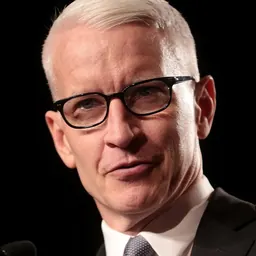

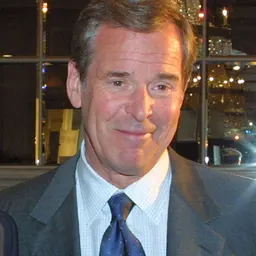




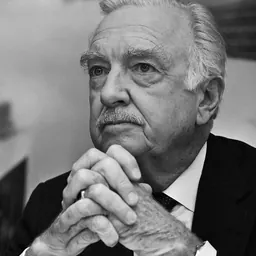
Related people
Same field, nearest in time

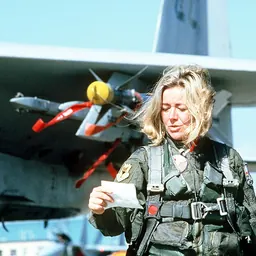



Contemporaries
People whose lives overlapped Aaron Brown's


Frequently asked questions
Who was Aaron Brown?
American journalist
When was Aaron Brown born?
Aaron Brown was born on 10 November 1948 in Hopkins.
When did Aaron Brown die?
Aaron Brown died on 29 December 2024 in Washington, D.C..
What was Aaron Brown's occupation?
Aaron Brown was a broadcast journalist and university teacher.
What nationality was Aaron Brown?
Aaron Brown was American.
Sources & further reading
· DBpedia: Aaron Brown (journalist)
Cite this page
APA: Biography.guide. (2026). Aaron Brown. https://biography.guide/aaron-brown-broadcast-journalist/
MLA: "Aaron Brown." Biography.guide, https://biography.guide/aaron-brown-broadcast-journalist/.
Chicago: "Aaron Brown." Biography.guide. https://biography.guide/aaron-brown-broadcast-journalist/.
Data last updated: 2026-09-22 · Spot an error? Report a correction.
Page generated 2026-09-27 05:21 UTC