
Aaron Aaronsohn
Jewish agronomist, botanist, and Zionist activist
About Aaron Aaronsohn
Lived 1876 – 1919 (aged 42). Aaron Aaronsohn was a British botanist, agronomist, politician, botanical collector and scientific collector.
Aaron Aaronsohn (21 May 1876 – 15 May 1919) was a Romanian-born Jewish agronomist, botanist, and political activist, who lived most of his life in Zikhron Ya'akov. Aaronsohn was the discoverer of wild emmer (Triticum dicoccoides), believed to be "the mother of wheat." He founded and was head of the NILI espionage network.
Biography
Aaron Aaronsohn was born in Bacău, Romania, and brought to Palestine, then part of the Turkish Ottoman Empire, at the age of six. His parents were among the founders of Zikhron Ya'akov, one of the pioneer Jewish agricultural settlements of the First Aliyah. He had two sisters, Sarah and Rivka, and a brother, Alexander. Aaronsohn was the first car-owner in Palestine and one of the first to own a bicycle, which he brought back from France.
Agriculture and botany After studying agriculture in France, sponsored by French Baron Edmond de Rothschild, Aaronsohn worked in Metulla, then a new colony in the north of the country. Together with a member of the German Templer community he launched a business for importing and selling agricultural machines such as reapers, harrows and combine harvesters using modern marketing methods. Another company he established sold gasoline-operated pumps, a centrifuge for separating cream and making butter, and fertilizers. He also imported different varieties of seeds and vines. he discovered Triticum dicoccoides, whom he considered to be the "mother of wheat", an important find for agronomists and historians of human civilization. Geneticists have proven that wild emmer is indeed an ancestor of most domesticated wheat strands cultivated on a large scale today
Aaronsohn served as a scientific consultant to Djemal Pasha during a crop-destroying desert locust invasion in 1915. In March–October of that year, the locusts stripped the country of almost all vegetation. Aaronsohn and the team fighting the locust invasion was given permission to move around the area known as Southern Syria (including modern day Israel) and made detailed maps of the areas they surveyed. Aaronsohn also collected strategic information about Ottoman camps and troop deployment.
In 1918, Aaronsohn was one of the experts consulted for the purpose of demarcating the northern boundary of Palestine, focusing on the need for irrigation water. He envisaged a boundary that would assure the inclusion of the sources of the Jordan, Litani and Yarmuk rivers. His approach became the official Zionist baseline presented to the Peace Conference in Paris in February 1919.
Political activity and espionage During World War I, the Ottomans had joined sides with the Germans, and Aaronsohn feared the Jews would suffer the same fate as the Armenians under the Turks. Together with his assistant Avshalom Feinberg, his sister Sarah Aaronsohn and a few others, Aaronsohn organized Nili, a ring of Jewish residents of Palestine who spied for Britain during World War I. He had access to detailed information about the Turks, because they has used him extensively across the region to combat enormous locust swarms. Aaronsohn recommended the plan of attack through Beersheba that General Edmund Allenby ultimately used to take Jerusalem in December 1917 as part of the Sinai and Palestine Campaign. Owing to information supplied by Nili to the British Army concerning the locations of oases in the desert, General Allenby was able to mount a surprise attack on Beersheba, bypassing strong Ottoman defenses in Gaza.
Death and legacy
After the war, Weizmann called on Aaronsohn to work on the Versailles Peace Conference. On 15 May 1919, under unclear circumstances, Aaronsohn was killed in an airplane crash over the English Channel while on his way to France. Some blamed the British government.
Aaronsohn died a bachelor and had no children. His research on Palestine and Transjordan flora, as well as part of his exploration diaries, were published posthumously.
After Aaronsohn's death, the director of British Military Intelligence confirmed that Allenby's victory would not have been possible without the information supplied by the Aaronsohn group.
Published works Agricultural and botanical explorations in Palestine, 1910 "Shemot ha-tzemachim" ("Botanical names"), in: Hashelaḥ 26 (1912) Reliquiae Aaronsohnianae, 1940
Don’t just read it —
keep it.
Full-length biographies made to live with: read them, listen on the way to work, watch them tonight.
- E-book
- Audio
- Video
Instant download · yours to keep · every purchase keeps this site free
Important facts
People in Aaron Aaronsohn's life
Named in this biography and alive at the same time
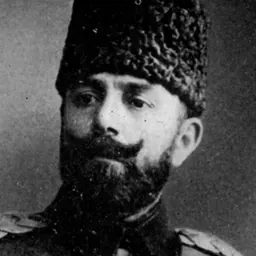
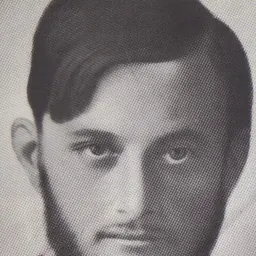
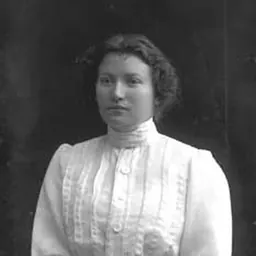
Related people
Same field, nearest in time
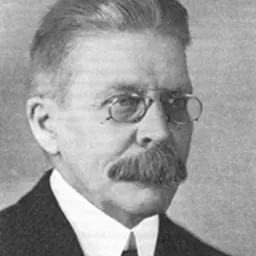
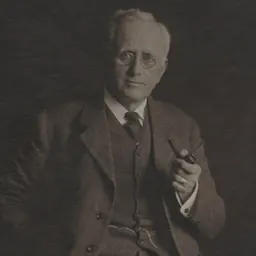

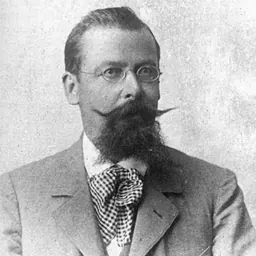
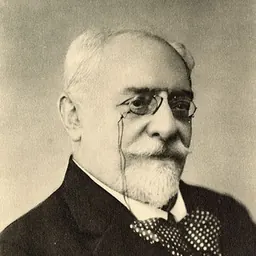

Contemporaries
People whose lives overlapped Aaron Aaronsohn's

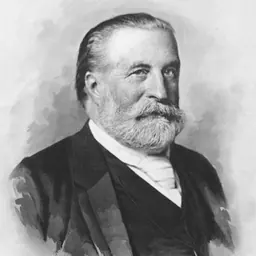
Frequently asked questions
Who was Aaron Aaronsohn?
Jewish agronomist, botanist, and Zionist activist (1876-1919)
When was Aaron Aaronsohn born?
Aaron Aaronsohn was born on 21 May 1876 in Bacău.
When did Aaron Aaronsohn die?
Aaron Aaronsohn died on 15 May 1919 in English Channel.
What was Aaron Aaronsohn's occupation?
Aaron Aaronsohn was a botanist, agronomist, politician, botanical collector and scientific collector.
What nationality was Aaron Aaronsohn?
Aaron Aaronsohn was British.
Sources & further reading
Cite this page
APA: Biography.guide. (2026). Aaron Aaronsohn. https://biography.guide/aaron-aaronsohn/
MLA: "Aaron Aaronsohn." Biography.guide, https://biography.guide/aaron-aaronsohn/.
Chicago: "Aaron Aaronsohn." Biography.guide. https://biography.guide/aaron-aaronsohn/.
Data last updated: 2026-09-26 · Spot an error? Report a correction.
Page generated 2026-09-27 05:14 UTC