
About A. L. Rowse
Lived 1903 – 1997 (aged 93). A. L. Rowse was a British historian, poet, biographer, academic and elizabeth I of England.
Alfred Leslie Rowse (4 December 1903 – 3 October 1997) was a British historian and writer, best known for his work on Elizabethan England and books relating to Cornwall.
Born in Cornwall and raised in modest circumstances, he was encouraged to study for Oxford by fellow-Cornishman Sir Arthur Quiller-Couch. He was elected a fellow of All Souls College and later appointed lecturer at Merton College. Best known of his many works was The Elizabethan Age trilogy. His work on Shakespeare included a claim to have identified the Dark Lady of the Sonnets as Emilia Lanier, which attracted much interest from scholars, but also many counterclaims. Rowse was in popular demand as a lecturer in North America.
In the 1930s, he stood unsuccessfully as the Labour candidate for Penryn and Falmouth, though later in life he became a Conservative.
Life and politics Rowse was born at Tregonissey, near St Austell, Cornwall, the son of Annie (née Vanson) and Richard Rowse, a china clay worker. Despite his modest origins and his parents' limited education, he won a place at St Austell County Grammar School and then a scholarship to Christ Church, Oxford, in 1921. He was encouraged in his pursuit of an academic career by a fellow Cornish man of letters, Sir Arthur Quiller-Couch, of Polperro, who recognised his ability from an early age. Rowse endured doubting comments about his paternity, thus he paid particular attention to his mother's association with a local farmer and butcher from Polgooth, near St Austell, Frederick William May (1872–1953). Any such frustrations were channelled into academia, which reaped him dividends later in life.
Rowse had planned to study English literature, having developed an early love of poetry, but was persuaded to read history. He was a popular undergraduate and made many friendships that lasted for life. He graduated with first class honours in 1925 and was elected a fellow of All Souls College the same year. In 1927 Rowse was appointed lecturer at Merton College, where he stayed until 1930. He then became a lecturer at the London School of Economics. In 1929, he proceeded to a Master of Arts degree. While at Oxford, Rowse met Adam von Trott zu Solz who was attending Oxford as a Rhodes scholar. Rowse became deeply infatuated with Trott, a man whom he madly loved and who influenced his thinking about Germany. Trott took Rowse on a number of tours of Berlin, Hamburg and Dresden to introduce him to German high culture.
Rowse's biographer, Richard Ollard, described Trott as "...the most longest and most intense love" of Rowse's life, a man whom he was never able to get over despite a rift that had developed between them by the late 1930s. Rowse described Trott as "six feet tall" and "well aware of his shattering beauty", but complained that he was "fundamentally heterosexual". He later stated that his relationship with Trott was "an ideal love-affair, platonic in a philosophical sense; we never exchanged a kiss, let alone an embrace. We were both extremely high-minded, perhaps too much so".
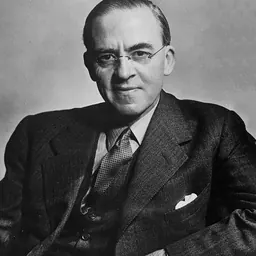
In 1931, Rowse contested the parliamentary seat of Penryn and Falmouth for the Labour Party, but was unsuccessful, finishing third behind a Liberal. In the general election of 1935 he again stood unsuccessfully, but managed to finish in second place, ahead of the Liberal. In both the 1931 and 1935 elections, Maurice Petherick was returned as a Conservative MP to Parliament, albeit with a minority of the vote. Rowse supported calls made by Sir Stafford Cripps and others for a "Popular Front". Cripps was expelled from the Labour Party for his views. In 1937, Rowse wrote in his diary: "My emotional life was engulfed in Adam, quite anguished enough in itself". By this point, Rowse and Trott were drifting apart as Trott sought to make a diplomatic career in the highly elitist Auswärtiges Amt (Foreign Office), which offended Rowse as serving in the Auswärtiges Amt meant serving the Nazis. Moreover, Trott was a German ultra-nationalist committed to recovering all of the lands lost under the Treaty of Versailles, which led him to a certain support for Nazi foreign policy, a position that Rowse could not accept. Trott's viewpoint that he did not particularly like the Nazis, but was willing to serve them insofar as Nazi foreign policy was aimed at undoing the Treaty of Versailles was dismissed by Rowse as amoral.
Rowse worked to get agreement by Labour and Liberal parties in Devon and Cornwall, making a common cause with the Liberal MP Sir Richard Acland. A general election was expected to take place in 1939, and Rowse, who was again Labour's candidate for Penryn & Falmouth, was not expected to have a Liberal opponent. That would increase his chances of winning. But, due to outbreak of war, the election did not take place and his political career was effectively ended.
Undeterred, Rowse chose to continue his career by seeking administrative positions at Oxford becoming Sub-Warden of All Souls College. In 1952, he failed in his candidacy for election as Warden against John Sparrow. Shortly afterwards he began what became regular trips to The Huntington Library in Southern California, where for many years he was a senior research fellow. He received a doctorate (DLitt) from Oxford University in 1953. After delivering the British Academy's 1957 Raleigh Lecture on history about Sir Richard Grenville's place in English history, Rowse was selected as a fellow of the academy (FBA) in 1958.
Rowse published about 100 books. By the mid-20th century, he was a celebrated author and much-travelled lecturer, especially in the United States. He also published many popular articles in newspapers and magazines in Great Britain and the United States. His brilliance was widely recognised. His knack for the sensational, as well as his academic boldness (which some considered to be irresponsible carelessness), sustained his reputation. His opinions on rival popular historians, such as Hugh Trevor-Roper and A. J. P. Taylor, were expressed sometimes in very strong terms.
In 1977, Rowse sparked much controversy with his book Homosexuals in History which linked creativity in the arts with being gay. Rowse wrote that his book was a study on the "predisposing conditions of creativeness, the psychological rewards of ambivalence, the doubled response to life, the sharping of perception, the tensions that led to achievement". Homosexuals in History attracted critical reviews as some of the artists identified as being gay in the book were based on only circumstantial evidence; the book had no footnotes or endnotes; his theory of a connection between artistic creativity and homosexuality was ill-defined; and his opinionated writing style full of arch comments alienated many. The American scholar Richard Aldrich wrote that for its flaws Homosexuals in History was one of the first serious studies in gay history and that many of the artists whom Rowse "outed" in his book were indeed gay, which marked the first time that this aspects of their lives was discussed in a mainstream book.
In his later years, Rowse moved increasingly towards the political right, and many considered him to be part of the Tory tradition by the time he died. One of Rowse's lifelong themes in his books and articles was his condemnation of the Conservative-dominated National Government's policy of appeasement of Nazi Germany in the 1930s, and the economic and political consequences for Great Britain of fighting a Second World War with Germany. He also criticised his former Labour Party colleagues–including George Lansbury, Kingsley Martin and Richard Crossman—for endorsing appeasement, writing "not one of the Left intellectuals could republish what they wrote in the Thirties without revealing what idiotic judgments they made about events." Another was his horror at the degradation of standards in modern society. He is reported as saying: "... this filthy twentieth century. I hate its guts".
Despite international academic success, Rowse remained proud of his Cornish roots. He retired from Oxford in 1973 to Trenarren House, his Cornish home, from where he remained active as writer, reviewer and conversationalist until immobilised by a stroke in 1996. He died at home on 3 October 1997. Much later, following retirement, he said, "of course, I used to be a homo; but now, when it doesn't matter, if anything I'm a hetero".
He was aware of his own intelligence from earliest childhood, and obsessed that others either did not accept this fact, or not quickly enough. The diaries describe what he said were "a series of often inane jealousies".
Rowse was appointed a Member of the Order of the Companions of Honour (CH) in the 1997 New Year Honours.
Posthumous reputation Memorial to Dr A. L. Rowse at Black Head, near Trenarren on Cornwall's south coast As well as his own appearances on radio and television, Rowse has been depicted in various TV drama documentaries about British politics in the 1930s and appeasement.
Christopher William Hill's radio play Accolades, rebroadcast on BBC Radio 4 in March 2007 as a tribute to its star, Ian Richardson, who had died the previous month, covers the period leading up to the publication of Shakespeare the Man in 1973 and publicity surrounding Rowse's unshakable confidence that he had discovered the identity of the Dark Lady of the Sonnets. It was broadcast again on 9 July 2008.
A Cornish Childhood has also been adapted for voices (in the style of Under Milk Wood) by Judith Cook.
Selected works On History: a Study of Present Tendencies, London: Kegan Paul, Trench, Trubner & Co., 1927 Science and History: a New View of History, London: W. W. Norton, 1928 Politics and the Younger Generation, London: Faber & Faber, 1931 The Question of the House of Lords, London: Hogarth Press, 1934 Queen Elizabeth and Her Subjects (with G. B. Harrison), London: Allen & Unwin, 1935 Mr. Keynes and the Labour Movement, London: Macmillan, 1936 Sir Richard Grenville of the "Revenge", London: Jonathan Cape, 1937 What is Wrong with the Germans?, 1940 Tudor Cornwall, London: Jonathan Cape, 1941 A Cornish Childhood: autobiography of a Cornishman, London: Jonathan Cape, 1942 The Spirit of English History, London: Jonathan Cape, 1943 The English Spirit: Essays in History and Literature, London: Macmillan, 1944 West-Country Stories, London: Macmillan, 1945 The Use of History (key volume in the "Teach Yourself History" series), London: Hodder & Stoughton, 1946 The End of an Epoch: Reflections on Contemporary History, London: Macmillan, 1947 The England of Elizabeth: the Structure of Society. London: Macmillan, 1950 The English Past: Evocation of Persons and Places, London: Macmillan, 1951 An Elizabethan Garland, London: Macmillan, 1953 The Expansion of Elizabethan England, London: Macmillan, 1955 The Early Churchills, London: Macmillan, 1956 The Later Churchills, London: Macmillan, 1958 The Elizabethans and America: The Trevelyan Lectures at Cambridge, 1958, London, Macmillan, 1959 St Austell: Church, Town, Parish, St Austell: H. E. Warne, 1960 All Souls and Appeasement: a Contribution to Contemporary History, London: Macmillan, 1961 Ralegh and the Throckmortons, London: Macmillan, 1962 William Shakespeare: a Biography, London: Macmillan, 1963 Christopher Marlowe: a biography, London: Macmillan, 1964 Shakespeare's Sonnets, London: Macmillan, 1964; 1984 3rd edition A Cornishman at Oxford, London: Jonathan Cape, 1965 Shakespeare's Southampton: Patron of Virginia, London: Macmillan, 1965 Bosworth Field and the Wars of the Roses, London: Macmillan, 1966 Cornish Stories, London: Macmillan, 1967 A Cornish Anthology, London: Macmillan, 1968 The Cornish in America, London: Macmillan, 1969 The Elizabethan Renaissance: the Life of Society, London: Macmillan, 1971 The Elizabethan Renaissance: the Cultural Achievement, London: Macmillan, 1972 The Tower of London in the History of the Nation, London: Weidenfeld & Nicolson, 1972 Shakespeare The Man, London: Macmillan, 1973 Windsor Castle In the History of the Nation, London: Weidenfeld & Nicolson, 1974 Victorian and Edwardian Cornwall from old photographs, London: Batsford, 1974 (Introduction and commentaries by Rowse; ten extracts from Betjeman) Simon Forman: Sex and Society in Shakespeare's Age, London: Weidenfeld & Nicolson, 1974 Discoveries and Reviews: from Renaissance to Restoration, London: Macmillan, 1975 Oxford: In the History of the Nation, London: Weidenfeld & Nicolson, 1975 Jonathan Swift: Major Prophet, London, Thames & Hudson, 1975 A Cornishman Abroad, London: Jonathan Cape, 1976 Matthew Arnold: Poet and Prophet, London: Thames & Hudson, 1976 Homosexuals in History, London: Weidenfeld & Nicolson, 1977 Shakespeare the Elizabethan, London: Weidenfeld & Nicolson, 1977 Milton the Puritan: Portrait of a Mind, London: Macmillan, 1977 The Byrons and the Trevanions, London: Weidenfeld & Nicolson, 1978 A Man of the Thirties, London: Weidenfeld & Nicolson, 1979 Memories of Men and Women, London: Eyre Methuen, 1980 A Man of Singular Virtue: being a Life of Sir Thomas More by his Son-in-Law William Roper, and a Selection of More's Letters, London: Folio Society, 1980 (Editor) Shakespeare's Globe: his Intellectual and Moral Outlook, London: Weidenfeld & Nicolson, 1981 A Life: Collected Poems, Edinburgh: William Blackwood, 1981 Eminent Elizabethans, London: Macmillan, 1983 Night at the Carn and Other Stories, London: William Kimber, 1984 Shakespeare's Characters: a Complete Guide, London: Methuen, 1984 Glimpses of the Great, London: Methuen, 1985 The Little Land of Cornwall, Gloucester: Alan Sutton, 1986 A Quartet of Cornish Cats, London: Weidenfeld & Nicolson, 1986 Stories From Trenarren, London: William Kimber, 1986 Reflections on the Puritan Revolution, London: Methuen, 1986 The Poet Auden: a Personal Memoir, London: Weidenfeld & Nicolson, 1987; abstract with table of contents, Taylor & Francis website Court and Country: Studies in Tudor Social History, Brighton: Harvester Press, 1987 Froude the Historian: Victorian Man of Letters, Gloucester: Alan Sutton, 1987 Quiller-Couch: a Portrait of "Q", London: Methuen, 1988 A. L. Rowse's Cornwall: a Journey through Cornwall's Past and Present, London: Weidenfeld & Nicolson, 1988 Friends and Contemporaries, London: Methuen, 1989 The Controversial Colensos, Redruth: Dyllansow Truran, 1989 Discovering Shakespeare: a Chapter in Literary History, London: Weidenfeld & Nicolson, 1989 Four Caroline Portraits, London: Duckworth, 1993 All Souls in My Time, London: Duckworth, 1993 The Regicides and the Puritan Revolution, London: Duckworth, 1994 Historians I Have Known, London: Duckworth, 1995 My View of Shakespeare, London: Duckworth, 1996 Cornish Place Rhymes, Tiverton: Cornwall Books, 1997 (posthumous commemorative volume begun by the author; preface by the editor, S. Butler) The Elizabethan Age (a four-volume set composed of The England of Elizabeth; The Expansion of Elizabethan England; The Elizabethan Renaissance: The Life of the Society; The Elizabethan Renaissance: The Cultural Achievement), London: Folio Society, 2012
Biography and bibliography
Capstick, Tony (1997), A. L. Rowse: An Illustrated Bibliography, Wokingham: Hare's Ear Publication Cauveren, Sydney (2000), A. L. Rowse: A Bibliophile's Extensive Bibliography, Lanham, Maryland: Scarecrow Press Cauveren, Sydney (2001), "A. L. Rowse: Historian and Friend", Contemporary Review, December 2001, pp. 340–346 Jacob, Valerie (2001), Tregonissey to Trenarren: A. L. Rowse – The Cornish Years, St. Austell: Valerie Jacob
Ollard, Richard (2003), The Diaries of A. L. Rowse, London: Allen Lane Whetter, James (2003), Dr. A. L. Rowse: Poet, Historian, Lover of Cornwall, Gorran, St. Austell: Lyfrow Trelyspen Payton, Philip (2005), A. L. Rowse and Cornwall, Exeter: University of Exeter Press Donald Adamson is due to publish a biography of A. L. Rowse (from a friend's perspective), see article in the International Literary Quarterly. Slattery-Christy, David (2017), Other People's Fu**ing! An Oxford Affair. New play exploring the relationship between A.L. Rowse and Adam von Trott during the 1930s in Oxford. Published by Christyplays. www.christyplays.com
Don’t just read it —
keep it.
Full-length biographies made to live with: read them, listen on the way to work, watch them tonight.
- E-book
- Audio
- Video
Instant download · yours to keep · every purchase keeps this site free
Important facts
People in A. L. Rowse's life
Named in this biography and alive at the same time





Related people
Same field, nearest in time
Contemporaries
People whose lives overlapped A. L. Rowse's
Frequently asked questions
Who was A. L. Rowse?
British historian (1903–1997)
When was A. L. Rowse born?
A. L. Rowse was born on 4 December 1903 in St Austell.
When did A. L. Rowse die?
A. L. Rowse died on 3 October 1997 in Cornwall.
What was A. L. Rowse's occupation?
A. L. Rowse was a historian, poet, biographer, academic and elizabeth I of England.
What nationality was A. L. Rowse?
A. L. Rowse was British.
Sources & further reading
Cite this page
APA: Biography.guide. (2026). A. L. Rowse. https://biography.guide/a-l-rowse/
MLA: "A. L. Rowse." Biography.guide, https://biography.guide/a-l-rowse/.
Chicago: "A. L. Rowse." Biography.guide. https://biography.guide/a-l-rowse/.
Data last updated: 2026-09-20 · Spot an error? Report a correction.
Page generated 2026-09-27 05:30 UTC