
About Arthur Quiller-Couch
Lived 1863 – 1944 (aged 80). Arthur Quiller-Couch was a British poet, writer, university teacher, literary critic, anthologist and novelist.
Sir Arthur Thomas Quiller-Couch (; 21 November 186312 May 1944) was a British writer and literary critic who published using the pseudonym Q.
Early life
Arthur Quiller-Couch was born in the town of Bodmin, Cornwall. He was the son of DrThomas Quiller Couch (d.1884), who was a noted physician, folklorist and historian who married Mary Ford and lived at 63, Fore Street, Bodmin, until his death in 1884. Thomas was the product of the union of two ancient local families, the Quiller family and the Couch family. Arthur was the third in a line of intellectuals from the Couch family. His grandfather, Jonathan Couch, was a naturalist, physician, historian, classicist, apothecary, and illustrator (particularly of fish). His younger sisters Florence Mabel and Lilian M. were also writers and folklorists.
Arthur Quiller-Couch had two children. His son, Bevil Brian Quiller-Couch, was a war hero and poet, whose romantic letters to his fiancée, the poet May Wedderburn Cannan, were published in Tears of War. Kenneth Grahame inscribed a first edition of his The Wind in the Willows to Arthur's daughter, Foy Felicia, attributing Quiller-Couch as the inspiration for the character Ratty.
Quiller-Couch was educated at Newton Abbot Proprietary College between the late 1870's and early 1880's . Thereafter, he also attended Clifton College, and Trinity College, Oxford, where he took a First in Classical Moderations (1884) and a Second in Greats (1886). From 1886, Quiller-Couch worked for a brief time as a Classics lecturer at Trinity.
Quiller-Couch died at home in May 1944 aged 80, after being injured by a jeep near his home in Cornwall in the preceding March during his daily walk to the Royal Fowey Yacht Club.
World War I
On 27 March 1915, Quiller-Couch and Colonel Dudley Acland Mills (a retired officer) formed the Duke of Cornwall's Light Infantry 10th Battalion; on 24 October 1915, the Battalion was taken over by the War Office, which allowed Quiller-Couch to return to his academic post at Cambridge.
His son Bevil died of Spanish flu in 1919. Later editions of this extended the period of concern to 1918 and it remained the leading general anthology of English verse until Helen Gardner's New Oxford Book of English Verse appeared in 1972.
In 1910 he published The Sleeping Beauty and other Fairy Tales from the Old French. He was the author of a number of popular novels with Cornish settings (collected edition as 'Tales and Romances', 30 vols. 1928–29).
He was appointed King Edward VII Professor of English Literature in the University of Cambridge in 1912 and retained the chair for the rest of his life. Simultaneously, he was elected to a Fellowship of Jesus College, which he also held until his death. His inaugural lectures as professor of English literature were published as the book On the Art of Writing. His rooms were on staircase C, First Court, and known as the 'Q-bicle'. He supervised the beginnings of the English Faculty there — an academic diplomat in a fractious community. He is sometimes regarded as the epitome of the school of English literary criticism later modified by his pupil F. R. Leavis.
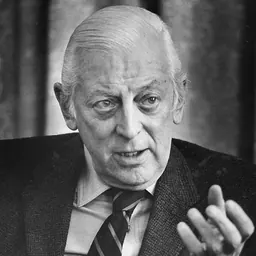
Alistair Cooke was a student of Quiller-Couch and Nick Clarke's semi-official biography of Cooke features Quiller-Couch prominently, noting that he was regarded by the Cambridge establishment as "rather eccentric" even by the university's standards.
Quiller-Couch was a noted literary critic, publishing editions of some of Shakespeare's plays (in the New Shakespeare, published by Cambridge University Press, with Dover Wilson) and several critical works, including Studies in Literature (1918) and On the Art of Reading (1920). He edited a companion to his verse anthology: The Oxford Book of English Prose, which was published in 1923. He left his autobiography, Memories and Opinions, unfinished; it was nevertheless published in 1945.
Legacy
His Book of English Verse is often quoted by John Mortimer's fictional character Horace Rumpole.
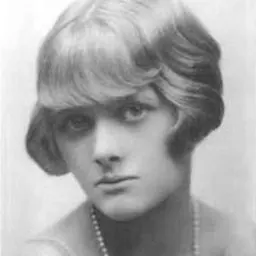
Castle Dor, a re-telling of the Tristan and Iseult myth in modern circumstances, was left unfinished at Quiller-Couch's death and was completed many years later by Daphne du Maurier. As she wrote in the Sunday Telegraph in April 1962, she began the job with considerable trepidation, at the request of Quiller-Couch's daughter and "in memory of happy evenings long ago when 'Q' was host at Sunday supper".
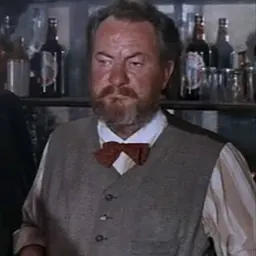
He features as a main character, played by Leo McKern, in the 1992 BBC television feature The Last Romantics. The story focuses on his relationship with his protégé, F. R. Leavis, and the students.
His Cambridge inaugural lecture series, published as On the Art of Writing, is the source of the popular writers' adage "murder your darlings":
Quiller-Couch may have adapted the phrase from his acquaintance George Meredith's 1859 novel The Ordeal of Richard Feverel, which he is known to have read. The novel contains the line "Killing one's darling child is a painful imposition", describing a boy being forced to burn a manuscript of his poetry by his controlling father.
Works
Fiction
Dead Man's Rock (1887) The Astonishing History of Troy Town (1888) The Splendid Spur (1889) The Blue Pavilions (1891) I Saw Three Ships and Other Winter's Tales (1892) The Delectable Duchy: Stories, Studies and Sketches (1893) Wandering Heath: Stories, Studies, and Sketches (1895) Ia, A Love Story (1896) St Ives (1898), completing an unfinished novel by Robert Louis Stevenson. Noughts and Crosses: Stories, Studies and Sketches (1898) The Ship of Stars (1899) A Fowey Garland (1899) Old Fires and Profitable Ghosts (1900) The Laird's Luck and Other Fireside Tales (1901) The Westcotes (1902) The White Wolf and Other Fireside Tales (1902) Hetty Wesley (1903) (This was based on the life of the poet Mehetabel Wesley Wright.) The Adventures of Harry Revel (1903) Fort Amity (1904) The Shining Ferry (1905) Shakespeare's Christmas and Other Stories (1905) The Mayor of Troy (1906) Sir John Constantine (1906) Merry Garden and Other Stories (1907) Poison Island (1907) Major Vigoureux (1907) True Tilda (1909) Corporal Sam and Other Stories (1910) Lady Good-for-Nothing: A Man's Portrait of a Woman (1910) Brother Copas (1911) Hocken and Hunken: A Tale of Troy (1912) My Best Book (1912) News from the Duchy (1913) Nicky-Nan, Reservist (1915) Mortallone and Aunt Trinidad: Tales of the Spanish Main (1917) Foe-Farrell: A Romance (1918) Castle Dor (1962) This novel was left unfinished at his death, and completed by Daphne Du Maurier.
A collected edition of Q's fiction appeared as Tales and Romances (30 volumes, 1928–29).
Verse
Green Bays, Verses and Parodies (1893) Poems and Ballads (1896) The Vigil of Venus and Other Poems (1912)
Criticism and anthologies The Golden Pomp, a procession of English lyrics from Surrey to Shirley (1895) Adventures in Criticism (1896; 2nd edition, 1924) Oxford Book of English Verse, 1250–1900 (1900) From a Cornish Window (1906) English Sonnets (Published in 1897, reprinted in 1910) The Sleeping Beauty and other Fairy Tales from the Old French (1910) The Oxford Book of Ballads (1911) In Powder and Crinoline: Old Fairy Tales Retold (1913) On the Art of Writing (1916) Notes on Shakespeare's Workmanship (1917) Studies in Literature: First Series (1918) Shakespeare's Workmanship (1918) On the Art of Reading (1920) The Oxford Book of Victorian Verse (1922) Studies in Literature: Second Series (1922) Oxford Book of English Prose (1923) Studies in Literature: Third Series (1929) The Poet As Citizen and Other papers (Macmillan, 1935) Cambridge Lectures (1943; 2nd ed. 1944)
Autobiography
Memories and Opinions (unfinished, published 1945)
Don’t just read it —
keep it.
Full-length biographies made to live with: read them, listen on the way to work, watch them tonight.
- E-book
- Audio
- Video
Instant download · yours to keep · every purchase keeps this site free
Important facts
People in Arthur Quiller-Couch's life
Named in this biography and alive at the same time





Related people
Same field, nearest in time

Contemporaries
People whose lives overlapped Arthur Quiller-Couch's



Frequently asked questions
Who was Arthur Quiller-Couch?
British writer and literary critic (1863–1944)
When was Arthur Quiller-Couch born?
Arthur Quiller-Couch was born on 21 November 1863 in Bodmin.
When did Arthur Quiller-Couch die?
Arthur Quiller-Couch died on 12 May 1944 in Fowey.
What was Arthur Quiller-Couch's occupation?
Arthur Quiller-Couch was a poet, writer, university teacher, literary critic, anthologist and novelist.
What nationality was Arthur Quiller-Couch?
Arthur Quiller-Couch was British.
Sources & further reading
· Wikipedia: Arthur Quiller-Couch
· DBpedia: Arthur Quiller-Couch
Cite this page
APA: Biography.guide. (2026). Arthur Quiller-Couch. https://biography.guide/arthur-quiller-couch/
MLA: "Arthur Quiller-Couch." Biography.guide, https://biography.guide/arthur-quiller-couch/.
Chicago: "Arthur Quiller-Couch." Biography.guide. https://biography.guide/arthur-quiller-couch/.
Data last updated: 2026-09-20 · Spot an error? Report a correction.
Page generated 2026-09-27 05:18 UTC