
About A. K. Ramanujan
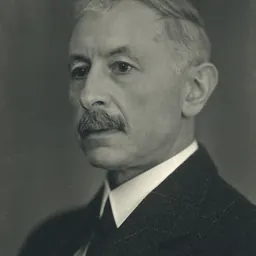
Lived 1929 – 1993 (aged 64). A. K. Ramanujan was an Indian linguist, writer, translator, poet and academic staff.
Attipate Krishnaswami Ramanujan (16 March 1929 – 13 July 1993) was an Indian poet and scholar of Indian literature and linguistics. Ramanujan was also a professor of linguistics at University of Chicago.
Ramanujan was a poet, scholar, linguist, philologist, folklorist, translator, and playwright. His academic research ranged across five languages: Kannada, English, Tamil, Telugu and Sanskrit. He published works on both classical and modern variants of this literature and argued strongly for giving local, non-standard dialects their due. Though he wrote widely and in a number of genres, Ramanujan's poems are remembered as enigmatic works of startling originality, sophistication and moving artistry. He was awarded the Sahitya Academy Award posthumously in 1999 for The Collected Poems.
Early life and education Ramanujan was born in Mysore City (now Karnataka) on 16 March 1929. His father, Attipat Asuri Krishnaswami, an astrologer and professor of mathematics at Mysore University, was known for his interest in English, Kannada and Sanskrit languages. His mother was a homemaker.
Ramanujan was educated at Marimallappa's High School, Mysore, and at the Maharaja College of Mysore. In college, Ramanujan majored in science in his freshman year, but his father persuaded him to change his major from science to English. Later, Ramanujan became a Fellow of Deccan College, Pune in 1958–59 and a Fulbright Scholar at Indiana University Bloomington in 1959–62. He was educated in English at the University of Mysore and received his PhD in linguistics from Indiana University Bloomington.
Career Ramanujan worked as a lecturer of English at Quilon and Belgaum; he later taught at The Maharaja Sayajirao University in Baroda for about eight years. In 1962, he joined the University of Chicago as an assistant professor. He was affiliated with the university throughout his career, teaching in several departments. He taught at other universities in the United States as well, including Harvard University, University of Wisconsin, University of Michigan, University of California at Berkeley, and Carleton College. At the University of Chicago, Ramanujan was instrumental in shaping the South Asian Studies program. He worked in the departments of South Asian Languages and Civilizations, Linguistics, and with the Committee on Social Thought.
In 1976, the Government of India awarded him the Padma Shri, and in 1983, he was given the MacArthur Prize Fellowship
Contributions to Indian studies A. K. Ramanujan's theoretical and aesthetic contributions span several disciplinary areas. In his cultural essays such as "Is There an Indian Way of Thinking?" (1990), he explains cultural ideologies and behavioral manifestations thereof in terms of an Indian psychology he calls "context-sensitive" thinking. In his work in folklore studies, Ramanujan highlights the inter-textuality of the Indian oral and written literary tradition. His essay "Where Mirrors Are Windows: Toward an Anthology of Reflections" (1989), and his commentaries in The Interior Landscape: Love Poems from a Classical Tamil Anthology (1967) and Folktales from India, Oral Tales from Twenty Indian Languages (1991) are good examples of his work in Indian folklore studies.
Additionally, his work Speaking of Śiva, a literary study in the early 1970s, was very influential in shaping the understanding of the contemporary understanding of Vīraśaivas, Śaiva devotees of the Kannada-speaking region. "Speaking of Śiva became the unrivaled standard for introducing the Vīraśaivas, South Asian devotionalism, and even Hinduism more broadly to a variety of English-speaking audiences worldwide."
Controversy regarding his essay His 1991 essay "Three Hundred Ramayanas: Five Examples and Three Thoughts on Translation" courted controversy over its inclusion in the B.A. in History syllabus of the University of Delhi in 2006. In this essay, he wrote of the existence of many versions of Ramayana and a few versions that portrayed Rama and Sita as siblings, which contradicts the popular versions of the Ramayana, such as those by Valmiki and Tulsidas.
The comments written by A K Ramanujan were found to be derogatory by some Hindus and some of them decided to go to court for removal of the text from the Delhi University curriculum. ABVP, a nationalist student organisation, opposed its inclusion in the syllabus, saying it hurt the majority Hindu sentiment, who viewed Rama and Sita as incarnations of gods and who were husband and wife. They demanded the essay be removed from the syllabus. In 2008, the Delhi High Court directed Delhi University to convene a committee to decide on the essay's inclusion. A four-member committee subsequently gave its 3-1 verdict in favor of its inclusion in the syllabus.
The academic council, however, ignored the committee's recommendation and voted to scrap the essay from its syllabus in October 2011. This led to protests by many historians and intellectuals, accusing Delhi University of succumbing to the diktat ("views") of non-historians.
Selected publications His works include translations from Old Tamil and Old Kannada, such as:
Translations and Studies of Literature
The Interior Landscape: Love Poems from a Classical Tamil Anthology, 1967 Song of the Earth, Writers Workshop. 1968. Speaking of Siva, Penguin. 1973. . The Literatures of India. Edited with Edwin Gerow. Chicago: University of Chicago Press, 1974 Hymns for the Drowning, 1981 Poems of Love and War. New York: Columbia University Press, 1985 Folktales from India, Oral Tales from Twenty Indian Languages, 1991 Is There an Indian Way of Thinking? in India Through Hindu Categories, edited by McKim Marriott, 1990 When God Is a Customer: Telugu Courtesan Songs by Ksetrayya and Others (with Velcheru Narayana Rao and David Shulman), 1994 A Flowering Tree and Other Oral Tales from India, 1997
Essays Three Hundred Ramayanas: Five Examples and Three Thoughts on Translation Collected Essays of A. K. Ramanujan "A Flowering Tree: A Women's Tale". In: Syllables of Sky: Studies in South Indian Civilization. Oxford University Press, 1995. pages 20–42. . (posthumous article)
Poetry
The Striders. London: Oxford University Press, 1966 Relations. London, New York: Oxford University Press, 1971 Selected Poems. New Delhi: Oxford University Press, 1976 Second Sight. New York: Oxford University Press,1986 The Collected Poems. New Delhi: Oxford University Press, 1995
Appearances in the following poetry Anthologies Ten Twentieth-Century Indian Poets (1976) ed. by R. Parthasarathy and published by Oxford University Press, New Delhi The Oxford India Anthology of Twelve Modern Indian Poets (1992) ed. by Arvind Krishna Mehrotra and published by Oxford University Press, New Delhi The Golden Treasure of Writers Workshop Poetry (2008) ed. by Rubana Huq and published by Writers Workshop, Calcutta
Kannada Samskara. (translation of U R Ananthamurthy's Kannada novel) Delhi: Oxford University Press, 1976 Hokkulalli Huvilla (translated to English - "No Flower in the Navel"). Dharwad, 1969 Mattu Itara Padyagalu (translated to English - "And Other Poems"). Dharwad, 1977 Kuntobille (translated to English - "Hopscotch") Mattobbana Atma Charitre (translated to English - "Yet Another Man's Autobiography") Haladi Meenu (Kannada Translation of Shouri's English Novel) A. K. Ramanujan Samagra (Complete Works of A. K. Ramanujan in Kannada) A. K. Ramanujan Avara Aayda Kavitegalu A. K. Ramanujan Avara Aayda Barahagalu "In the kingdom of fools" (9th class English, supplementary)
Don’t just read it —
keep it.
Full-length biographies made to live with: read them, listen on the way to work, watch them tonight.
- E-book
- Audio
- Video
Instant download · yours to keep · every purchase keeps this site free
Important facts
People in A. K. Ramanujan's life
Named in this biography and alive at the same time







Related people
Same field, nearest in time





Contemporaries
People whose lives overlapped A. K. Ramanujan's




Frequently asked questions
Who was A. K. Ramanujan?
Indian linguist (1929-1993)
When was A. K. Ramanujan born?
A. K. Ramanujan was born on 16 March 1929 in Mysore.
When did A. K. Ramanujan die?
A. K. Ramanujan died on 13 July 1993 in Chicago.
What was A. K. Ramanujan's occupation?
A. K. Ramanujan was a linguist, writer, translator, poet and academic staff.
What nationality was A. K. Ramanujan?
A. K. Ramanujan was Indian.
Sources & further reading
Cite this page
APA: Biography.guide. (2026). A. K. Ramanujan. https://biography.guide/a-k-ramanujan/
MLA: "A. K. Ramanujan." Biography.guide, https://biography.guide/a-k-ramanujan/.
Chicago: "A. K. Ramanujan." Biography.guide. https://biography.guide/a-k-ramanujan/.
Data last updated: 2026-09-20 · Spot an error? Report a correction.
Page generated 2026-09-27 05:21 UTC