
About A. D. Hope
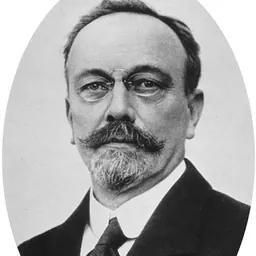
Lived 1907 – 2000 (aged 92). A. D. Hope was an Australian poet, writer, literary critic and essayist.
Alec Derwent Hope (21 July 190713 July 2000) was an Australian poet and essayist known for his satirical slant. He was also a critic, teacher and academic. He was referred to in an American journal as "the 20th century's greatest 18th-century poet". He was educated partly at home and in Tasmania, where they moved in 1911. Three years later they moved to Sydney.
He was appointed an Officer of the Order of the British Empire in 1972 and a Companion of the Order of Australia in 1981 and awarded many other honours. He died in Canberra, having suffered dementia in his last years, and is buried at the Queanbeyan Lawn Cemetery.
Poet and critic Although he was published as a poet while still young, The Wandering Islands (1955) was his first collection and all that remained of his early work after most of his manuscripts were destroyed in a fire. Its publication was delayed by concern about the effects of Hope's highly erotic and savagely satirical verse on the Australian public. His frequent allusions to sexuality in his work caused Douglas Stewart to dub him "Phallic Alec" in a letter to Norman Lindsay. His influences were Pope and the Augustan poets, Auden, and Yeats. He was a polymath, very largely self-taught, and with a talent for offending his countrymen. He wrote a book of "answers" to other poems, including one in response to the poem "To His Coy Mistress" by Andrew Marvell.
The reviews he wrote in the 1940s and '50s were feared "for their acidity and intelligence. If his reviews hurt some writers – Patrick White included – they also sharply raised the standard of literary discussion in Australia." However, Hope relaxed in later years. As poet Kevin Hart writes, "The man I knew, from 1973 to 2000, was invariably gracious and benevolent". Cole suggests that Hope represented the three attributes that Vladimir Nabokov believed essential in a writer, "storyteller, teacher, enchanter".
Influence and impact Kevin Hart, reviewing Catherine Cole's memoir of Hope, writes that "When A. D. Hope died in 2000 at the age of 93, Australia lost its greatest living poet". 1965: Britannica Australia Awards for Literature 1966: Australian Literature Society Gold Medal 1967: Myer Award for Australian Poetry 1969: Ingram Merrill Foundation Award for Literature (New York) 1969: Levinson Prize for Poetry (Chicago) 1969: Foundation Fellow of the Australian Academy of the Humanities 1972: Officer of the Order of the British Empire (OBE) 1976: The Age Book of the Year Award for A Late Picking 1976: Robert Frost Award for Poetry 1981: Companion of the Order of Australia (AC) 1989: New South Wales Premier's Literary Awards Special Award 1993: ACT Book of the Year Award for Chance Encounters Honorary doctorates from four Australian universities
Don’t just read it —
keep it.
Full-length biographies made to live with: read them, listen on the way to work, watch them tonight.
- E-book
- Audio
- Video
Instant download · yours to keep · every purchase keeps this site free
Important facts
People in A. D. Hope's life
Named in this biography and alive at the same time

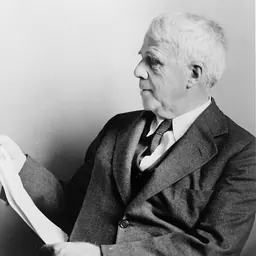

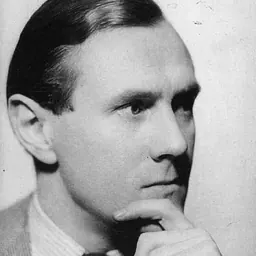



Related people
Same field, nearest in time


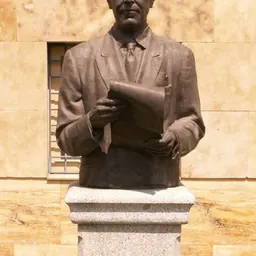
Contemporaries
People whose lives overlapped A. D. Hope's
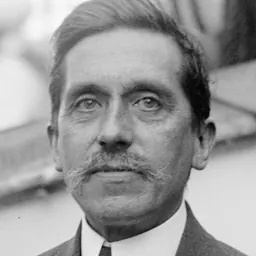
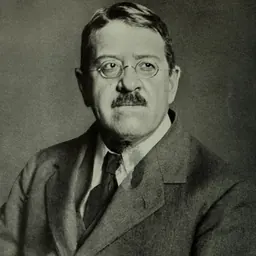


Frequently asked questions
Who was A. D. Hope?
Australian poet and essayist (1907-2000)
When was A. D. Hope born?
A. D. Hope was born on 21 July 1907 in New South Wales.
When did A. D. Hope die?
A. D. Hope died on 13 July 2000 in Canberra.
What was A. D. Hope's occupation?
A. D. Hope was a poet, writer, literary critic and essayist.
What nationality was A. D. Hope?
A. D. Hope was Australian.
Sources & further reading
Cite this page
APA: Biography.guide. (2026). A. D. Hope. https://biography.guide/a-d-hope/
MLA: "A. D. Hope." Biography.guide, https://biography.guide/a-d-hope/.
Chicago: "A. D. Hope." Biography.guide. https://biography.guide/a-d-hope/.
Data last updated: 2026-09-26 · Spot an error? Report a correction.
Page generated 2026-09-27 05:15 UTC