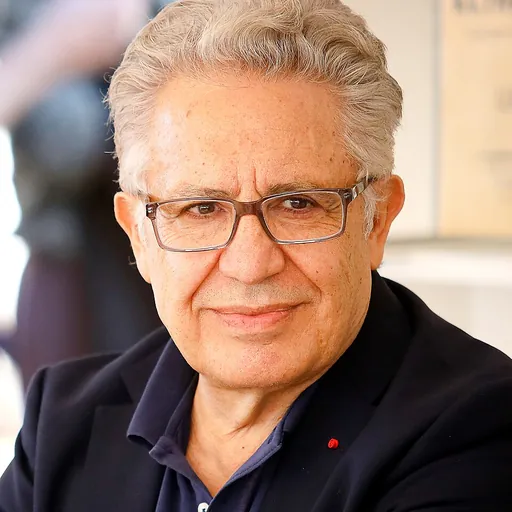
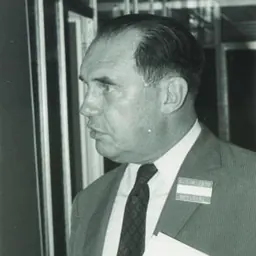
Zülfü Livaneli
Turkish musician, writer, screenwriter, and politician. (born 1946)
About Zülfü Livaneli
Born 1946. Zülfü Livaneli is a Turkish composer, politician, film director, poet, singer and writer.
Ömer Zülfü Livanelioğlu (born 20 June 1946), better known as Zülfü Livaneli, is a Turkish musician, author, poet, and politician.
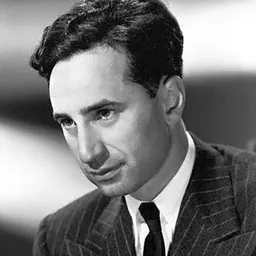
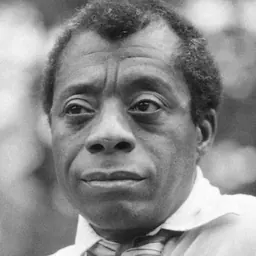
He was imprisoned several times following the 1971 Turkish military memorandum due to his political views, which led to his exile in 1972. During exile, he lived in Stockholm, Paris, Athens, and New York City, where he collaborated with artists and intellectuals such as Elia Kazan, Arthur Miller, James Baldwin, and Peter Ustinov. He returned to Turkey in 1984.
In 1995, UNESCO appointed him as a Goodwill Ambassador in recognition of his cultural works, political activities, and contributions to world peace. He resigned from this position in 2016 in protest against what he described as the damage by the Turkish State to the historic Kurdish Old Town of Diyarbakir.
Personal life Livaneli's family is of Georgian descent. His father, Mustafa Sabri Livanelioğlu, held various judicial positions before serving as the First Deputy President of the Court of Cassation from September 1977 to July 1983. Livaneli has four brothers and one sister. When he was 20, his mother died at the age of 38, after which his father remarried. In 1964, Livaneli married translator Ülker Tunçay. who was born in Ankara, Turkey, in 1966.
Musical career Livaneli released his debut album under the pseudonym "Ozanohad Glu". He later adopted his current name, Zülfü Livaneli, which appeared on his subsequent album, (Turkish revolutionary songs), released in 1973. While in Europe, Livaneli learned from his brother Ferhat that large crowds in Turkey were singing his songs during protests. In response, Livaneli created an album titled , setting his music to poems by Nâzım Hikmet. The album remained on the music charts for 48 weeks.
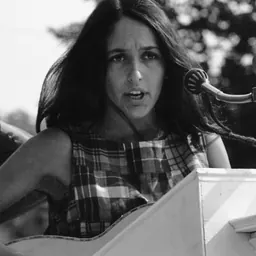
Livaneli's musical catalog includes approximately 300 songs, a ballet, and a rhapsody recorded by the London Symphony Orchestra. His work has been interpreted by international performers including Joan Baez, Maria Farantouri, and Udo Lindenberg. As a film composer, he has scored thirty productions, notably the 1982 Palme d'Or winner Yol and Helma Sanders-Brahms's Shirin's Wedding. A 1997 performance in Ankara is cited as one of his largest live events, with an estimated attendance of 500,000. In 2010, he sang "Mothers of the Disappeared" with Bono at U2's concert in Istanbul, Turkey, the band's first concert in the city. Livaneli has received awards including the Best Album of the Year Award (Greece), the Edison Award (Holland), Best Album of the Year (Music Critics Guild of Germany), and the Premio Luigi Tenco Best Songwriter Award at the San Remo in 1999.
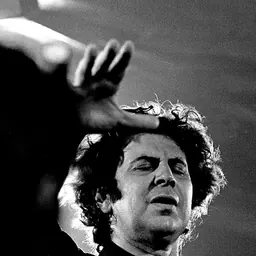
Livaneli's music achieved significant popularity in the 1980s. In 1986, he met the Greek composer Mikis Theodorakis. Together they produced the album Güneş Topla Benim İçin (Gather the Sun for Me). After its release in Turkey, the album peaked in the Turkish music market. In the 2002 Turkish general election, Livaneli was elected to the Grand National Assembly as a deputy for Istanbul for the Republican People's Party (CHP). He resigned from the CHP in early 2005, in protest against "the CHP's non-democratic and authoritarian system of politics." Livaneli served one term in the Turkish parliament.
During his political career, Livaneli presented a legislative proposal to amend Article 301 of the Turkish Penal Code, proposing that the concept of "Turkishness" be replaced with that of the "Turkish nation" to promote a more inclusive concept of national identity. The amendment was intended to reduce tension associated with the concept of the Turkish race.
In 2006, he presented a proposal to the National Assembly to establish a commission to investigate the reasons for increasing violence and fanaticism among youth, which was accepted.
Following his 2005 resignation from the party, Livaneli continued serving in the Grand National Assembly as an independent until the end of that term. He did not participate in the 2007 Turkish elections and has since focused on his artistic and literary work. Milliyet, and Cumhuriyet.
Films Livaneli directed four feature films: Iron Earth, Copper Sky, Mist, Shahmaran, and Veda. His film Iron Earth, Copper Sky was screened in the Un Certain Regard section at the 1987 Cannes Film Festival. Veda, based on the life of Mustafa Kemal Atatürk, is the last film written and directed by Zülfü Livaneli.
Bliss, adapted from Livaneli's novel of the same name, received critical praise and was considered one of the most notable Turkish films of the decade, as well as one of the first narrative films to address honor killings. The New York Times reviewed the film as "consistently gripping" and "visually intoxicating", calling it a "landmark of contemporary Turkish cinema".
Literature After establishing his music career, Livaneli focused on writing. His first collection of short stories, A Child in Purgatory, was published in 1978 and later adapted into a film by Swedish and German TV. Livaneli's novels, such as Bliss, which won the Barnes & Noble Discovery of Great New Writers Award in 2006, and his works Serenade for Nadia, Leyla's House, and My Brother's Story, have been translated into multiple languages and received both Turkish and international literary recognition. His novels have been adapted into films, theatrical productions, and operas.
Publications Arafat'ta Bir Çocuk (A Child in Purgatory) (1978) Orta Zekalılar Cenneti (The Heaven of the Mediocre) (1991) Diktatör ve Palyaço (The Dictator and the Clown) (1992) Sosyalizm Öldü mü? (Is Socialism Dead?) (1994) Engereğin Gözündeki Kamaşma (The Eunuch Of Constantinople) (1996) Bir Kedi, Bir Adam, Bir Ölüm (Memory Of Snow) (2001) Mutluluk (Bliss) (2002) Gorbaçov'la Devrim Üstüne Konuşmalar (Conversations With Gorbachov On Revolution) (2003) Leyla'nın Evi (Leyla's House) (2006) Son Ada (The Last Island) (2008) Sevdalim Hayat (2009) Sanat Uzun, Hayat Kısa (Art is Long, Life is Short) (2010) Serenad (Serenade) (2011) Edebiyat Mutluluktur (Literature is Bliss) (2012) Kardeşimin Hikayesi (My Brother's Story) (2013) Son Ada'nın Çocukları (Last Island's Kids) (2014) Konstantiniyye Oteli (Constantinople Hotel) (2015) Elia ile Yolculuk (2017) Huzursuzluk (2017) Rüzgârlar Hep Gençtir (2019) Kaplanın Sırtında (2021)
Partial discography Chants Révolutionnaires Turcs (Turkish revolutionary songs) – 1973 Yasak Plak – 1971–1974 Eşkıya Dünyaya Hükümdar Olmaz (Bandits Cannot Rule the World) – 1976 Merhaba (Hello!) – 1977 Nazım Türküsü (Nazim's Song) – 1978 The Bus (OST) – 1978 Alamanya Beyleri – 1979 Atlının Türküsü (The Horseman's Song) – 1979 Günlerimiz (Our Days) – 1980 İnce Memet Türküsü (Thin Memet Song) – 1980 Anadoluyum Ben (I Am An Anatolian) – 1981 Maria Farandouri Söylüyor Zülfü Livaneli (Maria Farandouri Singing Livaneli) – 1982 Yol (The Way) (Soundtrack) – 1983 Eine Auswahl (A Selection) – 1983 Ada (Island) – 1983–1984 İstanbul Konseri (Istanbul Concert) – 1984 Güneş Topla Benim İçin (Gather The Sun For Me) – 1986 Livaneli / 10 Yılın Ezgisi (10 Melodies of the Year) – 1986 Zor Yıllar (Difficult Years) – 1987 Hoşgeldin Bebek (Welcome Baby) – 1987 Gökyüzü Herkesindir (Sky Belongs to Everybody) – 1988 Soundtracks – 1988 Crossroads (New Age) – 1991 Saat 4 Yoksun (Hour 4, You Are Not Here) – 1992 Sevgiyle (With Love) −1994 Neylersin – 1994 Yangın Yeri (The Place in Fire) – 1996 Janus (Symphonic Poems) – 1996 Livaneli & Theodorakis : Together – 1997 Nefesim Nefesine (My Breath to Your Breath) – 1998 New Age Rhapsody, London Symphony Orchestra Plays Livaneli – 1998–1999 Unutulmayanlar (Unforgettable Ones) – 1999 İlk Türküler (First Songs) – 2001 Hayata Dair (About Life) – 2005 Suyun Belleği (The Memory of Water) – 2005 Efsane Konserler (Best Concerts) – 2006 35. Yıl Konseri (35th Year Concert) – 2008 "Gökkuşağı Gönder Bana" (Send me a rainbow) – 2013 Livaneli 50. Yıl "Bir Kuşaktan Bir Kuşağa" (Livaneli 50th year – "From One Generation to Another") – 2016
Don’t just read it —
keep it.
Full-length biographies made to live with: read them, listen on the way to work, watch them tonight.
- E-book
- Audio
- Video
Instant download · yours to keep · every purchase keeps this site free
Important facts
Family & relationships
People in Zülfü Livaneli's life
Named in this biography and alive at the same time




Related people
Same field, nearest in time

Contemporaries
People whose lives overlapped Zülfü Livaneli's


Frequently asked questions
Who is Zülfü Livaneli?
Turkish musician, writer, screenwriter, and politician. (born 1946)
When was Zülfü Livaneli born?
Zülfü Livaneli was born on 20 June 1946 in Ilgın.
What is Zülfü Livaneli's occupation?
Zülfü Livaneli is a composer, politician, film director, poet, singer and writer.
What nationality is Zülfü Livaneli?
Zülfü Livaneli is Turkish.
Sources & further reading
Cite this page
APA: Biography.guide. (2026). Zülfü Livaneli. https://biography.guide/zulfu-livaneli/
MLA: "Zülfü Livaneli." Biography.guide, https://biography.guide/zulfu-livaneli/.
Chicago: "Zülfü Livaneli." Biography.guide. https://biography.guide/zulfu-livaneli/.
Data last updated: 2026-09-20 · Spot an error? Report a correction.
Page generated 2026-09-27 05:10 UTC