
About Zu Chongzhi
Lived 429 – 500. Zu Chongzhi was a mathematician and astronomer.
Zu Chongzhi (; 429–500 ), courtesy name Wenyuan , was a Chinese astronomer, inventor, mathematician, politician, and writer during the Liu Song and Southern Qi dynasties. He was most notable for calculating pi as between 3.1415926 and 3.1415927, a record in precision which would not be surpassed for nearly 900 years.
Life and works
Chongzhi's ancestry was from modern Baoding, Hebei. To flee from the ravages of war, Zu's grandfather Zu Chang moved to the Yangtze, as part of the massive population movement during the Eastern Jin. Zu Chang at one point held the position of Chief Minister for the Palace Buildings within the Liu Song and was in charge of government construction projects. Zu's father, Zu Shuozhi , also served the court and was greatly respected for his erudition.
Zu was born in Jiankang. His family had historically been involved in astronomical research, and from childhood Zu was exposed to both astronomy and mathematics. When he was only a youth, his talent earned him much repute. When Emperor Xiaowu of Song heard of him, he was sent to the Hualin Xuesheng academy, and later the Imperial Nanjing University (Zongmingguan) to perform research. In 461 in Nanxu (today Zhenjiang, Jiangsu), he was engaged in work at the office of the local governor. In 464, Zu moved to Louxian (today Songjiang district, Shanghai), there, he compiled the Daming calendar and calculated π.
Zu Chongzhi, along with his son Zu Gengzhi, wrote a mathematical text entitled Zhui Shu (; "Methods for Interpolation"). Most schools argue about his complexity since traditionally the Chinese had developed mathematics as algebraic and equational. Logically, scholars assume that the Zhui Shu yields methods of cubic equations. His works on the accurate value of pi describe the lengthy calculations involved. Zu used Liu Hui's algorithm described earlier by Liu Hui to inscribe a 12,288-gon. Zu's value of pi is precise to six decimal places and for almost nine hundred years thereafter no subsequent mathematician computed a value this precise. Zu also worked on deducing the formula for the volume of a sphere with his son Zu Gengzhi. In their calculation, Zu used the concept that two solids with equal cross-sectional areas at equal heights must also have equal volumes to find the volume of a Steinmetz solid. And further multiplied the volume of the Steinmetz solid with π/4, therefore found the volume of a sphere as πd^3/6 (d is the diameter of the sphere).
Zu Chongzhi's mathematical achievements included: the calendar introduced by him in 465. distinguishing the sidereal year and the tropical year. He measured 45 years and 11 months per degree between those two; today we know the difference is 70.7 years per degree. calculating one year as 365.24281481 days, which is very close to 365.24219878 days as we know today. calculating the number of overlaps between sun and moon as 27.21223, which is very close to 27.21222 as we know today; using this number he successfully predicted an eclipse four times during 23 years (from 436 to 459). calculating the Jupiter year as about 11.858 Earth years, which is very close to 11.862 as we know of today. deriving two approximations of pi, (3.1415926535897932...) which held as the most accurate approximation for for over nine hundred years. His best approximation was between 3.1415926 and 3.1415927, with (, milü, close ratio) and (, yuelü, approximate ratio) being the other notable approximations. He obtained the result by approximating a circle with a 24,576 (= 213 × 3) sided polygon. This was an impressive feat for the time, especially considering that the counting rods he used for recording intermediate results were merely a pile of wooden sticks laid out in certain patterns. Japanese mathematician Yoshio Mikami pointed out, " was nothing more than the value obtained several hundred years earlier by the Greek mathematician Archimedes, however milü = could not be found in any Greek, Indian or Arabian manuscripts, not until 1585 Dutch mathematician Adriaan Anthoniszoon obtained this fraction; the Chinese possessed this most extraordinary fraction over a whole millennium earlier than Europe". Hence Mikami strongly urged that the fraction be named after Zu Chongzhi as Zu's fraction. In Chinese literature, this fraction is known as "Zu's ratio". Zu's ratio is a best rational approximation to , and is the closest rational approximation to from all fractions with denominator less than 16600. finding the volume of a sphere as D3/6 where D is diameter (equivalent to 4r3/3).
Inventions and innovations Hammer mills In 488, Zu Chongzhi was responsible for erecting water powered trip hammer mills which was inspected by Emperor Wu of Southern Qi during the early 490s.
Paddle boats Zu is also credited with inventing Chinese paddle boats or Qianli chuan in the late 5th century AD during the Southern Qi dynasty.
South pointing chariot The south-pointing chariot device was first invented by the Chinese mechanical engineer Ma Jun (c. 200–265 AD). It was a wheeled vehicle that incorporated an early use of differential gears to operate a fixed figurine that would constantly point south, hence enabling one to accurately measure their directional bearings. This effect was achieved not by magnetics (like in a compass), but through intricate mechanics, the same design that allows equal amounts of torque applied to wheels rotating at different speeds for the modern automobile. After the Three Kingdoms period, the device fell out of use temporarily. However, it was Zu Chongzhi who successfully re-invented it in 478, as described in the texts of the Book of Song and the Book of Qi, with a passage from the latter below:
When Emperor Wu of Liu Song subdued Guanzhong he obtained the south-pointing carriage of Yao Xing, but it was only the shell with no machinery inside. Whenever it moved it had to have a man inside to turn (the figure). In the Sheng-Ming reign period, Gao Di commissioned Zi Zu Chongzhi to reconstruct it according to the ancient rules. He accordingly made new machinery of bronze, which would turn round about without a hitch and indicate the direction with uniformity. Since Ma Jun's time such a thing had not been.
Literature Zu's paradoxographical work Accounts of Strange Things [] survives.
Named after him ≈ as Zu Chongzhi's ratio The lunar crater Tsu Chung-Chi 1888 Zu Chong-Zhi is the name of asteroid 1964 VO1 ZUC stream cipher, an encryption algorithm Zhuchongzi, a series of quantum computers developed by researchers at the University of Science and Technology of China in Hefei
Don’t just read it —
keep it.
Full-length biographies made to live with: read them, listen on the way to work, watch them tonight.
- E-book
- Audio
- Video
Instant download · yours to keep · every purchase keeps this site free
Important facts
People in Zu Chongzhi's life
Named in this biography and alive at the same time


Related people
Same field, nearest in time



Contemporaries
People whose lives overlapped Zu Chongzhi's





Frequently asked questions
Who was Zu Chongzhi?
Chinese mathematician-astronomer
When was Zu Chongzhi born?
Zu Chongzhi was born in 429 in Jiankang.
When did Zu Chongzhi die?
Zu Chongzhi died in 500 in China.
What was Zu Chongzhi's occupation?
Zu Chongzhi was a mathematician and astronomer.
What nationality was Zu Chongzhi?
Zu Chongzhi's recorded nationality: Liu Song dynasty, Southern Qi.
Sources & further reading
Cite this page
APA: Biography.guide. (2026). Zu Chongzhi. https://biography.guide/zu-chongzhi/
MLA: "Zu Chongzhi." Biography.guide, https://biography.guide/zu-chongzhi/.
Chicago: "Zu Chongzhi." Biography.guide. https://biography.guide/zu-chongzhi/.
Data last updated: 2026-09-21 · Spot an error? Report a correction.
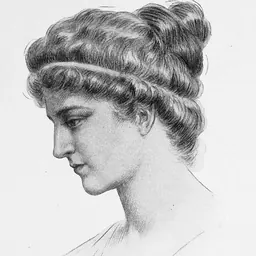
Portrait: Wikimedia Commons · author & licence
Page generated 2026-09-27 05:00 UTC