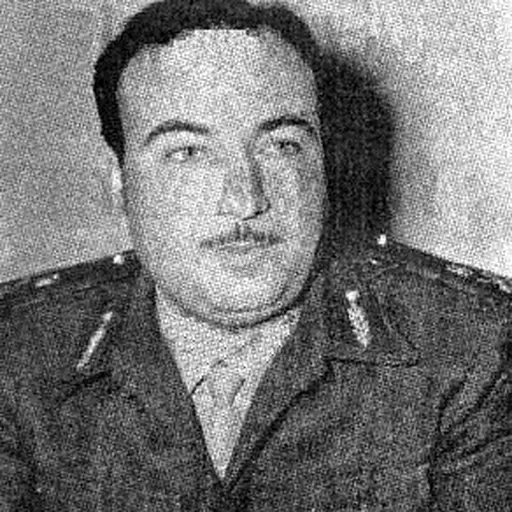
About Ziad al-Hariri
Lived 1930 – 2015 (aged 84–85). Ziad al-Hariri was a Syrian politician.
Mohammed Ziad al-Hariri (1929 – 2 September 2015) was a Syrian Arab Army officer. A staunch Arab nationalist, he supported the union between Syria and Egypt in 1958, opposed Syria's secession from it in 1961 and served as the chief leader of the coup d'état that toppled the secessionist government in March 1963. Politically independent from the Nasserists and their Ba'athist rivals, Hariri served as the army's chief of staff following the coup and was briefly defense minister until being dismissed during a wide-scale purge of non-Ba'athists from the military. He retired from political activity soon afterward.
Early life Hariri was born to a Sunni Muslim Arab family from the town of Hama in 1929. His father was a major landowner in nearby Homs, and was sympathetic to the politics of the communist national leader Khalid al-Azm. Hariri's brother was also sympathetic to communism and was a locally known poet in Syria. Hariri's brother-in-law was the prominent Arab socialist politician Akram al-Hawrani, who was also a Hama native.
Military and political career Hariri entered the Homs Military Academy in the early 1950s and became an officer in the Syrian Army in 1954, during the presidency of Adib al-Shishakli. During this period he became active in the growing pan-Arabist movement led by Egyptian president Gamal Abdel Nasser. Hariri supported the formation of the United Arab Republic (UAR) in February 1958. After the union's breakup in 1961, following a secessionist coup in Syria, he became a staunch opponent of the new government of President Nazim al-Qudsi. At the time, It was both a prestigious title and a strategic post as Hariri headed the largest concentration of Syrian troops in the country.
For two years Hariri actively opposed the secessionist government and worked to restore the union with Egypt, gaining the support of Nasserist and politically independent Arab nationalist officers in the army. Sometime in the middle of 1962, the Military Committee of the Ba'ath Party, which ostensibly favored the restoration of the UAR, offered Hariri the position of army chief of staff if he gave the Ba'athists his support in overthrowing Qudsi's government. Should the coup attempt fail, the committee guaranteed Hariri could "disown" them. Tensions had been rising between Hariri and Prime Minister Khalid al-Azm, and Hariri feared Azm was going to dismiss him as front commander and appoint him as the military attaché in Baghdad, where he could wield little influence over events in Syria. while pro-government brigades at Qatana and al-Kiswah, on the outskirts of the city, were neutralized by unionist forces. Hariri's troops installed barricades blocking strategic roads in the city, and besieged several government buildings, including the main post office. By the morning of 8 March, the coup was completed with virtually no blood spilled and the chief unionist officers gathered at army headquarters in Damascus to celebrate its quick success. Syria expert Patrick Seale referred to Hariri as the "chief coup maker." Hariri was promoted to Major-General, became a member of the Revolutionary Command Council (RCC) that governed the country and, as planned, was appointed the army's chief of staff. To Hariri's chagrin, the Military Committee became the underlying power in Syria instead of Hariri serving as the country's strongman. Under the committee's influence, the RCC appointed officer Lu'ay al-Atassi as president and Ba'athist co-founder Salah al-Din Bitar as prime minister. Hariri had taken part in the negotiations in Cairo. Hariri had been sent to Algeria on 19 June with a high-ranking delegation, including Bitar, Aflaq and Education Minister Sami Droubi, just prior to the purge and was unable to personally intervene.
Hariri was subsequently dismissed as chief of staff and was officially reassigned to the post of military attache in Washington D.C. He refused the position and left Syria for France on 8 July to avoid the repercussions from the Ba'athist officers. Prime Minister Bitar was known to sympathize with Hariri,
Al-Hariri died in Damascus on 2 September 2015, and buried in Hama.
Don’t just read it —
keep it.
Full-length biographies made to live with: read them, listen on the way to work, watch them tonight.
- E-book
- Audio
- Video
Instant download · yours to keep · every purchase keeps this site free
Important facts
People in Ziad al-Hariri's life
Named in this biography and alive at the same time


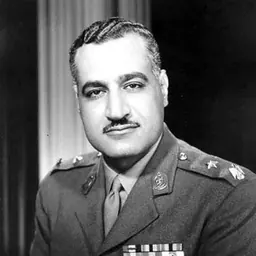

Related people
Same field, nearest in time


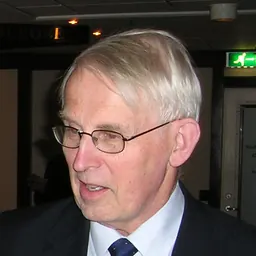

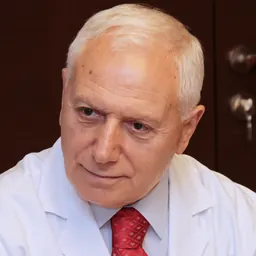
Contemporaries
People whose lives overlapped Ziad al-Hariri's

Frequently asked questions
Who was Ziad al-Hariri?
Syrian politician
When was Ziad al-Hariri born?
Ziad al-Hariri was born in 1930 in Hama.
When did Ziad al-Hariri die?
Ziad al-Hariri died on 2 September 2015.
What was Ziad al-Hariri's occupation?
Ziad al-Hariri was a politician.
What nationality was Ziad al-Hariri?
Ziad al-Hariri was Syrian.
Sources & further reading
Cite this page
APA: Biography.guide. (2026). Ziad al-Hariri. https://biography.guide/ziad-al-hariri/
MLA: "Ziad al-Hariri." Biography.guide, https://biography.guide/ziad-al-hariri/.
Chicago: "Ziad al-Hariri." Biography.guide. https://biography.guide/ziad-al-hariri/.
Data last updated: 2026-09-23 · Spot an error? Report a correction.
Portrait: Wikimedia Commons · author & licence
Page generated 2026-09-27 05:06 UTC