
About Zhu Hong
Lived 1535 – 1615 (aged 79–80). Zhu Hong was a Chinese writer, buddhist monk and monk.
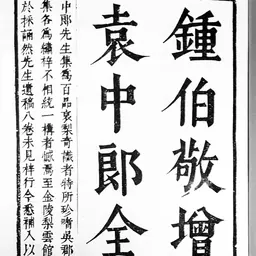
Yunqi Zhuhong (; 1535–1615), also widely known as Master Lianchi , was a Chinese Buddhist monk during the late Ming Dynasty. The name Yunqi derives from his monastic residence on Mount Yunqi hence "Zhuhong of Yunqi [Mountain]", while Lianchi translates to "lotus pond". In Chinese Buddhism, Yunqi Zhuhong is best remembered as the Eighth Patriarch of the Pure Land tradition, and is known for his analysis of the Pure Land thought, and reconciling "mind-only" interpretations with more literal "Western Pure Land" interpretations. Along with his lay follower, Yuan Hongdao, Zhuhong wrote extensively on the Pure Land and defended its tradition against other Buddhist critics, while analyzing the Pure Land of Amitabha Buddha within the larger Buddhist context.
Zhuhong was also an avid editor of Buddhist liturgical texts, and he recodified the manuals of various rituals such as the Yujia Yankou rite and the Shuilu Fahui ceremony, which remain widely performed in contemporary Chinese Buddhism. Zhuhong's contributions also extend to the other Buddhist traditions besides Pure Land, such as Chan and Esoteric Buddhism, which is reflective of the historically non-sectarian nature of Chinese Buddhism. For instance, he wrote the Chan Whip Anthology , a survey of Chan Buddhist literature from the Tang dynasty to the Ming dynasty, which has served as a Chan handbook in both China and Japan since its publication in 1600. Another example is his recodification of the tantric Yujia Yankou rite, where he incorporated and made commentary regarding various esoteric Buddhist material, including the offering of a maṇḍala during the rite and the invocation or presence of various esoteric deities such as the maṇḍala of the Thirty-seven Deities in the Diamond Realm. According to sources, the area was still infested with tigers which often attacked the local villagers. To curb the attacks without killing the tigers, Zhuhong led a pacification ceremony for five days and nights where monks were instructed to perform twelve complete sessions of the Repentance Ritual of the Emperor of Liang (梁皇懺法; pinyin: Liánghuáng Chànfǎ) as well as conduct the Yujia Yankou rite (瑜伽燄口; pinyin: Yújiā Yànkǒu; lit: "Yoga Flaming Mouth Food Bestowal Rite") to pacify the tigers, after which the attacks subsided. Another famous account mentions an incident when, during a year where severe drought struck the area, the local villagers petitioned Zhuhong for help in praying for rain. When Zhuhong replied that he did not know any rain-making magic and only knew the nianfo, the villagers insisted. Unable to refuse, Zhuhong went out, reciting the nianfo and striking a wooden fish while walking through the fields, whereupon rain began to fall wherever he passed. Records mention other similar feats by Zhuhong, including an instance in 1588 when he managed to lift a plague that had struck Hangzhou after being invited by the magistrate Yu Liangshu (余良樞) to Lingzhi Temple (靈芝寺) to perform a ritual to avert calamity.
Due to his miraculous interventions for the benefit of the local community, Zhuhong eventually restored Yunqi Temple with local sponsorship and assumed leadership of the local religious community. Due to his educated background, he assisted when official matters required someone who could speak Mandarin Chinese, and developed a network of gentlemen who sought his advice on spiritual matters as well.
Pure Land Writings
Yunqi Zhuhong wrote extensively on the Pure Land Buddhist tradition both to defend it from criticism from other Buddhist institutions (primarily Chan), and to explore and clarify the teachings more.
For example, in his commentary on the Amitabha Sutra, Zhuhong wrote on the phenomenal aspect of the Pure Land, and how at the highest level, the awakened mind sees the Pure Land as it really is. Zhuhong's polemic coincided with the political appointment of Shen Que (, d. 1624) as vice minister of rites in Nanking (Nanjing) and his initiation of an anti-Catholic campaign from official circles in 1616.
In the , published in three sections: the Chubi , Erbi and the Sanbi , he describes Matto Ricci as follows:
Don’t just read it —
keep it.
Full-length biographies made to live with: read them, listen on the way to work, watch them tonight.
- E-book
- Audio
- Video
Instant download · yours to keep · every purchase keeps this site free
Important facts
more
Jingmiao Zhenxiuchanshi, Lianchi, FuhuiPeople in Zhu Hong's life
Named in this biography and alive at the same time
Related people
Same field, nearest in time

Contemporaries
People whose lives overlapped Zhu Hong's





Frequently asked questions
Who was Zhu Hong?
Chinese Buddhist monk
When was Zhu Hong born?
Zhu Hong was born in 1535 in Hangzhou.
When did Zhu Hong die?
Zhu Hong died in 1615.
What was Zhu Hong's occupation?
Zhu Hong was a writer, buddhist monk and monk.
What nationality was Zhu Hong?
Zhu Hong was Chinese.
Sources & further reading
Cite this page
APA: Biography.guide. (2026). Zhu Hong. https://biography.guide/zhu-hong/
MLA: "Zhu Hong." Biography.guide, https://biography.guide/zhu-hong/.
Chicago: "Zhu Hong." Biography.guide. https://biography.guide/zhu-hong/.
Data last updated: 2026-09-26 · Spot an error? Report a correction.
Page generated 2026-09-27 05:16 UTC