
About Zhang Hong-tu
Born 1943. Zhang Hong-tu is a Chinese painter and sculptor.
Zhang Hongtu (Simplified Chinese: 张宏图; Traditional Chinese: 張宏圖; Wade-Giles: Chang Hung-t'u; Pinyin: Zhāng Hóngtú) (born 1943) is a Chinese artist based in New York City.
Zhang was born in Pingliang. He works in a variety of media such as painting (sometimes with soy sauce), sculpture, collage, ceramics, digital imaging and installation. His work explores the freedom to criticize the Chinese authorities afforded to an artist living in the West. It also reflects on themes of authority and belief (specifically the power of iconic imagery) and cross-cultural 'East and West' connections. These themes are largely derived from his "outsider" standing as a Muslim in China and, after his move to the United States, as a Chinese citizen in the Western world.
He studied at the Central Academy of Arts and Crafts in Beijing.
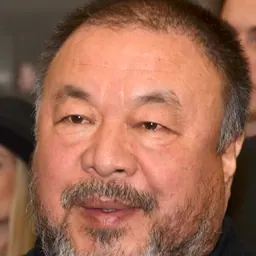
In 1987 he took part in the founding of The Chinese United Overseas Artists Association, along with Li Shuang, Qu Leilei, and Ai Weiwei.
Biographical
Early life Zhang Hongtu was born in 1943 into a Muslim family in Pingliang, 100 miles northwest of Xi'an. His family was constantly on the move however, so that Hongtu never quite belonged to any of the places he moved. Zhang Hongtu's father, Zhang Bingduo, was a devout Muslim and traveled throughout China to start schools in the Arabic language. From 1947 to 1950, with the Chinese civil war raging, Hongtu's father mobilized his family, moving them from Pingliang in the northwest to Shanghai, Suzhou, and Nanjing, and then north to Zhengzhou. Before the communist defeat, Zhang Bingduo intended to escape with his family to Hong Kong, but was convinced to move to Beijing by a Muslim professor.
In Beijing, the members of the Zhang family were outsiders. Hongtu's father worked various jobs for the new government, including the Minority Affairs Association, the Xinhua News Agency, the Central Broadcasting Administration, and eventually he became the vice president of the National Muslim Association. However, their religious affiliation in an officially atheistic state made life increasingly difficult. Bingduo was branded a Rightist in 1957. And while he avoided being sent to a reeducation camp, Hongtu's mother lost her job and talk of religion disappeared within the household. It marked the beginning of what Jerome Silbergeld notes as "a long romance between Chinese and Western icons" in Zhang Hongtu's work. In his deconstruction of cultural icons, Zhang Hongtu has used cutouts and contrast. He cuts images out, turning positives into negatives and solids into voids. Repainting Shanshui is a series that Zhang Hongtu began in 1998 to explore the parody of values and conventions of Chinese and Western art. For Zhang, the image of Chairman Mao seemed ubiquitous, and with just a few brushstrokes he was able to juxtapose Western and Eastern cultures in a humorous critique. This artwork is seen as one of the first "political pop" artworks from a Chinese artist. The Saatchi Gallery, which housed an exhibition of Zhang Hongtu's work, notes that "The uncanny resemblance between communist leader and puritan farmer ironically confuses propaganda, religion, and ideology with the kitsch of advertising and cult of personality; like Elvis and Jesus, once you start looking Mao can be found everywhere." The painting was rejected because it "offended Christian values."
The painting was intended to be a satire about the deification of Chairman Mao, surrounded by disciples who made themselves in his image.
Selected exhibitions 2004
Selected work, William Holland & Drury Gallery, Marlboro College, Vermont
2003
Icon & Innovations: The Cross-Cultural Art of Zhang Hongtu, The Gibson Gallery, State University of New York at Potsdam
2002
Paris-Pekin, Espace Cardin, Paris
ConversASIAN, National Gallery, Cayman Island
2000
New Paintings, Cheryl McGinnis Gallery, New York
1996
Soy Sauce, Lipstick, Charcoal, Hong Kong University of Science and Technology
Chairmen Mao, Groton School, Massachusetts
1995
Zhang Hongtu: Material Mao, The Bronx Museum of the Arts, New York
1994
The Fifth Biennial of Havana, Cuba
Small World - Small Works, Galerie + Edition Caoc, Berlin, Germany
1982
The Spirit of Dunhuang, Asian Arts Institute, New York
Don’t just read it —
keep it.
Full-length biographies made to live with: read them, listen on the way to work, watch them tonight.
- E-book
- Audio
- Video
Instant download · yours to keep · every purchase keeps this site free
Important facts
People in Zhang Hong-tu's life
Named in this biography and alive at the same time



Related people
Same field, nearest in time

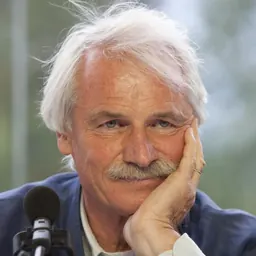
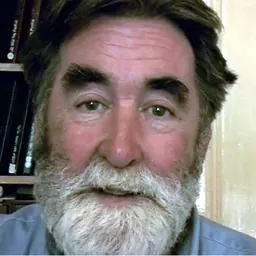
Contemporaries
People whose lives overlapped Zhang Hong-tu's

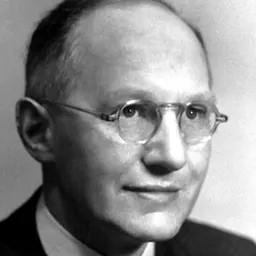

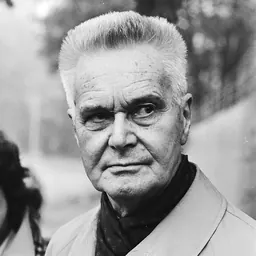

Frequently asked questions
Who is Zhang Hong-tu?
Chinese artist (born 1943)
When was Zhang Hong-tu born?
Zhang Hong-tu was born in 1943 in Pingliang.
What is Zhang Hong-tu's occupation?
Zhang Hong-tu is a painter and sculptor.
What nationality is Zhang Hong-tu?
Zhang Hong-tu is Chinese.
Sources & further reading
Cite this page
APA: Biography.guide. (2026). Zhang Hong-tu. https://biography.guide/zhang-hong-tu/
MLA: "Zhang Hong-tu." Biography.guide, https://biography.guide/zhang-hong-tu/.
Chicago: "Zhang Hong-tu." Biography.guide. https://biography.guide/zhang-hong-tu/.
Data last updated: 2026-09-20 · Spot an error? Report a correction.
Page generated 2026-09-27 05:23 UTC