
About Zhang Ge
Lived 801 – 927. Zhang Ge was a politician.
Zhang Ge (張格), courtesy name Chengzhi (承之), nickname Yishi (義師), was a politician of the Chinese Five Dynasties and Ten Kingdoms period state Former Shu, serving two stints as chancellor. Zhang was instrumental in persuading Former Shu's founding emperor Wang Jian into designating his youngest son Wang Zongyan as his heir.
During Tang Dynasty It is not known when Zhang Ge was born. His father Zhang Jun was a chancellor during the reigns of Emperor Xizong of Tang and Emperor Xizong's brother and successor Emperor Zhaozong. He was Zhang Jun's second son, and was said to be intelligent and handsome in his youth, and wily as his father was regarded to be.
By the time of around the new year 904, Emperor Zhaozong had been assassinated, and his son and successor Emperor Ai was under the physical control of the powerful warlord Zhu Quanzhong the military governor of Xuanwu Circuit (宣武, headquartered in modern Kaifeng, Henan), and Zhang Jun had retired to his vacation estate at Changshui (長水, in modern Luoyang, Henan). Zhu was preparing to seize the throne and was apprehensive that Zhang Jun might encourage the other warlords into a coordinated resistance movement against him. He ordered his ally Zhang Quanyi, who controlled the Luoyang region, to act against Zhang Jun. Zhang Quanyi sent his officer Yang Lin (楊麟) to Changshui dressed as bandits, ready to slaughter Zhang Jun and his household and blame the incident on banditry. A deputy sheriff at Yongning County (永寧, in modern Luoyang as well), Ye Yan (葉彥), whom Zhang Jun had treated well before, found out about this, and went to meet Zhang Ge, stating, "The Lord Chancellor cannot escape this disaster, but you, master, should make a different plan!" Zhang Jun then stated to Zhang Ge, "If you remain here, you will just die with us. If you flee, the family seeds can continue." Zhang Ge, after a tearful farewell, left with Ye, who took 30 men sworn to protect Zhang Ge, and escorted him as far as the Han River, and Zhang Ge subsequently fled to Xichuan Circuit (西川, headquartered in modern Chengdu, Sichuan). Meanwhile, Yang's men arrived, surrounded Zhang Jun's vacation estate, and slaughtered the entire household. (Zhang Ge's younger brother Zhang Bo, whom Emperor Zhaozong had earlier granted the imperial family name of Li and given a new name of Yan, was serving as Emperor Zhaozong's emissary to Yang Xingmi the military governor of Huainan Circuit (淮南, headquartered in modern Yangzhou, Jiangsu), and therefore also escaped this fate.)
During Former Shu
During Wang Jian's reign In 907, Zhu Quanzhong had Emperor Ai yield the throne to him, ending Tang Dynasty and starting a new Later Liang with him as its Emperor Taizu. Wang Jian the military governor of Xichuan, along with several other regional governors, refused to recognize the new Later Liang emperor, but after a joint declaration by Wang and Yang Wo the military governor of Huainan Circuit (淮南, headquartered in modern Yangzhou, Jiangsu) failed to caused a mass uprising by Later Liang subjects, Wang decided to declare himself emperor of a new state of Shu (known in history as Former Shu). He respected the Tang officials who fled to his realm, and Zhang Ge was among those people that he treated well. However, one of the seals on the letter bore the text, "From the Great Liang to Shu," and Zhang pointed out that this was a form of address that treated Shu as a vassal. Wang, in reaction, wanted to kill the emissaries, but Zhang persuaded him not to, pointing out that this was the fault of the Later Liang officials who drafted the text, and should not be blamed against the emissaries or cause disruption of the relationship. Thereafter, Wang treated Zhang with even greater respect.
In 918, Wang Jian grew deathly ill, and he entrusted Wang Zongyan to a group of officials led by his adoptive son, the general Wang Zongbi. However, Tang Wenyi wanted to hold onto power, and therefore, when Wang Jian grew even sicker, used the imperial guard soldiers he commanded to prevent the officials from entering the palace to see Wang Jian. However, his associate Pang Zaiying (潘在迎) betrayed him and allowed Wang Zongbi and the other officials inside the palace to take charge. Tang was exiled and, as soon as Wang Jian died, executed. Wang Zongyan took the throne.
During Wang Yan's reign Zhang Ge remained chancellor in the immediate aftermaths of Wang Yan's ascension to the throne, but was fearful of what would happen to him due to his long-term association with Tang Wenyi. He considered resigning his post first himself, but was dissuaded from doing so by his associate Yang Fen (楊玢) the minister of rites. However, shortly after, both Zhang and Yang were demoted, and Zhang was initially made the prefect of Mao Prefecture (茂州, in modern Ngawa Tibetan and Qiang Autonomous Prefecture, Sichuan), then further demoted to be the census officer at Wei Prefecture (維州, in modern Ngawa as well). Upon further accusations by the director of palace communications, Yu Ningji, Zhang was then further removed from all offices and exiled to Heshui Base (合水鎮, in Mao Prefecture). Yu further directed the prefect of Mao, Gu Chengyan (顧城郾) to guard Zhang carefully and submit further accusations against him. The wife of the prominent general Wang Zongkan (王宗侃, also adoptive son of Wang Jian's), however, was also named Zhang and wanted to protect him, and therefore persuaded Gu, through Gu's mother, not to do so, leading to Yu later finding excuses to punish Gu, but allowing Zhang's life to be saved.
During Later Tang In 925, Former Shu fell to an invasion by Later Tang (whose founding emperor, Emperor Zhuangzong, had earlier destroyed Later Liang and taken over its territory), commanded by Emperor Zhuangzong's son Li Jiji the Prince of Wei and his chief of staff Guo Chongtao. A number of Former Shu officials were forcibly moved to the Later Tang capital Luoyang — although, by the time they reached Luoyang in 926, Emperor Zhuangzong himself had been killed in a mutiny and was succeeded by his adoptive brother Emperor Mingzong. Zhang Ge was among the officials moved to Luoyang. Remembering how Ye Yan had saved his life, he tried to find Ye to show gratitude. Ye had died by that point, so he gave a large gift to Ye's family.
Notes and references
History of the Five Dynasties, vol. 71. Spring and Autumn Annals of the Ten Kingdoms (十國春秋), vol. 41. Zizhi Tongjian, vols. 264, 266, 268, 270, 273.
Don’t just read it —
keep it.
Full-length biographies made to live with: read them, listen on the way to work, watch them tonight.
- E-book
- Audio
- Video
Instant download · yours to keep · every purchase keeps this site free
Important facts
People in Zhang Ge's life
Named in this biography and alive at the same time


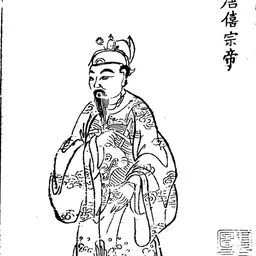

Related people
Same field, nearest in time



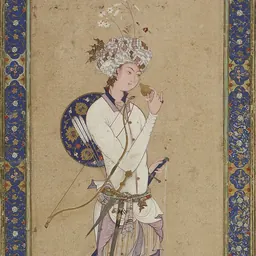
Contemporaries
People whose lives overlapped Zhang Ge's

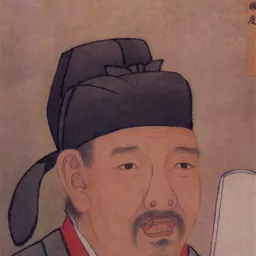

Frequently asked questions
Who was Zhang Ge?
Chinese politician and chancellor
When was Zhang Ge born?
Zhang Ge was born in 801.
When did Zhang Ge die?
Zhang Ge died on 10 June 927.
What was Zhang Ge's occupation?
Zhang Ge was a politician.
Sources & further reading
Cite this page
APA: Biography.guide. (2026). Zhang Ge. https://biography.guide/zhang-ge/
MLA: "Zhang Ge." Biography.guide, https://biography.guide/zhang-ge/.
Chicago: "Zhang Ge." Biography.guide. https://biography.guide/zhang-ge/.
Data last updated: 2026-09-20 · Spot an error? Report a correction.
Page generated 2026-09-27 05:14 UTC