
Zeynep Tüfekçi
Turkish sociologist and writer (born 1970)
About Zeynep Tüfekçi
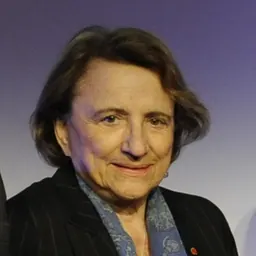
Born 1970. Zeynep Tüfekçi is a Turkish sociologist, opinion journalist, university teacher, writer, journalist and magazine writer.
Zeynep Tufekci (; ; ) is a Turkish-American sociologist, and the Henry G. Bryant Professor of Sociology and Public Affairs at Princeton University. She is also a columnist for The New York Times. Her work focuses on social media, media ethics, the social implications of new technologies, such as artificial intelligence and big data, as well as societal challenges such as the COVID-19 pandemic using complex and systems-based thinking. According to The Chronicle of Higher Education, she is one of the most prominent academic voices on social media and the new public sphere. In 2022, Tufekci was a Pulitzer Prize finalist for her "insightful, often prescient, columns on the pandemic and American culture", which the committee said "brought clarity to the shifting official guidance and compelled us towards greater compassion and informed response."
Before becoming a regular columnist, she was a frequent contributor to The New York Times and The Atlantic. She has also written columns for Wired and Scientific American. Prior to Princeton, she was a professor at Columbia University's Craig Newmark Center for Journalism Ethics and Security, a faculty associate at the Berkman Klein Center for Internet and Society at Harvard University, and an associate professor at the School of Information and Library Science at the University of North Carolina and associate professor at the University of Maryland Baltimore County.
Early life and education Tufekci was born in Istanbul, Turkey, near Taksim Gezi Park in Istanbul's Beyoğlu district. In 1995, Tufekci received a B.A. in sociology from Istanbul University, as well as an undergraduate degree in computer programming from Boğaziçi University. Tufekci earned an M.A. and a Ph.D. from the University of Texas at Austin.
Career Tufekci worked as a computer programmer before becoming an academic and turning her attention to social science.
In 2012, Tufekci became a faculty associate at the Berkman Klein Center for Internet & Society at Harvard University. During this time, Tufekci expressed concern about political campaigns impacted by and driven by big data in the form of "Smart Campaigns". This early warning was eventually recognized as prescient after Donald Trump was elected in 2016. She has repeatedly urged both online and in op-eds that outlets should avoid repetition of the killer's name and face as well as step-by-step discussions of their methods. The phenomenon of suicide contagion via social media and news coverage is part of Tufekci's analytical work.
In 2016, Tufekci was featured in a special report by The Economist on technology and politics in which she argues that the increasingly individualized targeting of voters by political campaigns is leading to a reduction of the "public sphere" in which civic debate takes place publicly. In May 2017, Tufekci's first book, Twitter and Tear Gas: The Power and Fragility of Networked Protest, was published by Yale University Press.
In 2020 during the COVID-19 pandemic, Tufekci was critical of the mainstream media for failing to explain the importance of mask wearing, and is often cited as one of the first to take up the importance of mask wearing in the mainstream media. This led to Tufekci becoming one of the academics who advised the WHO on adopting a mask recommendation. In addition to her mainstream media writing during the COVID-19 pandemic, Tufekci has co-authored articles published in peer-reviewed academic journals reviewing evidence that the SARS-CoV-2 virus is airborne, with British medical professor Trisha Greenhalgh and environmental engineering professor Linsey Marr.
Tufekci has given a series of TED talks on online social change, technology, the role of artificial intelligence and machine learning, and the role of social media and tech companies. She has also been a regular contributor at Wired.
Honors and awards 2005: International Communication Association, Top Eight Papers in Communication and Technology for "Digital Divide and Social Mobility: How Much Hope and How Much Hype?" 2011-2012: The Berkman Klein Center for Internet & Society at Harvard University, Fellow 2012-2013: Princeton University, Center for Information Technology Policy, Fellow 2014: Business Insider, The 100 Most Influential Tech People On Twitter 2014: American Sociological Association, The Section on Communication, Information Technologies, and Media Sociology's Award for Public Sociology 2015-2016: Carnegie Corporation of New York, Andrew Carnegie Fellow in the Social Sciences and Humanities 2022: Honorary Doctor of Humane Letters degree, Brown University
Works
Books
Theses
Critical studies and reviews of Tufekci's work Twitter and tear gas
Don’t just read it —
keep it.
Full-length biographies made to live with: read them, listen on the way to work, watch them tonight.
- E-book
- Audio
- Video
Instant download · yours to keep · every purchase keeps this site free
Important facts
more
Z Tufekci, Tufekci, Tufekci Z, Tufekci Z., Zeynep TufekciPeople in Zeynep Tüfekçi's life
Named in this biography and alive at the same time




Related people
Same field, nearest in time





Contemporaries
People whose lives overlapped Zeynep Tüfekçi's





Frequently asked questions
Who is Zeynep Tüfekçi?
Turkish sociologist and writer (born 1970)
When was Zeynep Tüfekçi born?
Zeynep Tüfekçi was born in 1970 in Istanbul.
What is Zeynep Tüfekçi's occupation?
Zeynep Tüfekçi is a sociologist, opinion journalist, university teacher, writer, journalist and magazine writer.
What nationality is Zeynep Tüfekçi?
Zeynep Tüfekçi is Turkish.
Sources & further reading
Cite this page
APA: Biography.guide. (2026). Zeynep Tüfekçi. https://biography.guide/zeynep-tufekci/
MLA: "Zeynep Tüfekçi." Biography.guide, https://biography.guide/zeynep-tufekci/.
Chicago: "Zeynep Tüfekçi." Biography.guide. https://biography.guide/zeynep-tufekci/.
Data last updated: 2026-09-25 · Spot an error? Report a correction.
Page generated 2026-09-27 05:11 UTC