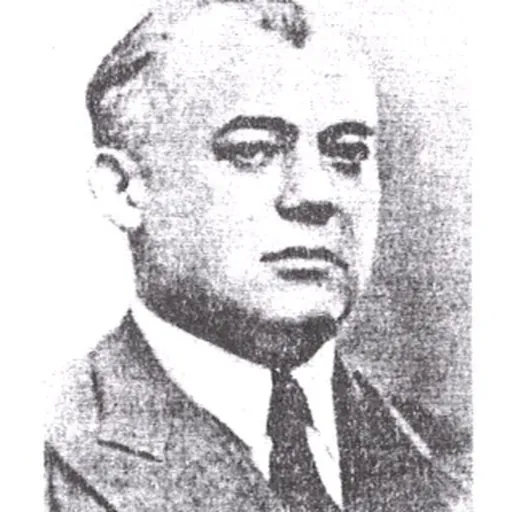
About Zenovie Pâclișanu
Lived 1886 – 1958 (aged 71–72). Zenovie Pâclișanu was an Austrian and Romanian archivist, historian and catholic priest.
Zenovie Pâclișanu (1 May 1886 – 1957 or 1958) was an Austro-Hungarian-born Romanian historian, diplomat and cleric. A native of Transylvania, he completed a doctorate at Vienna, and during the 1910s was active in the cultural and religious life of Blaj. Following the creation of Greater Romania, which he enthusiastically supported, he became a civil servant, twice taking part in treaty negotiations. After World War II, the new communist regime suppressed his Greek-Catholic Church and threw Pâclișanu in prison, where he died. His work, banned under communism but partly re-edited in the years since, focuses on the history of Transylvania between the 17th and 19th centuries, particularly in the religious sphere.
Biography
Origins, education and early activity Born into a family of Greek-Catholic peasants in Straja, Alba County, in the Transylvania region, he attended the Romanian high school in Blaj. Upon graduating in 1906, he enrolled in the theology faculty of Budapest University, which he completed in 1910. and was also the first director of the town's central library,
In Greater Romania In 1916, the Austro-Hungarian authorities arrested Pâclișanu on a charge of high treason. They alleged he had spied for Romania, which had recently entered World War I, by offering information to its army. One of twelve Romanian intellectuals arrested in Transylvania, he was freed after five weeks. becoming one of several Transylvanians admitted that June.
From 1920 to 1922, he headed the Cluj branch of the State Archives. Pâclișanu then worked as a manager at the Education and Religious Affairs Ministry from 1922 to 1948. He helped draft the 1927 Concordat,
World War II activity and communist persecution During the 1930s and '40s, Pâclișanu held a number of other government posts, heading the Education Ministry's arts office (1930), the minorities section of the prime minister's press bureau (1931), the minorities office at the Education Ministry and then the Religious Affairs and Arts Ministry, leaving in March 1942. For the following two years, he directed the studies and documentaries department of the Propaganda Ministry, also heading a section of the Institute of National History. After a ministerial reorganization in the summer of 1944, he and his department were transferred to the Foreign Ministry. There, he was given the title of cultural adviser within the press, propaganda and information cultural directorate. He also headed the minister's office of studies. Pâclișanu was initially interred at Jilava; his widow was eventually able to bury the body at Bellu Catholic cemetery. His son, sentenced to death in absentia, managed to flee to the United States, where he became a psychiatrist in Philadelphia. His widow died in Bucharest.
His publications include: Biserica și românismul. Studiu istoric (1910), the better known Vechile Mănăstiri Românești din Ardeal (1919), Alegerea Arhiereilor. Notițe istorice (1920), Propaganda catolică între românii din Ardeal și Ungaria înainte de 1500. Studiu istoric (1920), Din istoria bisericească a Românilor ardeleni. "Teologul" vlădicilor uniți (1700–1773). Studiu istoric cu anexe documentare (1923), Luptele politice ale Românilor ardeleni din anii 1790 – 1792. Studiu istoric cu anexe documentare (1923), Corespondența din exil a episcopului Inochentie Micu Klein, 1746 – 1768 (1924), Documente privitoare la istoria școalelor din Blaj (1930), Mișcările revizioniste în Statele europene în cursul anului 1931 (1932), Problema statutului minorităților (1935), Un vechi proces literar (Relațiile lui I. Bob cu S. Klein, Gh. Șincai și P. Maior) (1935), and Istoria creștinismului antic (1937). Following the cession of Northern Transylvania to Hungary imposed by the Second Vienna Award, his writings increased in frequency and virulence. He published works in German, Italian and French regarding Hungarian minority policy. Three late articles published in Revista Istorică Română retain their interest: "In jurul ierarhiei Românilor ardeleni în secolul XV" (1943), "Vechile districte românești de peste munți" (1943) and "Din corespondența doctorului Ioan Rațiu" (1944).
With the onset of the Communist regime, Pâclișanu's work was banned in its entirety, and appeared only in fragmentary form in exile publications, particularly Catholic ones based at Rome. One of his wartime texts was published in the United States in 1985 as Hungary's Struggle to Annihilate its National Minorities. Based on Secret Hungarian Documents. He left in manuscript form the monumental church history Istoria Bisericii Române Unite, published only in 2006, as well as a lengthy series of studies. Although some historians began to cite his writings in more or less subversive manner after the slight cultural thaw in the early years of the Nicolae Ceaușescu era, his work never fully re-entered the academic mainstream. Nevertheless, a systematic attempt to recover his work began after the Romanian Revolution of 1989. Biserica și românismul was republished in 2005, while his doctoral thesis was printed in 2010, both in the Latin original and in a Romanian translation.
Don’t just read it —
keep it.
Full-length biographies made to live with: read them, listen on the way to work, watch them tonight.
- E-book
- Audio
- Video
Instant download · yours to keep · every purchase keeps this site free
Important facts
People in Zenovie Pâclișanu's life
Named in this biography and alive at the same time

Related people
Same field, nearest in time



Contemporaries
People whose lives overlapped Zenovie Pâclișanu's






Frequently asked questions
Who was Zenovie Pâclișanu?
Romanian archivist (1886-1958)
When was Zenovie Pâclișanu born?
Zenovie Pâclișanu was born on 1 May 1886 in Straja.
When did Zenovie Pâclișanu die?
Zenovie Pâclișanu died in 1958 in Jilava prison.
What was Zenovie Pâclișanu's occupation?
Zenovie Pâclișanu was an archivist, historian and catholic priest.
What nationality was Zenovie Pâclișanu?
Zenovie Pâclișanu was Austrian and Romanian.
Sources & further reading
· Wikipedia: Zenovie Pâclișanu
Cite this page
APA: Biography.guide. (2026). Zenovie Pâclișanu. https://biography.guide/zenovie-paclisanu/
MLA: "Zenovie Pâclișanu." Biography.guide, https://biography.guide/zenovie-paclisanu/.
Chicago: "Zenovie Pâclișanu." Biography.guide. https://biography.guide/zenovie-paclisanu/.
Data last updated: 2026-09-24 · Spot an error? Report a correction.
Portrait: Wikimedia Commons · author & licence
Page generated 2026-09-27 05:08 UTC