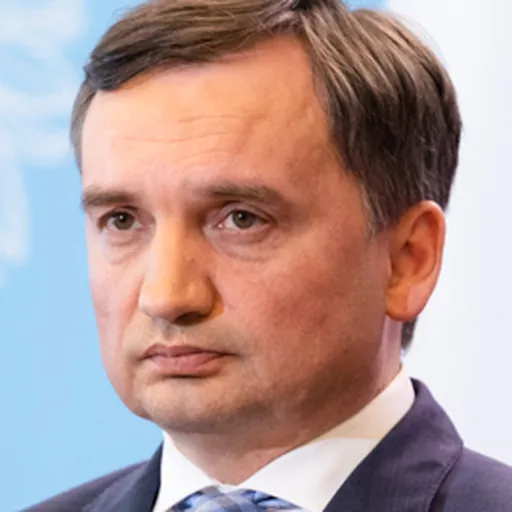
About Zbigniew Ziobro
Born 1970. Zbigniew Ziobro is a Polish politician, jurist and lawyer.
Zbigniew Tadeusz Ziobro (; born 18 August 1970) is a Polish politician and lawyer. He served as minister of justice and public prosecutor general from 2005 to 2007, returned as justice minister in 2015 and again combined the two offices from 2016 until 2023. He has been a member of the Sejm during six parliamentary terms and was a Member of the European Parliament (MEP) from 2009 to 2014. A co-founder of Law and Justice (PiS), he was expelled from the party in 2011 and subsequently founded and led Sovereign Poland, known until 2023 as United Poland. The party merged into PiS in October 2024.
Ziobro rose to national prominence through his anti-corruption rhetoric and his work on the parliamentary inquiry into the Rywin affair. As justice minister, he cultivated a law-and-order image and became one of Poland's most influential and polarising politicians. During his second period in office he was a principal architect of changes to the judiciary and prosecution service that the European Commission, the Court of Justice of the European Union (CJEU), the European Court of Human Rights (ECtHR) and other critics said weakened judicial independence and politicised law enforcement. Ziobro and PiS maintained that the changes increased accountability, removed communist-era structures and improved efficiency.
Since 2025, Polish prosecutors have sought to prosecute Ziobro for 26 alleged offences connected mainly with the management of the Justice Fund, including alleged abuse of office, misappropriation of public funds and directing an organised criminal group. Ziobro denies wrongdoing and describes the proceedings as political retaliation by the government of Donald Tusk. He was granted refugee status by Hungary in January 2026 and travelled to the United States in May. Hungary revoked his status and refugee travel document on 2 July 2026; on the same day, a Warsaw court made an order for his pre-trial detention final. As of July 2026, he remained in the United States.
Early life and education Ziobro was born on 18 August 1970 in Kraków. He studied law at the Faculty of Law and Administration of Jagiellonian University, graduating with a master's degree, and completed a prosecutorial apprenticeship at the Regional Prosecutor's Office in Katowice. He later began doctoral studies but did not complete a doctorate.
In 2000, justice minister Lech Kaczyński appointed Ziobro secretary of a team preparing amendments to Poland's criminal-law codes. From March to July 2001, he served as an undersecretary of state in the Ministry of Justice.
In the 2005 parliamentary election, Ziobro was re-elected in the Kraków constituency with 120,188 votes, one of the strongest individual results in the election. He also worked on Lech Kaczyński's successful presidential campaign.
First tenure as justice minister and prosecutor general (2005–2007) Ziobro was appointed minister of justice and public prosecutor general on 31 October 2005 in the government of Kazimierz Marcinkiewicz and remained in the posts under Jarosław Kaczyński. His tenure was interrupted from 7 to 11 September 2007, when he was dismissed and then reappointed. He left office on 16 November 2007 after PiS lost its parliamentary majority. In 2006, the Polish weekly Wprost named him its Person of the Year. In the European Parliament, he sat on the Committee on Legal Affairs and, at different periods, belonged to the European Conservatives and Reformists and Europe of Freedom and Democracy groups. He retained both positions in the governments of Mateusz Morawiecki and was re-elected to the Sejm in 2019 and 2023.
Ziobro oversaw extensive changes to the organisation of courts, judicial appointments, disciplinary proceedings and the prosecution service. He was also responsible for the Justice Fund, which had originally been established primarily to assist crime victims and people leaving prison but was expanded to finance crime-prevention projects and other programmes. His party was renamed Sovereign Poland in May 2023.
In 2020, when the EU blocked funding for Polish towns that declared themselves 'LGBT-free zone.' Ziobro announced that the town of Tuchów in southern Poland would now receive 250,000 zlotys ($67,800) from the ministry's Justice Fund, to compensate for the EU funding reversal for its support for LGBT-free zone.
On 27 November 2023, during the short-lived Third Cabinet of Mateusz Morawiecki, Ziobro was replaced as justice minister and prosecutor general by Marcin Warchoł.
Return to Law and Justice (2024–present) Ziobro suspended most political activity in late 2023 after being diagnosed with oesophageal cancer and underwent surgery and chemotherapy, including treatment in Belgium.
Ziobro opposes same-sex marriage and adoption by same-sex couples. In 2020, he said it would be unacceptable for EU institutions to make legalisation of same-sex marriage a condition for Poland to receive EU funds. In March 2021, his ministry proposed legislation intended to prevent people in same-sex relationships from adopting as single parents; Ziobro said the measure defended the traditional family and reflected the views of most Poles.
Ziobro has opposed the Istanbul Convention on preventing and combating violence against women and domestic violence. In July 2020, he announced that his ministry would begin the process of withdrawing Poland from the convention, arguing that it introduced an ideological concept of gender and weakened the significance of biological sex. In 2012, he had called the convention a feminist instrument intended to legitimise what he termed “gay ideology”.
European Union and judicial sovereignty Ziobro has supported Poland's membership of the European Union but has taken a strongly sovereigntist and Eurosceptic position on the scope of EU authority. During disputes over the Polish judicial reforms, he accused EU institutions of “blackmail” and said Poland should remain in the EU, but “not at any cost”. In July 2021, after a CJEU order concerning Poland's judicial disciplinary system, he said Poland could not comply with a ruling that, in his view, exceeded powers conferred on the EU.
Controversies and legal proceedings Statements concerning Mirosław Garlicki On 12 February 2007, the Central Anticorruption Bureau arrested cardiac surgeon Mirosław Garlicki on suspicion of corruption and homicide. At a press conference two days later, Ziobro said that “no one will ever again be deprived of life by this man”. Garlicki was not charged with homicide, although he was later convicted of some corruption offences. He sued Ziobro for infringement of his personal rights. In December 2008, the Kraków Court of Appeal upheld a judgment requiring Ziobro to apologise publicly and pay compensation; the Supreme Court declined to hear his cassation appeal in 2009. In a 2011 judgment concerning Garlicki's arrest and detention, the European Court of Human Rights found, among other violations, that Ziobro's public statement had breached Garlicki's right to be presumed innocent.
Death of his father and prosecution of doctors Ziobro's father, Jerzy Ziobro, died in 2006 following cardiac treatment at the Jagiellonian University Hospital in Kraków. The family alleged medical negligence. Prosecutors discontinued the investigation in 2008 and again in 2011, but it was reopened after Ziobro returned as justice minister and prosecutor general. Four doctors were acquitted in 2017; further appellate proceedings continued for years. Critics, including judges' and lawyers' organisations, alleged that the prosecution service had devoted exceptional resources to a private case involving the prosecutor general's family and had exerted pressure on the doctors and the trial judge. Ziobro and his family maintained that the proceedings were necessary to establish responsibility for his father's death. In 2022, the ECtHR found no violation of Article 2, concluding that the Polish authorities had investigated the alleged medical negligence with sufficient thoroughness. In the ensuing public dispute, Ziobro disclosed that he had secretly recorded a conversation with Lepper. Lepper accused him of manipulating the recording and of responsibility for the operation.
Barbara Blida case and State Tribunal attempt Former construction minister Barbara Blida died by suicide on 25 April 2007 while officers of the Internal Security Agency were attempting to arrest her in a corruption investigation. A parliamentary inquiry established after the change of government concluded in 2011 that the investigation and arrest operation had been politically driven and recommended that Ziobro and Jarosław Kaczyński be brought before the State Tribunal. PiS members issued a dissenting report and argued that the majority's conclusions were politically motivated.
In 2012, MPs from the governing coalition submitted a broader motion to hold Ziobro constitutionally accountable for alleged abuses during his 2005–2007 tenure. In July 2015, the Sejm's Constitutional Accountability Committee found grounds to proceed on six of the eight allegations. On 25 September 2015, 271 deputies voted to refer the case to the State Tribunal, five fewer than the required three-fifths majority of 276, so the motion failed.
Disclosure of prosecution files In 2008, the Sejm lifted Ziobro's parliamentary immunity so prosecutors could investigate whether he had unlawfully disclosed confidential files from an investigation into the fuel mafia to Jarosław Kaczyński while serving as prosecutor general. Ziobro said the disclosure had been lawful and related to the prime minister's supervisory responsibilities. The investigation was discontinued in November 2009 for insufficient evidence to establish an offence.
Judicial overhaul and conflict with European courts During Ziobro's second tenure, the government changed the rules governing the National Council of the Judiciary, the Supreme Court, court presidents and the disciplinary system for judges. The justice minister received expanded powers to dismiss and appoint presidents and vice-presidents of ordinary courts. Critics said the changes allowed the executive and parliamentary majority to influence judicial careers and punish judges who questioned the reforms; the government argued that the measures increased democratic accountability and efficiency.
The CJEU issued several judgments and interim orders finding aspects of the disciplinary regime incompatible with EU law. The ECtHR likewise found violations arising from the appointment and removal of judges and the composition of newly created chambers. The dispute contributed to the European Commission withholding billions of euros in EU recovery funds from Poland. Ziobro rejected the rulings as an encroachment on national sovereignty and said Poland could not comply with decisions that exceeded EU competences.
Justice Fund spending The Supreme Audit Office (NIK) repeatedly criticised the management of the Justice Fund under Ziobro. In a 2021 audit, NIK found that large sums had been spent outside the fund's core purpose of assisting crime victims, that grant procedures lacked transparency and equal treatment, and that some spending was uneconomic or ineffective. The Ministry of Justice rejected the central conclusions and argued that the broadened use of the fund was lawful.
In March 2024, prosecutors and the Internal Security Agency searched properties belonging to Ziobro and other former officials in an investigation into alleged misuse of the fund. Ziobro, who was then undergoing cancer treatment, denied wrongdoing, while members of Sovereign Poland described the searches as politically motivated.
Pegasus purchase and parliamentary inquiry Money from the Justice Fund was used in 2017 to transfer 25 million złoty to the Central Anticorruption Bureau for the purchase of the Pegasus spyware system. Ziobro later acknowledged that he had initiated the purchase and said the software was acquired lawfully to combat serious crime and corruption. The subsequent discovery that Pegasus had been used against opposition politicians, prosecutors and lawyers generated allegations that it had been deployed for political surveillance; Ziobro denied that it was used unlawfully. He ultimately testified before the committee on 29 September 2025. On 2 July 2026, an appellate court upheld the detention order, making it final and allowing prosecutors to prepare an extradition request to the United States.
Ziobro travelled from Milan to New York on 9 May 2026 using a Hungarian-issued refugee travel document and a United States journalist visa. Reuters reported that US Deputy Secretary of State Christopher Landau had instructed officials to facilitate approval of the visa; the State Department and Landau declined to comment. Ziobro said he was working as a correspondent and commentator for the right-wing Polish broadcaster Telewizja Republika. His lawyer said that, at the time of travel, no international arrest warrant or travel ban applied to him.
After a change of government in Hungary, the Hungarian authorities revoked the refugee status and travel documents of Ziobro, his wife Patrycja Kotecka-Ziobro and former deputy justice minister Marcin Romanowski on 2 July 2026. Polish officials said they would seek clarification from the United States about Ziobro's legal status and pursue extradition. Ziobro continued to describe the prosecution as politically motivated.
Personal life and health Ziobro is married to journalist and former media executive Patrycja Kotecka; they have two sons. He was diagnosed with oesophageal cancer in November 2023 and subsequently underwent several operations and chemotherapy in Poland and Belgium.
Don’t just read it —
keep it.
Full-length biographies made to live with: read them, listen on the way to work, watch them tonight.
- E-book
- Audio
- Video
Instant download · yours to keep · every purchase keeps this site free
Important facts
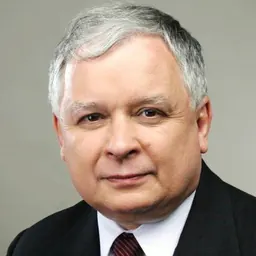
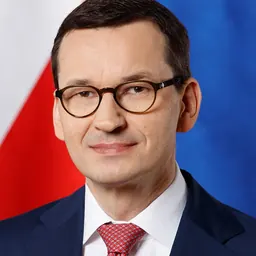
People in Zbigniew Ziobro's life
Named in this biography and alive at the same time




Related people
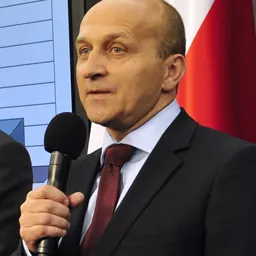
Same field, nearest in time





Contemporaries
People whose lives overlapped Zbigniew Ziobro's



Frequently asked questions
Who is Zbigniew Ziobro?
Polish politician (born 1970)
When was Zbigniew Ziobro born?
Zbigniew Ziobro was born on 18 August 1970 in Kraków.
What is Zbigniew Ziobro's occupation?
Zbigniew Ziobro is a politician, jurist and lawyer.
What nationality is Zbigniew Ziobro?
Zbigniew Ziobro is Polish.
Sources & further reading
Cite this page
APA: Biography.guide. (2026). Zbigniew Ziobro. https://biography.guide/zbigniew-ziobro/
MLA: "Zbigniew Ziobro." Biography.guide, https://biography.guide/zbigniew-ziobro/.
Chicago: "Zbigniew Ziobro." Biography.guide. https://biography.guide/zbigniew-ziobro/.
Data last updated: 2026-09-20 · Spot an error? Report a correction.
Portrait: Wikimedia Commons · author & licence
Page generated 2026-09-27 04:58 UTC