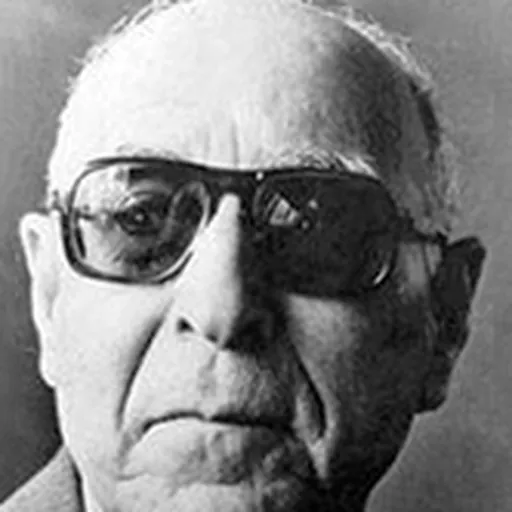
About Zaki Naguib Mahmoud
Lived 1905 – 1993 (aged 88). Zaki Naguib Mahmoud was an Egyptian and Turkish philosopher and writer.
Zaki Naguib Mahmoud (Arabic: زكي نجيب محمود) (February 2, 1905 – September 8, 1993) was an Egyptian intellectual and thinker, and is considered a pioneer in modern Arabic philosophical thought. He was described by Abbas Mahmoud al-Akkad as "the philosopher of authors and author of philosophers". Mahmoud adhered to logical positivism and adopted science interpretation with social motivations to reconcile the Arab tradition with modernism. Mahmoud defines the "Arab tradition" as the configuration of techniques by which our ancestors lived, and he viewed logical positivism as the spirit of "Modernism".
Life Zaki Naguib Mahmoud was born in the Damietta governorate in northern Egypt. There he attended the traditional Islamic school (kuttāb) where he memorized part of the Qur'an in his early years. He went to elementary school in Cairo and then in Sudan, where his father worked as a civil servant. He studied at the Gordon Memorial College in Khartoum and attended two years of his secondary school there before returning to Egypt where he continued his secondary education. Afterwards he entered the high school of teachers and graduated in 1930. He then worked as a teacher until 1944.
He was married to Dr Munira Helmy, a professor of psychology at Ain Shams University.
Academic life Zaki Naguib Mahmoud finished his education at Ain Shams University, and then travelled to the United Kingdom to do his PhD at King's College London in Philosophy. He defended his dissertation titled "self-determination" successfully and obtained his PhD in 1947, later on the dissertation was translated by his student Dr. Abdul-Fattah Emam.
When he came back, he was appointed as a lecturer, then, assistant professor and finally professor of philosophy at the Faculty of Arts, Cairo University. Among the distinguished positions Zaki Naguib Mahmoud held are: professor of philosophy in the University of Kuwait (1968), member of the Supreme Council of Culture, and of the National Council of Education and Scientific Research. In addition, he worked in 1953 as a visiting professor of philosophy in The University of South Carolina in Columbia, USA for one semester, and in Washington State University in Pullman, Washington in the second, and then he worked as a cultural attaché in the Embassy of Egypt in Washington, D.C. (1954–1955).
Zaki Naguib Mahmoud was given the State Incentive Award in 1960, Order of Merit Award in 1970, Arab Educational, Scientific and Cultural Organization Award in 1984, The American University in Cairo Honorary Doctorate in 1985, and the necklace of Sultan Al-Owais of the U.A.E. in 1991, an award which is exclusive to the most distinguished figures in the Arab world.
His thought Zaki Naguib Mahmoud's thought can be divided into two or three phases, according to the measure we use to approach and evaluate it. In the general meaning of the term "thought" it is evident according to his own writings as well as other scholars that he passed through three phases of thinking.
Evolution of his thought Zaki Naguib started his intellectual life, in its first phase, with a religious if not a Sufi position in which he defended religious miracles, human freedom as well as metaphysical contemplation of human life. It is believed that this phase extended until his studies for PhD and peaked in his dissertation "self-determination". In this work he attacked Hume's empiricism as well as behaviorism in their rejection of the concept of the psych. Following this attack he purported to support the view of objective free will of human psych or mind, albeit with the acknowledgement of the deterministic nature of its environment as well as its own constitution determined through history.
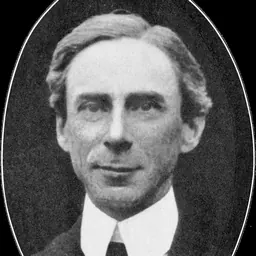
His second phase of thought began in the late 1940s and early 1950s. Dr. Mahmoud was exposed during his studies in England to analytic philosophy and was greatly influenced by the thought of Bertrand Russell and attended a lecture by Alfred Ayer on "Logical Positivism". This constituted a form of preparation for his second phase, in which he strictly adopted the principles of the new philosophical school of Logical positivism. Logical positivism rejected philosophy in its metaphysical sense and rendered it to the status of the analysis of scientific knowledge and analysis of meanings of the regular language. This period extended to somewhere between 1960 after writing The Artist East and 1968, when he left to teach in Kuwait. Landmarks of this period are his books: On Positivist Logic (1951), The Philosophy of Science (1952), The Myth of Metaphysics (1953) and The Theory of Knowledge (1956).
In particular, in The Myth of Metaphysics, he empathized on the well-known idea of the Logical Positivists that non-scientific phrases that cannot be verified scientifically are void of objective meaning. This was understood by the wider community as an indirect rejection of religion in general and Islam in particular. The book has invoked a storm of attack and criticism to its topic and to the author. In a late response, 1984, Zaki Naguib has reprinted the book with a slightly more moderate title A Stance from Metaphysics.
The third and last period has clarified itself during the period he stayed in Kuwait University between 1968 and 1973. This period can be viewed as a synthesis of the two previous stages. For it is marked by his deep interest in the intellectual Islamic heritage as well as the Islamic view as possessing specific characteristics. This new synthesis has revealed itself in domination of the problematic known as "Authenticity and Modernity" on his thought. This period is best marked, among many other writings by his books: The Rational and the Irrational in our Intellectual Heritage (1975), Our Culture in Front of Contemporary Time, (1976), and An Islamic Vision (1987).
However, if we adopt a strict philosophical measure in assessing his works we would be speaking about two phases of philosophical thought. Moreover, these two phases should be understood within one philosophical theme that comprises the essence of his philosophy.
Philosophy Mahmoud's philosophy can be found in one recurrent theme that constitutes the driving motive behind his successive views and phases. According to his own interpretation in his intellectual autobiography, A Story of a Mind, we may present such a central theme in one phrase: "Scientific thinking as a basic social value". His central problem was, as much as every thinker in the Arabic modernist era, how to transform a backward society like our present Arabic and Islamic societies into an advanced one. The answer was, in his view, to get rid of superstitious and irrational ways of thinking, and replace them by scientific thinking.
Hence, his enthusiasm for Logical Positivism was essentially a pragmatic move, his vision was that he can make use of this philosophical/scientific construct to uplift and boost his central idea. However, we should say that his writings during the first phase do not show any provisions, deviations or partial criticism of this philosophy. Hence, we can conclude correctly that such a pragmatic explanation of his position at that period applies only on the subconscious level, in which contradictions of this view with his traditional convictions has been running on the subconscious level.
In any case, "Scientific thinking", as an absent value in our societies, has taken for him the form of a philosophical project. The basic aim of such a project is to push toward implementing such thinking in the society, and the means with which this goal will be achieved is the position of logical positivism, or "scientific empiricism", the term he prefers. Success in this project requires positive reception form the society, which happened partially on the intellectual as well as governmental levels, but not on the general and lay person one.
Hence, in the second phase, his belief in "scientific thinking" as a necessary societal value, remained the same but in the form of an underlying structure covered by the study&n and analysis of the rational trends of Islamic heritage. Therefore, once again, the study of Islamic heritage was a pragmatic move in order to overcome resistance against his call for "scientific thinking".
This becomes perfectly clear if one analyses any of his articles and books in his second stage. The underlying message remains the same albeit with different terms. In addition, this method- a superstructure of Islamic analysis founded on a scientific if not positivist concepts – represented his response to the difficult question of Authenticity and Modernity. In brief, his view can be epitomized as follows: we should not abandon our intellectual heritage in order to achieve modernity, for this would be some form of a cultural suicide, instead we stress and use the rational and intellectual part of it in conjunction with contemporary advancements of scientific and objective philosophical thought.
If we want to classify his philosophy from the point of view of the degree of abstractness and its relation to real life, then we would say that Dr. Zaki Naguib lines up with those philosophers who expressed their philosophy through literature and art rather than through building metaphysical constructs. For, he did not build a metaphysical construct, despite his use of "Logical positivism" in its abstract form. In this sense he is closer to Sartre, Nietzsche and Kierkegaard, in modern ages, and to Abu Hayan Altawhidi in ancient Arabic philosophy than to Russell, Kant and Ibn Rusd. Hence he was rightly referred to as "the philosopher of literature writers and the writer of the philosophers".
Works Mahmoud authored many books and translations in addition to his numerous articles in magazines and newspapers, including the Egyptian Al Ahram.
A - In Philosophy On Positivist Logic, two parts On Formal Logic, 1951 On Philosophy of Science, 1952 David Hume, 1951 The Myth of Metaphysics, 1953 Theory of Knowledge, 1956 Bertrand Russell, 1956 The Live of Thought in the New World, 1956 Toward a Scientific Philosophy, 1959 The Artist East, 1960 Jābir ibn Hayyān, 1961
B - In Arabic Modernity Renewal of Arabic Thought, 1973 The Rational and the Irrational in Our Intellectual Heritage, 1975 Our Culture in Front of Contemporary Time, 1976 In Our Mental Live, 1979 With Poets, 1980 This Time and Its Culture, 1980 From a Philosophical Point of View, 1980 Preoccupations of Intellectuals, 1981 Thoughts and Positions, 1983 A New Society Or a Disaster, 1983 A Story of a Mind, 1984 In a Conjunction, 1985 About Freedom I am Talking, 1986 An Islamic Vision, 1987 On Modernization of Arabic Culture, 1988 An Arabic Between Two Cultures, 1990 The Outcome of the Years, 1991
C - Literature writings The Lands of The Dreams, 1939 Shakespeare, 1943 The Paradise of the Fool, 1947 Shreds of Glass, 1947 A Sunrise from the West, 1950 With the Revolution on the Doors, 1955 Days in America, 1955 A Story of a Psych, 1965
D - Writings in English Translations of Al-Akkad Poetry, 1945 PhD Dissertation titled "Self Determination", 1947 The Land and People of Egypt, 1956
E - Translations
a - In Philosophy Four Dialogues of Plato, 1936 The Rich and the Poor, H. G. Wells, 1937 History of Western Philosophy, Bertrand Russell, 1954 Logic, a Theory of Research, John Dewy, 1959,
b - In Collaboration with Ahmad Amin The Story of Greek Philosophy, 1935 The Story of Modern Philosophy, 1936 The Story of Literature, in three parts On Ancient and medieval Literature, 1943 On Modern Literature, 1945 On Eastern and Western Literature in the 19th century, 1948
c - In Cultural History and Literature Critique The Arts of Literature, H. T Charlton, 1944 I Preferred Freedom, Vector Crafetchenco, 1944 The Story of Civilization, Will Durant, Thee books of the 1st volume, The Appearance of Civilization, 1950 India and its Neighbors, 1951 Japan, 1951 The Heritage of Middle Ages, 1967
Death Mahmoud died on September 8, 1993, aged 88.
Don’t just read it —
keep it.
Full-length biographies made to live with: read them, listen on the way to work, watch them tonight.
- E-book
- Audio
- Video
Instant download · yours to keep · every purchase keeps this site free
Important facts
People in Zaki Naguib Mahmoud's life
Named in this biography and alive at the same time




Related people
Same field, nearest in time





Contemporaries
People whose lives overlapped Zaki Naguib Mahmoud's



Frequently asked questions
Who was Zaki Naguib Mahmoud?
Egyptian philosopher (1905–1993)
When was Zaki Naguib Mahmoud born?
Zaki Naguib Mahmoud was born on 2 February 1905 in Damietta.
When did Zaki Naguib Mahmoud die?
Zaki Naguib Mahmoud died on 8 September 1993.
What was Zaki Naguib Mahmoud's occupation?
Zaki Naguib Mahmoud was a philosopher and writer.
What nationality was Zaki Naguib Mahmoud?
Zaki Naguib Mahmoud was Egyptian and Turkish.
Sources & further reading
· Wikipedia: Zaki Naguib Mahmoud
· DBpedia: Zaki Naguib Mahmoud
Cite this page
APA: Biography.guide. (2026). Zaki Naguib Mahmoud. https://biography.guide/zaki-naguib-mahmoud/
MLA: "Zaki Naguib Mahmoud." Biography.guide, https://biography.guide/zaki-naguib-mahmoud/.
Chicago: "Zaki Naguib Mahmoud." Biography.guide. https://biography.guide/zaki-naguib-mahmoud/.
Data last updated: 2026-09-22 · Spot an error? Report a correction.
Portrait: Wikimedia Commons · author & licence
Page generated 2026-09-27 05:04 UTC