
About Zaida Catalán
Lived 1980 – 2017 (aged 36). Zaida Catalán was a Swedish politician and jurist.
Zaida Maria Catalán (6 October 1980 – 12 March 2017) She left active party politics in 2010 to pursue international work in peacebuilding and human rights, including roles with the Folke Bernadotte Academy and European Union civilian missions.
As a former politician, she advocated on issues including the environment, animal rights, and human rights (including support of Sweden's sex purchase law; see Prostitution in Sweden). During her time in Swedish politics, she co-authored early political motions advocating for consent-based sexual offence legislation.
Catalán worked between 2011 and 2016 in conflict-affected and post-conflict environments through European Union civilian missions, Swedish governmental peace and security institutions, and United Nations-related assignments focused on human rights, gender equality, and the documentation of conflict-related sexual violence. She held field and advisory roles in regions including the Democratic Republic of the Congo, Afghanistan, and the Palestinian territories, where she supported security sector reform, justice sector capacity-building, and the documentation of serious human rights violations.
Subsequent United Nations monitoring and investigative reporting documented indications that the killings may not have been random and may have been preceded by surveillance and coordination involving armed actors and individuals linked to state security structures. These findings contributed to public and investigative discussion regarding whether the UN experts may have been deliberately targeted while carrying out investigative work.
On 29 January 2022, a DRC military court sentenced more than 50 individuals in connection with the murders of Catalán and Sharp. Appeals proceedings have continued, and United Nations monitoring mechanisms and international observers have raised concerns regarding delays, evidentiary handling, and procedural constraints affecting the judicial process.
Biography
Early life Zaida Catalán was born in Stockholm but grew up in Högsby in Småland. Her mother was Swedish while her father had come to Sweden as a political refugee from Chile in 1975. During this period, she was also nominated as one of the top 100 most influential young people in Sweden by the magazine Weekly Business.
Between 2004 and 2010, she worked as a lawyer and legal adviser for the Green Party's parliamentary office in the Parliament of Sweden. During her term, she helped prevent the closure of municipally funded shelters for abused women and successfully negotiated increased municipal funding for women's shelters. During the same period, she also served in several politically appointed governance and oversight roles, including as a member of the Committee on Police Affairs for Stockholm County Council (2007–2010), where she negotiated Green Party priorities in the police budget, including stronger accountability mechanisms and increased police awareness of sexual violence victims. She also served on the board of the municipal housing company Stockholmshem (2006–2010), where she worked on budget and strategic priorities and promoted training for housing staff on gender-based violence awareness.
Catalán also held several leadership and governance roles within civil society connected to her political engagement on gender equality and protection from violence. She served as Vice President of the Board of Terrafem (2007–2009), Sweden's national organisation supporting migrant women exposed to violence, where she oversaw implementation of the organisation's budget and annual work plan and helped increase both membership and public funding. She also served on the board of the National Organisation for Women's and Girls’ Shelters (ROKS) (2008–2010), where she contributed to organisational budgeting and strategy, helped modernise board working methods by incorporating perspectives of migrant women into national materials on gender-based violence, and helped increase funding for shelters supporting girls exposed to sexual violence. In addition, she worked directly with survivors through Terrafem's national helpline and shelter network, providing legal, practical and multilingual support to migrant women exposed to violence. As part of field-based human rights investigations, she interviewed victims and families and collected testimonial and evidentiary material in line with international documentation standards.
As part of standard human rights documentation practices, Catalán and her team at times used concealed recording equipment to document statements from individuals associated with armed groups. Court proceedings and human rights reporting documented cases involving very young victims, including infants.
Media investigations and United Nations reporting characterised the Kasai crisis as involving mass displacement, allegations of mass graves, and widespread violence involving both militia groups and state security forces.
Human rights organisations, UN reporting, and media investigations accused Congolese security forces of using excessive and disproportionate force during counter-insurgency operations, including in incidents involving civilians and suspected militia members. On 27 March 2017, Catalán and Sharp were found dead side by side in a shallow grave approximately 80 centimetres (31 in) deep. Sharp had been shot in the head, while Catalán had been shot and decapitated. In April 2017, a video of the killings surfaced publicly.
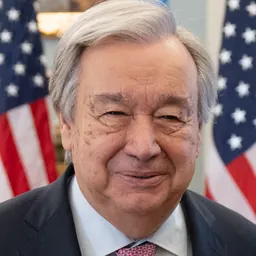
Prior to the killings, Catalán and Sharp had undertaken multiple UN-mandated investigative deployments to the Kasai region as part of their work examining the Kamuina Nsapu uprising, a conflict involving clashes between government security forces and militia groups. The region was described in some reporting as a limited-access or under-documented conflict zone, sometimes referred to as a “white spot” due to restricted access for independent observers. Their investigations included examining reports, rumours and allegations relating to mass graves and possible unlawful killings of civilians linked to the conflict, including child recruitment, and widespread abuses during clashes between Kamuina Nsapu-affiliated groups and state forces. UN Secretary-General António Guterres also offered his condolences.
In mid-2017, Congolese military authorities initiated judicial proceedings and early convictions involving alleged Kamuina Nsapu militia members. These proceedings were criticised by parts of the international community as premature and insufficiently broad, as investigations into potential wider responsibility were still ongoing.
Later in 2017, UN Secretary-General António Guterres established a Follow-on Mechanism (FOM) to support Congolese authorities in strengthening the investigation into the killings of the two UN experts and their Congolese companions. The initiative was detailed in a letter to the Security Council dated 31 October 2017. The Mechanism deployed a team led by Canadian prosecutor Robert Petit, composed of technical experts and support staff, who worked alongside Congolese investigators and prosecutors, providing technical, analytical and evidentiary assistance and later monitoring trial and appeal proceedings within the legal framework of MONUSCO.
While many defendants sought to attribute responsibility solely to militia actors, United Nations reporting stated that probative evidence placed before the court supported the prosecution's theory that the killings involved coordinated planning and conspiracy. UN reporting stated that the Appeal Military Prosecutor characterized FARDC Colonel Jean de Dieu Mambweni as a planner and instigator of the murders, alleging that the UN experts’ investigative work risked exposing efforts to conceal mass graves to avoid compromising the State, including concerns described as linked to directives from government authorities. In support of this line of inquiry, recorded phone communications introduced in court were described as indicating that Mambweni expressed concern about poorly concealed mass graves prior to the arrival of the UN experts, whom he allegedly characterized as “real investigators”. Court submissions and investigative material further alleged that Mambweni later denied knowledge of the experts’ presence in the area during proceedings, despite recordings that prosecutors and investigators interpreted as indicating prior awareness. The same sources also reported that Mambweni had met with the UN experts shortly before the killings, a point referenced in evidentiary discussions during legal proceedings and investigative reviews.
UN reporting further described investigative steps and evidentiary material pointing to the possible involvement of additional actors linked to the security and political structures of Central Kasai at the time, including the then acting police commissioner in Kananga (Colonel Kota). According to UN reporting, progress on these lines of inquiry advanced unevenly and later stalled, in part because the UN Follow-on Mechanism ceased active assistance after the Democratic Republic of the Congo lifted its moratorium on executions in March 2024, reducing UN involvement to monitoring proceedings, analysing evidence and reporting.
United Nations reporting on the appeal proceedings also described a pattern in which most defendants denied prior statements and sought to attribute responsibility to other actors, including militia leadership, while the evidence before the court continued to be contested. The reporting also noted structural and procedural constraints affecting the pace of proceedings, including limited hearing time and repeated postponements. UN reporting has further continued to note the unresolved status of four Congolese nationals who accompanied the experts on the day of their abduction and were reported missing and presumed dead. thumb MONUSCO's local chief displays two portraits created by young artists in Lubumbashi depicting the murdered UN experts Zaida Catalán and Michael Sharp.
Trials and sentences Over 50 individuals were tried for the murders of Zaida Catalán and her American colleague. On 29 January 2022, a military court in the Democratic Republic of the Congo sentenced 51 individuals to various punishments, including death sentences and life imprisonment, with the lowest sentence being 10 years of imprisonment. The sentences are subject to appeal.
Among those sentenced was FARDC Colonel Jean de Dieu Mambweni, who received a 10-year prison term for failing to follow orders and for neglecting to assist persons in danger. The court did not convict him for direct involvement in the murders, citing insufficient evidence of collaboration with the militia believed to have carried out the killings.
Human Rights Watch and other international observers have continued to criticise aspects of the proceedings, including what they described as failures to fully pursue investigative leads relating to potential involvement of members of the Congolese security services and political structures.
UN follow-on investigation and monitoring
Following the 2017 murders, United Nations Secretary-General António Guterres established a Follow-on Mechanism (FOM) to support the Congolese national investigation. In a letter to the Security Council dated 31 October 2017, he announced the deployment of a team led by Canadian prosecutor Robert Petit, composed of technical experts and support staff. The team was embedded with Congolese investigators in Kananga to assist in the inquiry into the killings of Catalán, Sharp, and their Congolese colleagues. The FOM operated within the legal framework of the United Nations Organization Stabilization Mission in the Democratic Republic of the Congo (MONUSCO).
Following the 2022 convictions, the United Nations welcomed progress in the case while reiterating its opposition to the use of the death penalty. The FOM continued to provide limited technical support to Congolese authorities before concluding its assistance in 2025.
As of the mid-2020s, appeals and related legal proceedings were ongoing, with observers continuing to monitor developments in the case.
Criticism of UN mission and security arrangements The United Nations' approach to the mission involving Catalán and Sharp received criticism, with commentary focusing primarily on institutional and organisational decision-making rather than on the actions of the deployed experts. A New York Times editorial described their dispatch to a violent region without safety equipment as an "astoundingly irresponsible approach by the United Nations to an obviously dangerous and hugely important task."
More broadly, the case highlighted longstanding structural challenges associated with the deployment of unarmed civilian investigative missions, particularly in contexts where armed actors may perceive monitoring as a threat.
Investigative reporting has further described the Kamuina Nsapu militia as having been infiltrated by actors linked to Congolese security structures. These materials have been cited in reporting as indicating that the experts may have been deliberately misled prior to the ambush in which they were killed, although the sequence of events and responsibility remain debated. The meme falsely claimed she was killed while advocating for “open borders” and referenced the term “suicidal empathy,” a phrase used in some political debates to criticise humanitarian or migration-related policies. The post also described Catalán primarily as a politician, whereas at the time of her death she was serving as an experienced lawyer and human rights expert on an international United Nations investigative mission. Commentators and Swedish media described the post as a distortion of Catalán's documented work in human rights, rule of law, and gender equality, and criticised it as a politicisation of her murder and a spread of misinformation.
Memorials On 20 February 2018 the Zaida Catalán Room at the Chilean Embassy in Sweden was inaugurated, and in the same year the Network on Humanitarian Action (NOHA) foundation started a scholarship program in Catalán's memory.
In 2020, the Folke Bernadotte Academy was asked by the Swedish Government to establish a scholarship aimed at supporting the implementation of UN Security Council Resolution (UNSCR) 1325 on women, peace and security. The scholarship was established in Catalán's memory.
Don’t just read it —
keep it.
Full-length biographies made to live with: read them, listen on the way to work, watch them tonight.
- E-book
- Audio
- Video
Instant download · yours to keep · every purchase keeps this site free
Important facts
People in Zaida Catalán's life
Named in this biography and alive at the same time

Related people
Same field, nearest in time


Contemporaries
People whose lives overlapped Zaida Catalán's

Frequently asked questions
Who was Zaida Catalán?
Swedish lawyer and politician
When was Zaida Catalán born?
Zaida Catalán was born on 6 October 1980 in Farsta church parish.
When did Zaida Catalán die?
Zaida Catalán died on 12 March 2017 in Kasaï-Central, Democratic Republic of the Congo.
What was Zaida Catalán's occupation?
Zaida Catalán was a politician and jurist.
What nationality was Zaida Catalán?
Zaida Catalán was Swedish.
Sources & further reading
Cite this page
APA: Biography.guide. (2026). Zaida Catalán. https://biography.guide/zaida-catalan/
MLA: "Zaida Catalán." Biography.guide, https://biography.guide/zaida-catalan/.
Chicago: "Zaida Catalán." Biography.guide. https://biography.guide/zaida-catalan/.
Data last updated: 2026-09-20 · Spot an error? Report a correction.
Page generated 2026-09-27 05:12 UTC