
About Zafra M. Lerman
Born 1937. Zafra M. Lerman is an American chemist, known for Human rights, Science diplomacy and Science education.
Zafra M. Lerman is an American chemist, educator, and humanitarian. She is the President of the Malta Conferences Foundation, which aims to promote peace by bringing together scientists from otherwise hostile countries to discuss science and foster international scientific and technical collaboration. From 1986 to 2010, she chaired the American Chemical Society's Subcommittee on Scientific Freedom and Human Rights. She has been successful in preventing executions, releasing prisoners of conscience from jail and bringing dissidents to freedom. She is the recipient of many awards for education and science diplomacy, including the 1999 Presidential Award from U.S. President Clinton, the 2015 Science Diplomacy Award from the American Association for the Advancement of Science (AAAS), the 2016 Andrei Sakharov Award for human rights from the American Physical Society (APS), the 2017 International Union of Pure and Applied Chemistry Distinguished Women in Chemistry or Chemical Engineering Award, and the 2025 Cardozo School of Law’s 24th International Advocate for Peace Award.
Early career Lerman received a Ph.D. in chemistry from the Weizmann Institute of Science in Rehovot, Israel. She conducted research on isotope effects at the Weizmann Institute of Science, Cornell University and Northwestern University in the US, and the ETH Zurich, Switzerland.
Science education and the arts
Lerman used the arts to help teach science at all levels. In 1977, she became the first science faculty member at Columbia College Chicago, an institution of higher education specializing in arts and media disciplines. In 1981, she founded the department of science and mathematics there and served as department chair through 1991. In 1991, she founded the Institute for Science Education and Science Communication (also known as the 'Science Institute") at Columbia College and served as its head until 2009. Since 1991 she was a Distinguished Professor of Science and Public Policy.
Part of her teaching philosophy is captured in this quote, from a 2011 lecture entitled "Creativity in 3D: "Drawing, Dance, and Drama": "Students remember and understand abstract concepts best by producing their own artistic projects and using their own (sometimes hidden) creativity. Through this process, students are active learners, and utilize both their left and right brain, instead of being just passive observers."
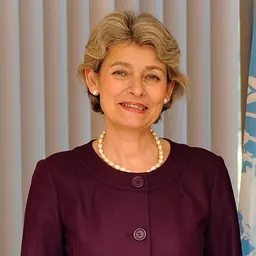
Peace activism Malta V Conference at UNESCO headquarters in Paris, France, December 4, 2011; His Royal Highness Prince Hassan of Jordan (center-left), Irina Bokova (center-right, Director-general of UNESCO), and Dr. Zafra M. Lerman (right, President of the Malta Conferences Foundation). (Photo by Cynthia Warren Mentz) In addition to developing innovative methods of teaching science through the arts, Lerman started using science to promote peace and human rights around the globe. In 1986 she was named chair of the American Chemical Society's Subcommittee on Scientific Freedom and Human Rights. Among other activities, this group's mission included helping scientists who, for political reasons, were jailed, abused, and sentenced to execution. She held that position for 25 years.
Starting in 2001, Lerman began working to develop a scientific conference that would bring together researchers from many different, often mutually hostile, nations in the Middle East so they could cooperatively work toward solving problems facing the region. With support from the American Chemical Society (ACS), International Union of Pure and Applied Chemistry (IUPAC), the Royal Society of Chemistry (RSC - England), and the Gesellschaft Deutscher Chemiker, the first conference was held on the island of Malta from December 6 to 11, 2003. Attendees included six Nobel Laureates and scientists from 15 Middle Eastern Countries (Bahrain, Egypt, Iran, Iraq, Israel, Jordan, Kuwait, Lebanon, Libya, Palestinian Authority, Qatar, Saudi Arabia, Syria, Turkey, and United Arab Emirates).
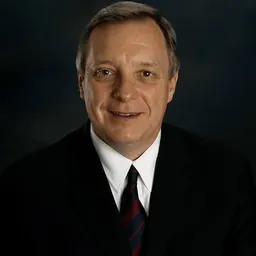
The meeting was honored by United States Senator Dick Durbin in a speech on the floor of the U.S. Senate entitled "Chemists Working Cooperatively".
Lerman led the initiative to continue with the conferences and founded the Malta Conferences Foundation to support them. She secured the support of UNESCO, the United Nations Educational, Scientific, and Cultural Organization.
List of Malta Conferences
Notable awards and honors
Books Lerman, Zafra (2024). Human Rights and Peace: A Personal Odyssey. Jenny Stanford Publishing. ISBN 9789815129243
Selected publications Year Title First Author Citation 1964 Temperature dependence of the secondary isotope effect in aqueous alkaline ester hydrolysis. Halevi, E. A. Proc. Chem. Soc., London (1964), p. 174. 2003 ACS Delegation Travels to Cuba Hofman, M. The Chemical Bulletin, 90, 4, 8, American Chemical Society, 2003 2003 From the Outreach Front! IAC Conference in Cuba Lerman, Zafra M. J. Chem. Educ., 80 (4), 383, 2003. 2003 Citizen Chemists (book review of Claude, R. P.: Science in the Service of Human Rights). Lerman, Zafra M. Chemical and Engineering News, 87 (21), 42-43, 2003 2003 Using the Arts to Make Chemistry Accessible to Everybody Lerman, Zafra M. Journal of Chemical Education (2003), vol. 80 (11), pp 1234-1243 2005 Chemistry: An Inspiration for Theater and Dance Lerman, Zafra M. Chemical Education International (2005) vol. 6, p.1 2006 Frontiers of Chemical Sciences II: Research and Education in the Middle East Lerman, Zafra M. Chemistry in Israel - Bulletin of the Israel Chemical Society, (2006) vol. 21, pp. 21–23 2009 Chemistry and chemical education as a bridge to peace Lerman, Zafra M. In Chemistry Education in the ICT Age, Gupta-Bhowon, M.; Jhaumeer-Laulloo, S.; Li Kam Wah, H.; Ramasami, P. (Eds.) 2013 Human Rights, Education, and Peace: A Personal Odyssey Lerman, Zafra M. Journal of Chemical Education (2013), vol. 90 (1), pp 5–9 2014 The Malta Conferences, Frontiers of Science: Research and Education in the Middle East Lerman, Zafra M. Forum on International Physics. American Physical Society. pp 19– 21. 2014. 2014 Research and Education in the Middle East Lerman, Zafra M. Chemistry International.(36)3. pp 6, 27- 29. 2014. 2014 The Challenges for Chemistry Education in Africa Lerman, Zafra M. African Journal of Chemical Education (AJCE),4 (2), pp 80–90. 2014.2015Science Offers A Whole New DiplomacyLerman, Zafra M.TWAS Newsletter, Vol. 27 No. 1, 2015, p. 23 2015 From Fighting for Human Rights to Building a Bridge to Peace: A Scientist’s Role and Responsibility Lerman, Zafra M. Science & Diplomacy (AAAS), 4 (1), pp 1–7. 2015.2015The Malta Conferences: Fostering International Scientific Collaborations Toward Peace in the Middle East. Hoffman, Morton Z Lerman, Zafra M. Jobs, Collaborations, and Women Leaders in the Global Chemistry Enterprise; Wu, M.L.; Cheng, H.N.; Miller, B., Eds., American Chemical Society, Washington, DC 2015 From Building Roads To Building Peace: A Woman Chemist’s Odyssey. Lerman, Zafra M. Jobs, Collaborations, and Women Leaders in the Global Chemistry Enterprise; Wu, M.L.; Cheng, H.N.; Miller, B., Eds., American Chemical Society, Washington, DC2018A Chain Reaction for Peace.Lerman, Z.M., Margolin, B. Guest editorial in Chemistry and Engineering News. 2018, 96 (4), pp. 2. 2018Resolution on the Water Crisis in GazaLerman, Z.M. Chemistry International, 2018 (40), 2, 32. 2018Education, Human Rights, and Peace – Contributions to the Progress of HumanityZafra Margolin LermanPure and Applied Chemistry, 91(2), pp. 351–360. 2020Chemistry for Peace.Z.M. Lerman, E.R. Zajdela.Chem. Eng. News, March 16, 2020, 98 (10), p. 2.2021Malta X Anniversary and COVID-19E.R. Zajdela, Z.M. Lerman.Chemistry International, vol. 43, no. 2, pp. 16–19.2021Science Education is a Human Right that Belongs to All.Lerman, Z.Iraqi Academy Journal Vol 1 Issue 0 No 10. 97 – 1022022Keep Up the Fight for Scientists’ Human Rights.Lerman, Z.Nature Reviews Materials.2023Malta Conferences Foundation, 10th Anniversary Conference: “Knowledge and Society” – MALTA X focus.Shevah. Y, Hogue. L, O’Brien. C, Lerman. Z. Chemistry International, 45 (2), pp. 44–48.
Don’t just read it —
keep it.
Full-length biographies made to live with: read them, listen on the way to work, watch them tonight.
- E-book
- Audio
- Video
Instant download · yours to keep · every purchase keeps this site free
Important facts
People in Zafra M. Lerman's life
Named in this biography and alive at the same time



Related people
Same field, nearest in time





Contemporaries
People whose lives overlapped Zafra M. Lerman's


Frequently asked questions
Who is Zafra M. Lerman?
Israeli American chemist and humanitarian
When was Zafra M. Lerman born?
Zafra M. Lerman was born on 27 January 1937 in Israel, Haifa.
What is Zafra M. Lerman's occupation?
Zafra M. Lerman is a chemist.
What is Zafra M. Lerman known for?
Zafra M. Lerman is known for Human rights, Science diplomacy and Science education.
What nationality is Zafra M. Lerman?
Zafra M. Lerman is American.
Sources & further reading
Cite this page
APA: Biography.guide. (2026). Zafra M. Lerman. https://biography.guide/zafra-m-lerman/
MLA: "Zafra M. Lerman." Biography.guide, https://biography.guide/zafra-m-lerman/.
Chicago: "Zafra M. Lerman." Biography.guide. https://biography.guide/zafra-m-lerman/.
Data last updated: 2026-09-20 · Spot an error? Report a correction.
Page generated 2026-09-27 05:20 UTC