
About Yves Hernot
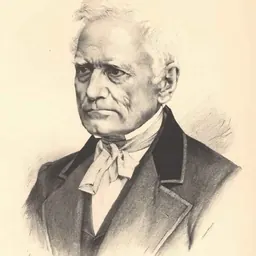
Lived 1820 – 1890 (aged 70). Yves Hernot was a French sculptor.
The Breton Calvary at Lourdes, created by the Ateliers Yves Hernot. Yves Hernot is the name of two sculptors, father and son, who ran the Ateliers Yves Hernot sculpture workshop in Lannion, Brittany, which specialised in creating Calvaries and tombs.
Hernot senior Yves Hernot senior (1829 - 1890) established himself in Lannion in 1844. The son of a stonemason, he was given the opportunity to study art, but preferred to work on traditional monumental masonry. However, he won the Grand Prix de Rome for Sculpture, and showed his works at the 1867 World Fair. His work was generally associated with the church. A devout Catholic and conservative Royalist, during his lifetime 517 Calvaries were created by his workshop. He also created several tombs, including that of the last bishop of Treguier, whose body was returned to Brittany half a century after he had died in exile after the Revolution.
Hernot also wrote many songs in the Breton language, which he printed and distributed. One contrasts a Catholic and an atheist, another warns against the presence of Protestants. Others express anti-republican views, such as Ar gaouiad Republik (The Deceptive Republic). These political songs were often signed "Ur c'hoz masouner" (An old mason).
Hernot junior Yves Hernot junior (1861 - 1929) inherited his father's business after the latter's death in 1890. By this time the workshop employed over 80 workers. Under Yves junior the company created 440 more Calvaries, of which the most important were the Calvary of Protest in Tréguier and the Breton Calvary in Lourdes.
The Breton Calvary was created in 1900 as a gift to Lourdes from the main Breton dioceses: Rennes, Vannes, Quimper and Saint-Brieuc. The monument comprises a single central cross set within a raised square base at each corner of which a statue of one of the witnesses to the crucifixion is placed.
The Calvary of Protest (1904) was Yves junior's most ambitious work. It was intended as a "symbol of the ultramontane church triumphing over the 19th century", as a response to the recent monument to the religious sceptic Ernest Renan, created nearby, and the proposed law separating church and state instituted by the radicals of the Third Republic. The monument includes the inscribed phrase "Truly this man was the Son of God" in the Latin, French and Breton languages below the main scene of lamenting figures at the foot of the cross. Beneath is a relief depicting Saint Yves between a rich and poor man, along with statues of Saint Tugdual, founder of Tréguier, and Saint Brieuc, after whom the chief town in the region is named. It is surrounded by statues of saints representing "spiritual combat": Saint Maurice, Saint George, Joan of Arc and Saint Louis.
Léon took over after his father's death, but the business ceased trading in 1932.
Don’t just read it —
keep it.
Full-length biographies made to live with: read them, listen on the way to work, watch them tonight.
- E-book
- Audio
- Video
Instant download · yours to keep · every purchase keeps this site free
Important facts
People in Yves Hernot's life
Named in this biography and alive at the same time
Related people
Same field, nearest in time



Contemporaries
People whose lives overlapped Yves Hernot's



Frequently asked questions
Who was Yves Hernot?
French sculptor (1820-1890)
When was Yves Hernot born?
Yves Hernot was born on 14 February 1820 in Plouaret.
When did Yves Hernot die?
Yves Hernot died on 17 February 1890 in Lannion.
What was Yves Hernot's occupation?
Yves Hernot was a sculptor.
What nationality was Yves Hernot?
Yves Hernot was French.
Sources & further reading
Cite this page
APA: Biography.guide. (2026). Yves Hernot. https://biography.guide/yves-hernot/
MLA: "Yves Hernot." Biography.guide, https://biography.guide/yves-hernot/.
Chicago: "Yves Hernot." Biography.guide. https://biography.guide/yves-hernot/.
Data last updated: 2026-09-20 · Spot an error? Report a correction.
Page generated 2026-09-27 05:16 UTC