
About Yuri Zhelyabuzhsky
Lived 1888 – 1955 (aged 66). Yuri Zhelyabuzhsky was a Russian camera operator, film director, screenwriter and cinematographer.
Yuri Andreyevich Zhelyabuzhsky (; – 24 October 1955 ) was a Russian and Soviet cinematographer, film director, screenwriter and animator, film theorist and professor at VGIK.
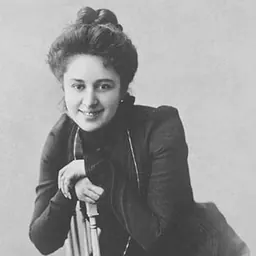
Early years Zhelyabuzhsky was born into a noble Russian family. His mother Maria Andreyeva (born Yurkovskaya) was a famous stage actress and revolutionary; she also came from a theatrical family of Fyodor Aleksandrovich Fyodorov-Yurkovsky who served as the main director of the Alexandrinsky Theatre and Maria Pavlovna Leleva, an actress of mixed German-Estonian origin. Yuri's father Andrei Alekseyevich Zhelyabuzhsky was an Active State Councillor who belonged to an old noble family tree which originated in the 15th century and gave birth to a number of prominent high-ranking officials and diplomats throughout Russian history.
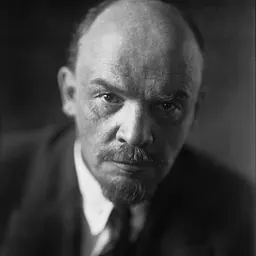
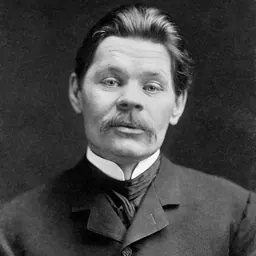
After Andrey Zhelyabuzhsky left the family, Maria Andreyeva became romantically involved with the major Bolshevik writer Maxim Gorky. Their civil union lasted for over 15 years, and Gorky officially adopted Yuri and his sister Yekaterina. They followed him on his trip to Italy in 1906. A famous series of photos that shows Vladimir Lenin playing chess with Gorky, Alexander Bogdanov and other Bolsheviks in exile was made by Zhelyabuzhsky at their Capri residence in April 1908.
Career Between 1913 and 1916 he studied at the Petrograd Peter the Great Polytechnic Institute, the shipbuilding faculty. After 1915 Yuri workedg in cinema — first as a film stock developer, then as a screenwriter for the Era company and other lesser-known collectives. In 1917 he became a member of the Rus' Film Studio (known as Mezrabpom-Rus and Mezhrabpomfilm during the Soviet days) where he had worked as a cinematographer, film director and screenwriter up until 1935.
Zhelyabuzhsky was active during both February and October Revolutions, shooting documentary chronicles of mass protests and Lenin's work in Moscow. Around the same time he got involved with Polikushka, one of the key movies of early Soviet cinema that featured distinctive camera work. Finished in 1919, it was released only in 1922.
Yuri Zhelyabuzhsky was among the founders of the All-Union State Institute of Cinematography in 1919 where he worked as an educator. In 1940 he became a professor of the cinematographer's faculty (VGIK). Author of the first Soviet educational films and theoretical publications on cinematography.
1924 saw the release of The Cigarette Girl from Mosselprom directed by Zhelyabuzhsky which became the first Soviet feature comedy film about the movie industry and the daily life of Moscow dwellers, free of agitation and revolution themes. It also introduced Igor Ilyinsky, Yuliya Solntseva, Nikolai Tseretelli and Mikhail Zharov to the big screen. All of them took part in another influential movie of 1924 — Aelita, the first science fiction blockbuster about space travel that emerged from the USSR, loosely based on Aleksey Tolstoy's novel. The camera work was conducted by Zhelyabuzhsky along with the German cinematographer Emil Schünemann. The screenplay was written by the famous Russian art historian, collector, founder of the Toy Museum in Moscow Nikolai Bartram. During the same year, Zhelyabuzhsky directed Bolvashka's Adventures which became the first Soviet short that combined live action and stop motion animation. Shot in the Toy Museum, it featured a cameo appearance of Bartram.
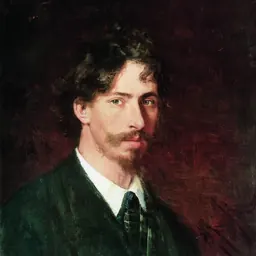
During the Great Patriotic War Zhelyabuzhsky stayed at VGIK and was in charge of protecting the building. Since 1944 he had been principally working on documentary films — first war chronicles, then biographical films dedicated to the greatest Russian artists such as Ilya Repin (1946), Vasily Surikov (1947), Viktor Vasnetsov (1952) and others. He was survived by his wife Anna Dmokhovskaya (1892—1978), an actress of the Moscow Art Theatre, and their daughter Svetlana.
Filmography Polikushka (1922) Aelita (1924) Morozko (1924) The Cigarette Girl from Mosselprom (1924) The Stationmaster (1925) The Skating Rink (1927) Bolvashka's Adventures (1927)
Don’t just read it —
keep it.
Full-length biographies made to live with: read them, listen on the way to work, watch them tonight.
- E-book
- Audio
- Video
Instant download · yours to keep · every purchase keeps this site free
Important facts
People in Yuri Zhelyabuzhsky's life
Named in this biography and alive at the same time



Related people
Same field, nearest in time



Contemporaries
People whose lives overlapped Yuri Zhelyabuzhsky's




Frequently asked questions
Who was Yuri Zhelyabuzhsky?
Soviet cinematographer (1888-1955)
When was Yuri Zhelyabuzhsky born?
Yuri Zhelyabuzhsky was born on 24 December 1888 in Tbilisi.
When did Yuri Zhelyabuzhsky die?
Yuri Zhelyabuzhsky died on 24 October 1955 in Moscow.
What was Yuri Zhelyabuzhsky's occupation?
Yuri Zhelyabuzhsky was a camera operator, film director, screenwriter and cinematographer.
What nationality was Yuri Zhelyabuzhsky?
Yuri Zhelyabuzhsky was Russian.
Sources & further reading
· Wikipedia: Yuri Zhelyabuzhsky
Cite this page
APA: Biography.guide. (2026). Yuri Zhelyabuzhsky. https://biography.guide/yuri-zhelyabuzhsky/
MLA: "Yuri Zhelyabuzhsky." Biography.guide, https://biography.guide/yuri-zhelyabuzhsky/.
Chicago: "Yuri Zhelyabuzhsky." Biography.guide. https://biography.guide/yuri-zhelyabuzhsky/.
Data last updated: 2026-09-22 · Spot an error? Report a correction.
Page generated 2026-09-27 05:26 UTC