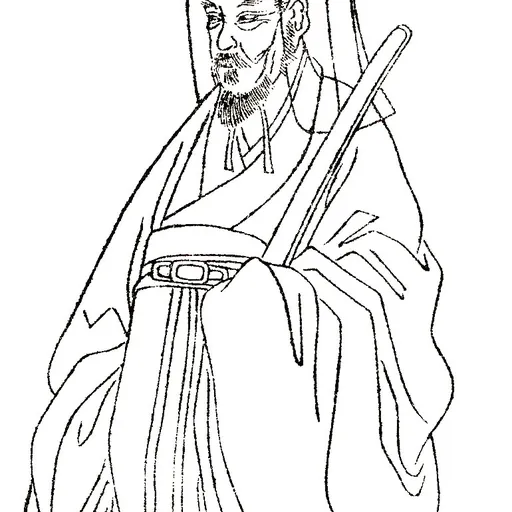
About Yu Qian
Lived 1398 – 1457 (aged 58). Yu Qian was a Chinese writer, poet and politician.
Yu Qian (; 1398–1457), courtesy name Tingyi (廷益), art name Jie'an (節庵), was a Chinese official who served under the Ming dynasty. Under Emperor Yingzong, he worked in the Ministry of War, eventually becoming a vice minister. He distinguished himself in the Tumu Crisis, leading the defense of Beijing against the Mongols, and was promoted to the position of Minister of War. For the next eight years, he remained the most influential member of the government of the new Jingtai Emperor. In January 1457, Emperor Yingzong returned to power and Yu Qian was promptly executed. His life is detailed in the 1580s novel Yu Shaobao cui zhong quanzhuan.
Biography Yu Qian was born in Qiantang County, Hangzhou, Zhejiang. He started his career in the Ming civil service after obtaining the position of a jinshi (進士; successful candidate) in the imperial examination in 1421. He helped to suppress a rebellion by the prince Zhu Gaoxu in 1426 and earned the favour of the Xuande Emperor (r. 1425–1435), who appointed him as the Grand Coordinator of Shanxi and Henan. During Emperor Yingzong's first reign (1435–1449), Yu offended the influential court eunuch Wang Zhen and ended up being imprisoned. However, he was released later, reinstated as an official, and further promoted to serve as the Minister of War.
In 1449, Yu played an important role in leading the Defense of Beijing from attacks by the Oirat Mongols, who had earlier captured Emperor Yingzong at the Battle of Tumu. Emperor Yingzong's brother and successor, the Jingtai Emperor (r. 1449–1457), appointed Yu as the Crown Prince's Guardian and Tutor. In 1457, Emperor Yingzong, who had returned after he was released by the Mongols, seized power from the Jingtai Emperor in a coup and began his second reign (1457–1464). Yu was accused of treason and executed. He was later posthumously rehabilitated by the Chenghua Emperor (r. 1464–1487) and given the posthumous name Sumin (lit. "Stern and Suffering") by the Hongzhi Emperor, afterwards changed into "Zhongsu" (lit."loyal and stern") by the Wanli Emperor (r. 1572–1620). There are memorial halls and shrines built in Beijing and Hangzhou to commemorate and honour Yu Qian.
Gallery
Don’t just read it —
keep it.
Full-length biographies made to live with: read them, listen on the way to work, watch them tonight.
- E-book
- Audio
- Video
Instant download · yours to keep · every purchase keeps this site free
Important facts
People in Yu Qian's life
Named in this biography and alive at the same time


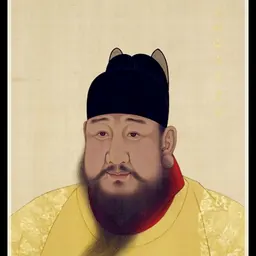

Related people
Same field, nearest in time



Contemporaries
People whose lives overlapped Yu Qian's



Frequently asked questions
Who was Yu Qian?
Chinese general, imperial scholar and poet (1398-1457)
When was Yu Qian born?
Yu Qian was born on 13 May 1398 in Hangzhou.
When did Yu Qian die?
Yu Qian died on 16 February 1457 in Beijing.
What was Yu Qian's occupation?
Yu Qian was a writer, poet and politician.
What nationality was Yu Qian?
Yu Qian was Chinese.
Sources & further reading
Cite this page
APA: Biography.guide. (2026). Yu Qian. https://biography.guide/yu-qian/
MLA: "Yu Qian." Biography.guide, https://biography.guide/yu-qian/.
Chicago: "Yu Qian." Biography.guide. https://biography.guide/yu-qian/.
Data last updated: 2026-09-23 · Spot an error? Report a correction.
Portrait: Wikimedia Commons · author & licence
Page generated 2026-09-27 05:06 UTC