
About Yu Gwansun
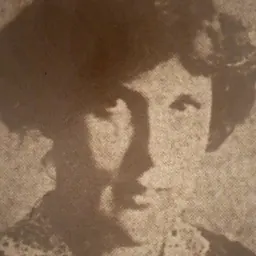
Lived 1902 – 1920 (aged 17). Yu Gwansun was a Korean and South Korean political activist.
Yu Gwan-sun (; December 16, 1902 – September 28, 1920) was a Korean independence activist. She was particularly notable for her role in South Chungcheong during the March 1st Movement protests against Japanese colonial rule. She has since become one of the most famous Korean independence activists and a symbol for the movement.
Early life and education Yu Gwan-sun was born on December 16, 1902, near Cheonan, South Chungcheong Province, Korean Empire. She was the second of three children. She was of the .
Her family was influenced by her grandfather Ryu Yoon-gi and her uncle Ryu Joong-moo, who were Protestants, and so she grew up in this religious environment. She was considered an intelligent child and could memorize Bible passages after hearing them only once. She attended the Ewha Haktang, today known as Ewha Womans University, through a scholarship program that required recipients to work as teachers after graduation. At the time, few women in the country attended university. Yu, along with a five-person group, attended several demonstrations in Seoul. On March 10, 1919, all schools, including Ewha Women's School, were temporarily closed by the Governor-General of Korea, and Yu returned home to Cheonan.
Political activism On March 1, 1919, Seoul teemed with marches by people nationwide protesting the Japanese occupation of Korea. After this protest, organizers arrived at Ewha Haktang and encouraged Yu and her friends to join a demonstration that would take place in three days, on March 5, 1919. She returned to her village of Jiryeong-ri (now Yongdu-ri) and there, she took a more active role in the movement.
Aunae Market demonstration and arrest
Along with her family, Yu went door-to-door and encouraged the public to join the independence movement, which was starting to take shape. She spread the word of an organized demonstration that she had planned with Cho In-won and Kim Goo-eung and rallied the people from neighboring towns, including Yeongi, Chungju, Cheonan and Jincheon. The demonstration took place on April 1, 1919 (March 1 in the lunar calendar), at Aunae Marketplace at 9a.m., where approximately 3,000 demonstrators chanted "Long live Korean independence!" . By 1 p.m., the Japanese military police arrived and fired on the protesters, killing 19 people, including Yu's parents. She was arrested.
Imprisonment and continued agitation for freedom After her arrest, Yu was initially detained at Cheonan Japanese Military Police Station and was later transferred to Gongju Police Station. At the police station, she ran into her older brother, Yu Woo Seok, who was also arrested for protesting at Gongju Yeongmyeong High School. According to records discovered in November 2011, 7,500 of the 45,000 arrested in relation to the protests during that period died at the hands of Japanese authorities.
"Japan will fall", she wrote while in prison:
Even if my fingernails are torn out, my nose and ears are ripped apart, and my legs and arms are crushed, this physical pain does not compare to the pain of losing my nation. [...] My only remorse is not being able to do more than dedicating my life to my country. On October 14, 1920, Yu's funeral was held at Jung-dong Church by Reverend Kim Jong-wu and her body was buried in a public cemetery in Seoul's Itaewon district. Later though, her body disappeared while the Japanese Empire built a military base where the graveyard had been. Currently, her grave in Cheonan, Chungcheongnam-do is empty.
Since 1946, a memorial service organized by people from Ewha Womans University has honored Yu. Around this time, people who took Yu's coffin from Seodaemun Prison opened the box, and this triggered rumors that the body had been cut into pieces. In 1947, the Yu Gwan Sun Memorial Association (유관순 열사 기념사업회) was formed and she was also named “a martyr who died for their country (순국의열사)” by the Screening Committee for Martyrs (순국의열사 심사위원회) in 1951.
Legacy Yu became known as "Korea's Joan of Arc". While the March 1 movement did not immediately secure Korea's freedom, the Japanese colonial government did soften some of its policies in the wake of Yu's death and the protests. Because she never abandoned her convictions after her arrest, Yu came to embody the Korean independence movement. After Korea gained independence, a shrine was built in honor of Yu with the cooperation of South Chungcheong province and the city of Cheonan. In South Chungcheong Province, an award is given in honor of Yu.
She was posthumously awarded the Order of Independence Merit in 1962.
Name spelling
There is some uncertainty over how to spell her surname in Hangul, which also affects the English spelling of her surname. In the South Korean standard of the Korean language, the initial at the start of words is dropped when spoken, and is called the "initial sound rule" . Yu's family name "" becomes "" even if it was originally pronounced "". In April 2007, an application was made to a local court to allow people to request changing their surname's spelling in the family register from to . This was eventually confirmed by the South Korean Constitutional Court.
The Yu Gwan-Sun Memorial Association used from its founding in 1947, but eventually changed to in 2001. However, in 2014, it reverted to the spelling, citing a need to remove confusion, in light of the consistent use of by textbooks and both official Korean government and unofficial texts.
Popular culture
Film Portrayed by Go Chun-hee in the 1948 film Yu Gwan-sun Portrayed by Do Geum-bong in the 1959 film Yu Gwan-sun Portrayed by Eom Aeng-ran in the 1966 film Yu Gwan-sun Portrayed by Moon Ji-hyun in the 1974 film Yu Gwan-sun Portrayed by Go Ah-seong in the 2019 film A Resistance Portrayed by Lee Sae-bom in the 2019 film 1919 Yu Gwan-sun
Animation Portrayed by Jung Mi-sook in the 1993-1994 KBS animation series Cho-ryong's Old Travel
Art and poetry Figures in the book Dictee by Theresa Hak Kyung Cha
Don’t just read it —
keep it.
Full-length biographies made to live with: read them, listen on the way to work, watch them tonight.
- E-book
- Audio
- Video
Instant download · yours to keep · every purchase keeps this site free
Important facts
Related people
Same field, nearest in time

Frequently asked questions
Who was Yu Gwansun?
Korean independence activist (1902-1920)
When was Yu Gwansun born?
Yu Gwansun was born on 17 December 1902 in Cheonan.
When did Yu Gwansun die?
Yu Gwansun died on 28 September 1920 in Seodaemun Prison.
What was Yu Gwansun's occupation?
Yu Gwansun was a political activist.
What nationality was Yu Gwansun?
Yu Gwansun was Korean and South Korean.
Sources & further reading
Cite this page
APA: Biography.guide. (2026). Yu Gwansun. https://biography.guide/yu-gwansun/
MLA: "Yu Gwansun." Biography.guide, https://biography.guide/yu-gwansun/.
Chicago: "Yu Gwansun." Biography.guide. https://biography.guide/yu-gwansun/.
Data last updated: 2026-09-20 · Spot an error? Report a correction.
Page generated 2026-09-27 05:20 UTC