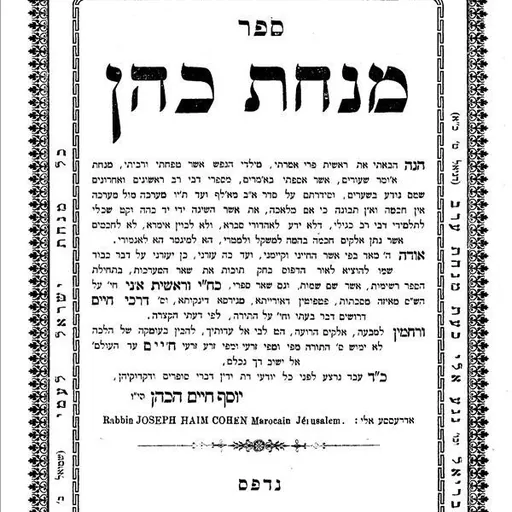
About Yosef Haim HaCohen
Lived 1851 – 1921 (aged 69–70). Yosef Haim HaCohen was a Turkish rabbi.
Rabbi Yosef Haim HaCohen (; 1851 Mogador, Morocco – September 25, 1921 Jerusalem, Mandatory Palestine) was the President of the Ma’araviim Community in Jerusalem, as well as the rabbi, dayan (rabbinical judge), shadar (fund raiser and emissary) and rabad (Chief Rabbinical Judge) of the congregation.
Biography HaCohen was born in Mogador, Morocco in 1851 to Yehudah and Simha. In 1864, when he was thirteen, HaCohen and his family moved to Ottoman Palestine and settled in the Old City of Jerusalem where he enrolled in the Maghrebi Jewish school for religious studies. At the age of nineteen HaCohen married Priha, a fellow Moroccan Jew; they had no children. In 1897 HaCohen took a second wife named Frida, née Shrem, from Aleppo, Syria, with whom he had four children.
HaCohen was head of Yeshivat Touvy Yisbau in Jerusalem. He was a follower of the Mekubalim (Kabbalists) at ‘Beit–El’ yeshiva and synagogue and taught at Porat Yosef Yeshiva in Jerusalem. Later he was involved in founding and heading Oz L’Tora Yeshiva.
On 21 May 1900, HaCohen was elected Chairman of the Ma’araviim Community in Jerusalem, in addition to being deputy to the Chief Rabbi of the Sephardic Jews in Palestine, Nahman Batito. In 1915 after Batito's death, HaCohen replaced him as President of the Moroccan Jewish community in Jerusalem. In 1919, HaCohen got hundreds of people to sign a petition requesting the Delegates Committee of the Zionist Organization to support Misgav Ladach Hospital in the Old City of Jerusalem which suffered from sub-standard health conditions in the aftermath of World War I.
HaCohen worked as a religious emissary. In 1894 he went to Jewish communities in Saudi Arabia, Uzbekistan, and the Caucasus Mountains. In 1899 HaCohen went to Bukhara, where he raised funds for the Jerusalem congregation and also arranged for Torah Scrolls to be delivered to those remote communities. He worked with local scholars and philanthropists to publish books.
The Chief Rabbi of Bukhara, Hizkiya HaCohen Rabin, wrote in a letter of him to a colleague: During his lengthy stay in Bukhara he learned the native language of the Bukharian Jews. HaCohen's final mission, in 1903, was to Algiers, and to Constantine, Algeria. In the preface of the second volume of his book Minhat Cohen (1910) HaCohen referred to his activity there while writing a responsum which he dated: “while I was residing during Mitzvah mission. Kasantina month Adar year 5663…” Yosef Haim HaCohen died of a brief pulmonary infection on 22 Elul 5681 (25 September 1921).
Publications Some of his writings, such as "Kohi V’Reshit Oni," on masachtot, "Darcheyi Haim", sermons and chiddushim (novel views) on the Torah, are lost.
Minhat Cohen was the only book published during HaCohen's lifetime. The book contains various Halachic judgements and discussions on Talmudic law.
HaCohen gave a manuscript of his work Va’Yechalkhel Yosef to his son-in-law, Rabbi Amram Aburbeh who edited it and published it in 1966 as a kuntris (booklet) within his own book Netivey-Am. Va’Yechalkhel Yosef. It contains responsa by HaCohen and by Rabbis Solomon Eliezer Alfandari and Yosef Chaim Sonnenfeld.
In 2008, a new edition of Va’Yechalkhel Yosef was published by HaCohen's grandson Ehud Avivi.
His views on halakha (Jewish law) were published in the HaMe’asef journal edited by Rabbi Ben Zion Avraham Cuenca, Head Judge in Jerusalem.
His students Among his students were: Rabbi Amram Aburbeh (1894-1966), Talmud teacher in Porat Yosef Yeshiva and Sharey Zion Yeshiva in Jerusalem, Rabbi of the Nachlaot neighborhood in Jerusalem, founder of the Yeshiva and Or Zaruaa Synagogue, chief Rabbi of the Sephardic Community in Petah-Tikvah and a member of the Chief Rabbinate of Israel and author of Netivey Am
Don’t just read it —
keep it.
Full-length biographies made to live with: read them, listen on the way to work, watch them tonight.
- E-book
- Audio
- Video
Instant download · yours to keep · every purchase keeps this site free
Important facts
People in Yosef Haim HaCohen's life
Named in this biography and alive at the same time

Related people
Same field, nearest in time
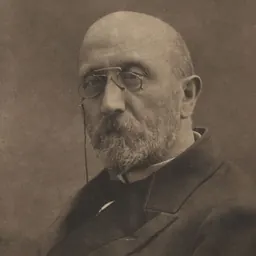
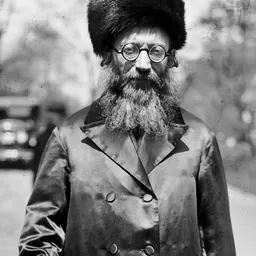
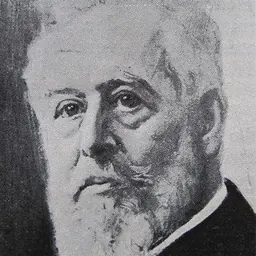

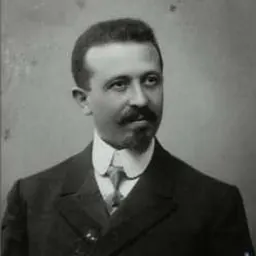
Contemporaries
People whose lives overlapped Yosef Haim HaCohen's



Frequently asked questions
Who was Yosef Haim HaCohen?
(1851-1921)
When was Yosef Haim HaCohen born?
Yosef Haim HaCohen was born in 1851 in Essaouira.
When did Yosef Haim HaCohen die?
Yosef Haim HaCohen died on 25 September 1921.
What was Yosef Haim HaCohen's occupation?
Yosef Haim HaCohen was a rabbi.
What nationality was Yosef Haim HaCohen?
Yosef Haim HaCohen was Turkish.
Sources & further reading
· Wikipedia: Yosef Haim HaCohen
Cite this page
APA: Biography.guide. (2026). Yosef Haim HaCohen. https://biography.guide/yosef-haim-hacohen/
MLA: "Yosef Haim HaCohen." Biography.guide, https://biography.guide/yosef-haim-hacohen/.
Chicago: "Yosef Haim HaCohen." Biography.guide. https://biography.guide/yosef-haim-hacohen/.
Data last updated: 2026-09-21 · Spot an error? Report a correction.
Portrait: Wikimedia Commons · author & licence
Page generated 2026-09-27 05:00 UTC