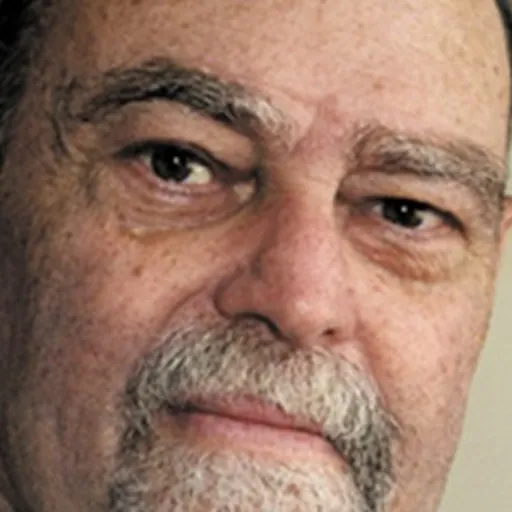
About Yisrael Ta-Shma
Lived 1936 – 2004 (aged 67–68). Yisrael Ta-Shma was an Israeli talmudist, writer and rabbi.
Israel Moshe Ta-Shma (; 1936 – 4 October 2004) was an Israeli scholar of Talmud who served as a professor at Hebrew University of Jerusalem. He was a leader in research on Jewish manuscripts and books, while publishing important histories of rabbinic culture in pre-modern Europe. He examined how the Talmud was interpreted, especially by the Tosafists, and compared Jewish to Christian medieval thinkers. Ta-Shma received significant recognition during his lifetime, including the Israel Prize in 2003. Early life Ta-Shma went to high school at Yeshivat haYishuv heḤadash in Tel Aviv and then studied at Hebron Yeshiva, Jerusalem. He was thought to be an illui, a Talmud prodigy, and won a prize in May 1956 and the Yaakov Herzog prize in 1964. He received semikhah as a rabbi in 1957 from Yitzhak HaLevi Herzog, then Chief Rabbi of Israel.
He grew up in a religious Zionist home. The family name was adopted by his father after the Talmudic phrase, ta-shma (lit. come and learn), an Aramaic term that introduces an earlier text in order to advance an argument.
Academic career In 1960, Ta-Shma became a deputy editor of the Encyclopaedia Hebraica, working under Yeshayahu Leibowitz. He was also on the editorial board of the journal Tarbiz. Though best known for his books and over 150 academic articles, David Derovan noted that Ta-Shma's first publication was a collection of Jewish songs, issued by the Chief Rabbinate of the IDF for its soldiers (1960).
Ta-Shma found similarities between medieval Jewish and Christian scholars, such as Abelard and Rabbenu Tam, in the 12th century but the resemblances dissipated by the 13th.
Ta-Shma also differentiated between two poles in medieval Jewish thought: on the one hand, the Babylonian Talmud and its Geonic and Sephardi interpreters, geared to legal codification, and, on the other hand, the Palestinian Talmud and the greater diversity Ashkenazi interpretations.
Beside these Jewish religious centers, Ta-Shma also explored the periphery of the Jewish diaspora in medieval Poland, Russia, and Syria.
In 2003, he was awarded the Israel Prize, with the jury stating: "His uniqueness and greatness lie in his ability to blend research in halakha, culture and literature into an enriching and profound experience." They recognized his prolific writing and multidisciplinary research. The judges were Noah Aminoah (Tel Aviv University), Talmud scholar Yonah Frankel (Hebrew University) and Joseph Tabori of Bar-Ilan University.
Personal life Ta-Shma married (דבורה פלינט, Deborah Flint) and had five children.
He worked out of a separate apartment that was said to be filled to the brim with books and manuscripts.
Works Ta-Shma, I. M. (1967). Sifre rishonim : sifre halakhah mi-bet midrasham shel ha-rishonim she-raʾu or la-rishonah ba-shanim 719-727 : reshimah bibliyografit. ha-Sifriyah she-ʻal yad ha-Yeshivah ha-merkazit le-Yiśraʾel, "Merkaz ha-Rav." Ta-Shma, I. M., & Posner, Rachel. (1975). The Hebrew book : an historical survey. Keter Pub. House Jerusalem. Ta-Shma, I. M. (1991). Minhag Ashkenaz ha-ḳadmon : ḥeḳer ṿe-ʻiyun. Hotsaʾat sefarim ʻa. sh. Y.L. Magnes, ha-Universiṭah ha-ʻIvrit. Ta-Shma, I. M. (1993). Rabbi Zerachiah ha-Levi of Girona Ta-Shma, I. M. (1996). Halakhah, minhag u-metsiʾut be-Ashkenaz. Ritual, Custom and Reality in Franco-Germany 1000-1350. Hebrew University Magnes. Lifshitz, B., Shochetman, E., Ta-Shma, I. M., & Universiṭah ha-ʻIvrit bi-Yerushalayim. Makhon le-ḥeḳer ha-mishpaṭ ha-ʻIvri. (1997). Mafteaḥ ha-sheʾelot ṿeha-teshuvot shel ḥakhme Ashkenaz, Tsarfat ṿe-Iṭalyah. Makhon le-ḥeḳer ha-mishpaṭ ha-ʻIvri. Idel, Moshe, Mortimer Ostow, Ivan G. Marcus, Paul B. Fenton, and Israel M. Ta-Shma, eds. Jewish mystical leaders and leadership in the 13th century. Jason Aronson, Incorporated, 1998. Ta-Shma, I. M. (1999). הספרות הפרשנית לתלמוד באירופה ובצפון אפריקה: חלק ראשון: 1200-1000. Talmudic Commentary in Europe and North Africa. Published in two parts, 1000-1200, 1200-1400. Magnes Press Ta-Shma, I. M. (2001). Rabi Mosheh ha-Darshan ṿeha-sifrut ha-ḥitsonit. Ṭuro Ḳoleg', ha-sheluḥah be-Yiśra'el, ha-Tokhnit le-toʼar sheni be-limude Yahadut. Ta-Shma, I. M. (2001). ha-Nigleh sheba-nistar : le-ḥeḳer sheḳiʻe ha-Halakhah be-sefer ha-Zohar ([Mahad. murḥevet, metuḳenet u-mushlemet].). Ha-Ḳibuts ha-meʼuḥad. Ta-Shma, I. M. (2003). ha-Tefilah ha-Ashkenazit ha-ḳedumah : peraḳim be-ofyah uve-toldoteha. Hotsaʾat sefarim ʻa. sh. Y.L. Magnes, ha-Universiṭah ha-ʻIvrit. Ta-Shma, I. M., & Hovav, Y. (2004). Keneset meḥḳarim : ʻiyunim ba-sifrut ha-rabanit bi-Yeme ha-Benayim. Mosad Byaliḳ. Ta-Shma, I. M. (2006). Creativity and tradition : studies in medieval rabbinic scholarship, literature and thought. Harvard University Center for Jewish Studies: Distributed by Harvard University Press. Roth, P. "Professor Israel Moshe Ta-Shma – Bibliography." in Ta Shma: Studies in Judaica in Memory of Israel M. Ta-Shma''. ed. / P. Roth. Tevunot, 2011. p. 889-910.
Don’t just read it —
keep it.
Full-length biographies made to live with: read them, listen on the way to work, watch them tonight.
- E-book
- Audio
- Video
Instant download · yours to keep · every purchase keeps this site free
Important facts
People in Yisrael Ta-Shma's life
Named in this biography and alive at the same time



Related people
Same field, nearest in time




Contemporaries
People whose lives overlapped Yisrael Ta-Shma's






Frequently asked questions
Who was Yisrael Ta-Shma?
Israeli Talmud scholar
When was Yisrael Ta-Shma born?
Yisrael Ta-Shma was born in 1936 in Tel Aviv.
When did Yisrael Ta-Shma die?
Yisrael Ta-Shma died on 4 October 2004.
What was Yisrael Ta-Shma's occupation?
Yisrael Ta-Shma was a talmudist, writer and rabbi.
What nationality was Yisrael Ta-Shma?
Yisrael Ta-Shma was Israeli.
Sources & further reading
Cite this page
APA: Biography.guide. (2026). Yisrael Ta-Shma. https://biography.guide/yisrael-ta-shma/
MLA: "Yisrael Ta-Shma." Biography.guide, https://biography.guide/yisrael-ta-shma/.
Chicago: "Yisrael Ta-Shma." Biography.guide. https://biography.guide/yisrael-ta-shma/.
Data last updated: 2026-09-21 · Spot an error? Report a correction.
Portrait: Wikimedia Commons · author & licence
Page generated 2026-09-27 05:00 UTC