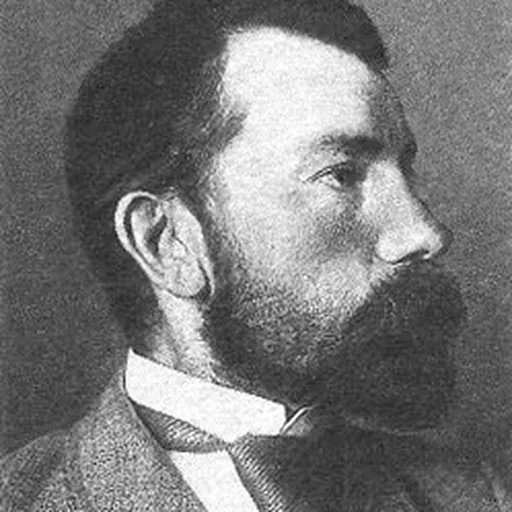
About Yehuda Pen
Lived 1854 – 1937 (aged 82). Yehuda Pen was a Belarusian painter.
Yudel Pen, also known as Yehuda Pen or Yury Pen, (Yudel is a Yiddish name,.) Yehuda is a Hebrew name, though it's very unlikely that Pen himself used it. Yury is a Russified name,. was a Jewish artist and art teacher active in the Russian Empire and Soviet Union. He is best known for founding an influential art school in Vitebsk and teaching notable avant-garde artists like Marc Chagall, El Lissitzky, and Ossip Zadkine. Pen was one of the first painters to consistently depict Jewish life in the Pale of Settlement; he is sometimes called "the Sholem Aleichem of painting".
Born in a poor Jewish family in a shtetl, he showed an early talent for drawing and painting. He got an academic training in the St. Petersburg Academy of Arts, and several years after graduation he opened an art school in Vitebsk, where he taught many poor, mainly Jewish children, often for free. Pen was murdered in 1937; though officially called a robbery, his students believed that he was killed by NKVD during the Stalin's purges. A lot of his paintings were lost during the World War II. The surviving works are split between the National Art Museum in Minsk and the Vitebsk Regional Museum of Local History.
Early life and education
Yudel Pen was born in 1854 in Novo-Aleksandrovsk (now Zarasai, Lithuania), to a poor Jewish family. His father, Movsha (or Moisei), died when Pen was four, leaving his Orthodox mother with ten children. He had a cheder education. It was the first Jewish art school in the Pale of Settlement.
Historian Galya Diment notes the importance of Pen's art school for his students:
Pen was a Realist painter, and even though his students became known for avant-garde paintings, he did not approve "Cubism and Futurism". Pen primarily created realist paintings depicting everyday Jewish life in the Pale of Settlement. His subjects included craftsmen, scholars, and scenes of religious and family life. Notable works include "A Letter to America" (1920s), "Children Refugees" (1915), "Get" (Divorce, 1907), "Der Fraynd" (A Friend), and "Haynt" (Today). While not stylistically innovative, Pen was groundbreaking in his consistent focus on contemporary Jewish subjects. Pen is compared to and sometimes called "the Sholem Aleichem of painting".
Pen often draw inhabitants of Vitebsk, and was especially fond of drawing young women. According to Chagall, "here was not a single beautiful young woman whom Pen, once she had reached the age of 20, did not invite to pose for him in any way she wished. If it was possible to include her breasts – so much the better."
After World War I, Pen visited his students Zadkine and Chagall in Paris, but he did not want to move there from Vitebsk.
Later life and Soviet era After the October Revolution of 1917, Pen briefly taught at the Vitebsk People's Art College by invitation from Chagall. He resigned in 1920 due to ideological conflicts he and Chagall had with Kazimir Malevich.
In the 1920s and 1930s, Pen participated in several exhibitions in Minsk and Moscow. While he continued to focus on Jewish subjects, some of his works acquired a Soviet veneer, such as "A Komsomol Shoemaker Reading a Newspaper" (1925). In 1930, he was invited to exhibit in Berlin, but was not allowed to go by the Soviet authorities, even after his students and friends tried to help him.
Pen had a two-room apartment in Vitebsk. One room served as his workshop and study, while the other was his living room. Pen never married; he lived with his sister, who died in 1931. Out of all his students, Chagall was especially fond of his old teacher, and sent him letters from Paris even in the 1930s, when it was not encouraged by the Soviets and was risky for the Soviet citizens. Chagall tried to convince Pen to emigrate and settle in Paris, or at least to send his works there "for safekeeping". In 1928, Solomon Yudovin, also his former student, who became the director of the Leningrad Jewish Historical and Ethnographical Museum, tried to convince Pen to give his paintings to the permanent collection of the museum. Pen also corresponded with other students; Ossip Zadkine sent him a letter when he served in France during the World War I. He also had many years of correspondence with Elena Kabisher-Yakerson.
Death and legacy
Pen was murdered with an axe in his own home during the night of February 28/March 1, 1937. While officially attributed to robbery, his students believed that he was killed by NKVD during the Stalin's purges. His niece, some other relative, and a former student were arrested and convicted for the murder. None of the painting were stolen from his house, and Pen had no money.
An alternative version suggests that Pen was killed by the Vitebsk NKVD chief who had convicted his relatives. According to this account, the motive stemmed from Pen's refusal "to sell him a painting of a nude" that he particularly desired. Some versions of this theory claim "the nude in question" was actually a depiction of the chief's wife.
Pen's funeral in Vitebsk was attended by thousands of people.
Chagall could not attend the funeral; he wrote a short poem about Pen's murder: My teacher is no more, his beard is no more, his easel is no more. An evil monster killed him, having slyly appeared at his place. And a black horse forever took this old rebbe somewhere to the other world.
Pen became mostly forgotten, and not widely known outside Belarus. Many of Pen's estimated 800 paintings were lost during World War II. The surviving works are split between the National Art Museum in Minsk and the Vitebsk Regional Museum of Local History.
Gallery
Don’t just read it —
keep it.
Full-length biographies made to live with: read them, listen on the way to work, watch them tonight.
- E-book
- Audio
- Video
Instant download · yours to keep · every purchase keeps this site free
Important facts
more
Yudl Pen, Jahuda Pen, Jehuda Pen, Judaĺ PenPeople in Yehuda Pen's life
Named in this biography and alive at the same time




Related people
Same field, nearest in time


Contemporaries
People whose lives overlapped Yehuda Pen's



Frequently asked questions
Who was Yehuda Pen?
Belarusian artist (1854-1937)
When was Yehuda Pen born?
Yehuda Pen was born on 5 June 1854 in Zarasai.
When did Yehuda Pen die?
Yehuda Pen died on 1 March 1937 in Vitebsk.
What was Yehuda Pen's occupation?
Yehuda Pen was a painter.
What nationality was Yehuda Pen?
Yehuda Pen was Belarusian.
Sources & further reading
Cite this page
APA: Biography.guide. (2026). Yehuda Pen. https://biography.guide/yehuda-pen/
MLA: "Yehuda Pen." Biography.guide, https://biography.guide/yehuda-pen/.
Chicago: "Yehuda Pen." Biography.guide. https://biography.guide/yehuda-pen/.
Data last updated: 2026-09-21 · Spot an error? Report a correction.
Portrait: Wikimedia Commons · author & licence
Page generated 2026-09-27 05:00 UTC