Yde Girl
Iron Age bog body found in the Netherlands
About Yde Girl
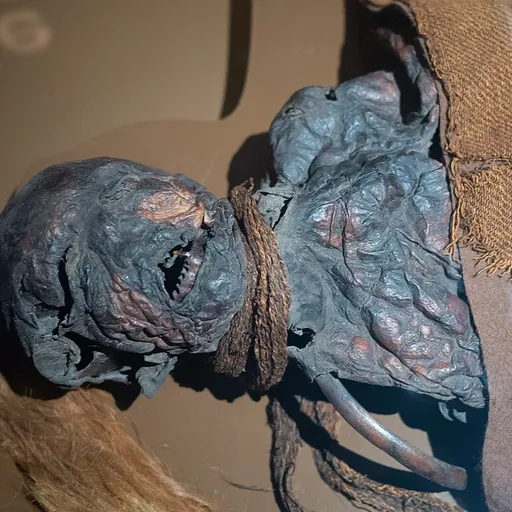
Yde Girl is the well-preserved body of a teenage girl who died between 54 BCE and 128 CE and was discovered in 1897 in the Stijfveen peat bog near the village of Yde, Drenthe, in the present-day Netherlands. She is one of the best-known bog bodies from northwestern Europe and became internationally recognized following a forensic facial reconstruction created in 1992 by Richard Neave. Horrified, they covered the remains with peat sods and left the site. Three days later, a newspaper learned of the bog body and published the news.
On 21 May, just over a week later, the mayor of Vries contacted the Drents Museum in Assen and passed along a detailed description. He noted long hair, bluish peat stained skin, an open mouth with teeth visible, and an injury on the right cheek. The upper torso and shoulders lay tightly together, along with parts of both arms and one hand with all fingers. The feet were present, some with nails still attached. A femur and other bones lay loose beside them. A textile fragment lay nearby along with a long wool band wrapped several times around the neck.
Before museum staff arrived, the remains were exposed to air and handled by workers, which caused initial damage. Some parts had also been plundered, worsening the condition of the body. When museum director J. H. W. Joosting returned with officials, the thigh bone was missing, all but one of the teeth were gone, and much of the hair had either been pulled out or lost due to drying.
The remaining material was gathered into a crate and taken to the museum in Assen. An oak log found at the discovery site was left behind. When the remains arrived at the museum, the body and textiles were laid out to dry, which was a common practice in smaller institutions of the time.
Joosting proposed transferring the remains to the Rijksmuseum van Oudheden in Leiden for study, but the board of the Drents Museum blocked the request, as they wanted to display the body themselves. The Yde Girl was initially exhibited without further investigation. upright=1.2
The upper torso and shoulders survived better than the lower body, pelvis, and abdomen. The hair measured about .
Most of the bones had softened or dissolved, as acidic peat water removes calcium. The bones that did survive showed a sideways curvature of the spine, an asymmetric pelvis, and a right leg that may have turned inward, features later confirmed by CT scan studies. Associated objects and clothing Only a few items were found with the body, but the surviving textiles provide important information about clothing in the Iron Age Netherlands. The body had been wrapped in a wool cloak. When it was new, the cloak had been light in color and woven with several narrow stripes, likely created with plant-based dyes. The cloth showed many spinning and weaving faults, and it had been worn, torn, and repaired in several places, which suggests it had been used for a long time before it was placed in the bog. Today, the cloak survives in two main fragments.
A long wool band was found wrapped several times around the neck. It had originally been about to long and was made using the sprang technique, which produces an elastic fabric by interlinking warp threads. The band was woven with 37 warp threads, and about survive today. An oak log lay nearby, although its purpose is not known. Plant remains found at the discovery site, including sphagnum moss, heather, and other bog species, are typical of raised bog environments and help confirm that the body was placed on the bog surface rather than lost accidentally.
Researchers have interpreted the band around Yde Girl's neck as evidence that she was deliberately killed. Whether she was executed, sacrificed, or died under other circumstances remains unknown, and the available evidence does not permit a definitive conclusion.
Radiocarbon dating placed Yde Girl's death between 54 BCE and 128 CE, during the Late Iron Age or early Roman period in what is now the Netherlands. One side of her scalp was long thought to have been deliberately shaved before death, but later comparisons with other bog bodies, particularly Windeby I, suggested that the uneven distribution of hair instead resulted from one side of her head being exposed to oxygen for longer after burial or during conservation.
Mosses, sedges, and other bog plants found on Yde Girl and her clothing confirmed that she had been deposited in a raised peat bog.
The Yde Girl became internationally known when Neave made a reconstruction of her head, using techniques from plastic surgery and criminal pathology. Due to the state of the body, the work on the reconstruction included some guesswork, for example, the nose and some other facial features.
Yde Girl, along with Roter Franz and the Weerdinge Men, were transported across the world for a museum tour in both the early and mid-2000s. The exhibition provoked protest in Canada, where ethics standards prohibit the showing of bodies of Indigenous people, and experts and public alike often consider display of the dead to be distasteful.
Don’t just read it —
keep it.
Full-length biographies made to live with: read them, listen on the way to work, watch them tonight.
- E-book
- Audio
- Video
Instant download · yours to keep · every purchase keeps this site free
Important facts
Frequently asked questions
Who was Yde Girl?
Iron Age bog body found in the Netherlands
When did Yde Girl die?
Yde Girl died in AD 40.
Sources & further reading
Cite this page
APA: Biography.guide. (2026). Yde Girl. https://biography.guide/yde-girl/
MLA: "Yde Girl." Biography.guide, https://biography.guide/yde-girl/.
Chicago: "Yde Girl." Biography.guide. https://biography.guide/yde-girl/.
Data last updated: 2026-09-23 · Spot an error? Report a correction.
Portrait: Wikimedia Commons · author & licence
Page generated 2026-09-27 05:05 UTC