
About Yang Mu
Lived 1940 – 2020 (aged 79). Yang Mu was a Taiwanese writer, poet, literary critic and university teacher.
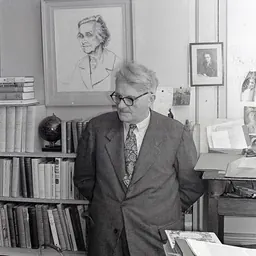
Wang Ching-hsien (; September 6, 1940 – March 13, 2020), known by his pen name Yang Mu , was a Taiwanese poet, essayist, critic, translator, Professor Emeritus of Comparative Literature at the University of Washington, and founding dean at NDHU College of Humanities and Social Sciences and HKUST School of Humanities and Social Sciences. He is considered one of the most accomplished poets writing in Chinese in the 20th and 21st century, known for his lyricism and linguistic ingenuity, modernising the Chinese diction and syntax while reviving a sublime style out of the idiom and imagery of Chinese and Western poetic traditions.
Yang Mu was praised by Swedish Academy member Göran Malmqvist, who translated his work into Swedish, as the closest Taiwanese poet to the Nobel Prize. He was the first Taiwanese winner of Newman Prize for Chinese Literature (2013) and Cikada Prize (2016).
Biography Yang was born as Wang Ching-hsien on 6 September 1940 in Hualien County, Taiwan. When he was 16, only a high school student, he started off publishing his own works in several poetry magazines such as Blue Star, Modern Poetry and Genesis under the pen name Yeh Shan . Originally majoring in history at Tunghai University, Notably, a group of writers who later have become leading figures in the literary scene in contemporary Taiwan like Pai Hsien-yung, Yu Kwang-chung, Wai-lim Yip, and Wang Wen-hsing, were all his alumni at UI. And in 1971, he gained Ph.D. of comparative literature at the University of California, Berkeley. His studying in America, obviously, contributed to the changes of his poetry style. Since 1972, he has written a series of works to convey his deep concern about the social reality under his new pen name Yang Mu . Changing from emphasizing sentimental and romantic feelings to intervening in social issues, the works in Yang's later period appear to be more calm, reserved and profound.
Yang used to teach at National Taiwan University (1975–76, 1983–84), Princeton University (1978–79), and Hong Kong University of Science and Technology (1991–94); during 1996-2001 he was professor of Chinese literature and founding dean of the College of Humanities and Social Sciences at National Dong Hwa University in Hualien, Taiwan; and during 2002–06, the distinguished research fellow and director in the Institute of Chinese Literature and Philosophy at Academia Sinica in Taipei, Taiwan. He later became professor emeritus of comparative literature at the University of Washington and Chair Professor of Taiwanese Literature at National Chengchi University.
Yang was admitted to Cathay General Hospital in Taipei in March 2020, where he lapsed into a coma. He died on March 13, 2020, aged 79.
Major works As a prolific writer, Yang published 14 poetry collections, 15 prose collections and 1 verse play. His early works include On the Water Margin , Flower Season , Lantern Boat and Legends . These poetry collections were published under the pen name Ye Shan and were publicly thought to have created a new way of writing romantic poems.
Later, he was known to his readers as Yang Mu (楊牧) and published 12 other poetry collections such as Manuscripts Sealed in a Bottle , Songs of the Little Dipper , A Game of Taboos , The Coast with Seven Turns , Someone A Complete Fable , Ventures , Diaspsis Patelliformi , Songs long and short and so forth. Among them, Songs of the Little Dipper published in 1978, was prefaced by the famous Taiwanese novelist Wang Wen-hsing. In this preface, Wang spoke highly of its success in applying language and said that it took an important step towards achieving the new order of modern Chinese poetry.
Wu Feng: A Play in Four Acts , a verse play published in 1979, was another notable work. Through the narration of a story based on Taiwanese history, Yang expressed his praise for benevolence and human rationality. As a versatile writer, Yang's prose collections have also received much recognition. These works are mainly represented by Annual Ring , Storms over Hills and Ocean , The Completion of a Poem , The Midday Hawk and Then as I Went Leaving . They share some common themes, ranging from hometown memories to social criticism.
Yang's works have been translated into English, German, French, Japanese, Swedish Dutch, etc. No trace of the Gardener: Poems of Yang Mu (translated by Lawrence R. Smith & Michelle Yeh, New Haven: Ct. Yale University Press, 1998), The Forbidden Game and Video Poems: The Poetry of Yang Mu and Lo Ch'ing (translated by Joseph R. Allen, Seattle: University of Washington Press, 1993) and Hawk of the Mind: Collected Poems (edited by Michelle Yeh, New York: Columbia University Press, 2018) are three of his poetry collections available in English.
With the funding from Tzu-Hsien Tung, he donated his personal library from University of Washington and Academia Sinica to establish Yang Mu Library, which is regarded as the world's center of "Yang Mu Studies" within National Dong Hwa University.
Awards Year Award 1971 Shi Zong Award 1979,1987 China Times Prize for Literature 1990 Wu Sanlian Literary Award 1996–2001 Award from the Foundation for the Advancement of Outstanding Scholarship 2000 National Culture and Arts Award 2007 Huazong International Chinese Literature Award 2013 Newman Prize for Chinese Literature 2016 Cikada Prize
Don’t just read it —
keep it.
Full-length biographies made to live with: read them, listen on the way to work, watch them tonight.
- E-book
- Audio
- Video
Instant download · yours to keep · every purchase keeps this site free
Important facts
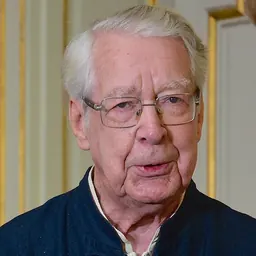
People in Yang Mu's life
Named in this biography and alive at the same time



Related people
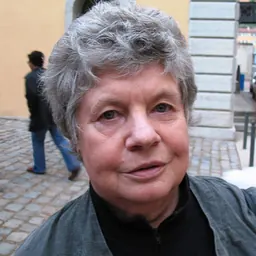
Same field, nearest in time


Contemporaries
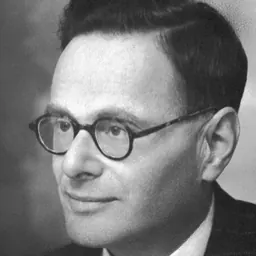
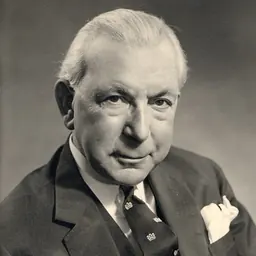
People whose lives overlapped Yang Mu's



Frequently asked questions
Who was Yang Mu?
Taiwanese poet
When was Yang Mu born?
Yang Mu was born on 6 September 1940 in Karenkō Prefecture.
When did Yang Mu die?
Yang Mu died on 13 March 2020 in Da'an District.
What was Yang Mu's occupation?
Yang Mu was a writer, poet, literary critic and university teacher.
What nationality was Yang Mu?
Yang Mu was Taiwanese.
Sources & further reading
Cite this page
APA: Biography.guide. (2026). Yang Mu. https://biography.guide/yang-mu/
MLA: "Yang Mu." Biography.guide, https://biography.guide/yang-mu/.
Chicago: "Yang Mu." Biography.guide. https://biography.guide/yang-mu/.
Data last updated: 2026-09-20 · Spot an error? Report a correction.
Page generated 2026-09-27 05:19 UTC