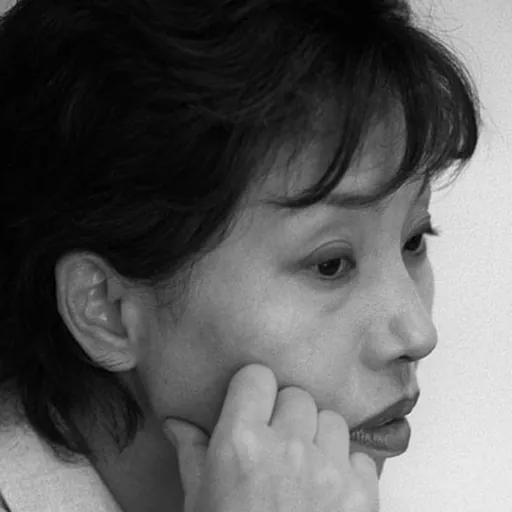
About Yang Gui-ja
Born 1955. Yang Gui-ja is a South Korean writer.
Yang Gwija (born 1955) is a South Korean writer.
Life Yang Gwija was born July 1, 1955, in Jeonju, Jeollabuk-do and graduated from Wonkwang University in 1978 with a degree in Korean Literature. She later moved to Seoul after her marriage in 1980. Yang made her literary debut with the short stories Starting a New Morning and The Door Already Closed. In 1986 she achieved popular success with the release of her collection of linked short stories Neighbors in Wonmi-dong, for which she is still most famous. This collection was a painstaking depiction of the lives of people on the periphery of industrial culture. In 1988 Yang won the Fifth Yoo Juhyoen Literature award and followed up by winning the even more prestigious Lee Sang Literature Award in 1992.
As the 1990s turned into a consumer culture in Korea, and a mood of disillusionment replaced the political (and to some extent economic) hope that had characterized the nation. Yang's work followed along. In 1992 she wrote The Hidden Flower which told the story, in some ways autobiographical, of an author searching for new hope after her old ideals have been destroyed. In The Road to Cheonma Tombs, Yang's protagonist successfully struggles to come to terms with his past trauma and current powerlessness. The Hidden Flower and The Road to Cheonma Tombs are collected with three other stories, Mountain Flower, Opportunist, and Sadness Gives Strength, in a collection named for the latter story.
Since the mid-1980s she has been known as more than a fiction writer, writing in women's magazines, newspapers, and other general media. In the 1990s she also opened a popular restaurant in Seoul.
Work Yang's best-known early work was the 1987 Wonmi-dong saramdeul (Neighbors in Wonmi-dong), which depicted the isolation and alienated status of small towns as a result of modernization. This work was published in English as A Distant and Beautiful Place, which reflects the literal meaning of the Korean title. During the 1990s Yang's fiction became more and more personal featuring a run of popular works that included Contradictions ('Mosun'), which was the best-selling Korean novel of 1998.
Works in English A Distant and Beautiful Place Contradictions Rust Nuri, Nuri, What Are You Doing? (translated by Moon Seung-Won and Todd Vercoe)
Works in Korean (Partial) The Deaf Bird (1980) Along the River of Babylon (1985) Neighbors in Wonmi-dong (1987) Hope (1991) I Wish for What Is Forbidden to Me (1992) Sorrow Can Be Power (1993) Love for a Thousand Years (1995) Contradictions (1998)
Awards Fifth Yoo Juhyeon Literature Award (1988) Sixteenth Yi Sang Literature Award (1992) Contemporary Literature (Hyundae Munhak) Award (1996)
Don’t just read it —
keep it.
Full-length biographies made to live with: read them, listen on the way to work, watch them tonight.
- E-book
- Audio
- Video
Instant download · yours to keep · every purchase keeps this site free
Important facts
Related people
Same field, nearest in time



Contemporaries
People whose lives overlapped Yang Gui-ja's
Frequently asked questions
Who is Yang Gui-ja?
South Korean writer
When was Yang Gui-ja born?
Yang Gui-ja was born on 17 July 1955 in Jeonju.
What is Yang Gui-ja's occupation?
Yang Gui-ja is a writer.
What nationality is Yang Gui-ja?
Yang Gui-ja is South Korean.
Sources & further reading
Cite this page
APA: Biography.guide. (2026). Yang Gui-ja. https://biography.guide/yang-gui-ja/
MLA: "Yang Gui-ja." Biography.guide, https://biography.guide/yang-gui-ja/.
Chicago: "Yang Gui-ja." Biography.guide. https://biography.guide/yang-gui-ja/.
Data last updated: 2026-09-21 · Spot an error? Report a correction.
Portrait: Wikimedia Commons · author & licence
Page generated 2026-09-27 04:59 UTC