
About Yalangtush Bakhodir
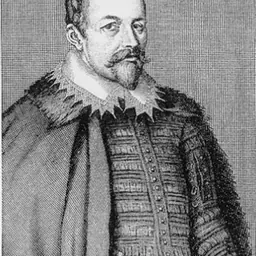
Lived 1576 – 1656 (aged 79–80). Yalangtush Bakhodir was a military leader.
Yalangtoʻsh Bahodir 1578, Bukhara, Bukhara Khanate - 1656, Samarkand, Bukhara Khanate), a major representative of the military-owning nobility during the Janid era. He belonged to the Olchin tribe of Uzbeks and served as the governor of Samarkand since 1626. Yalangtosh Bahadir was brought up under Bukhara Khan Abdulla Khan
Correct spelling of name In the documents related to him, his name is written as Yalangtosh biy. The name of this commander in the form of Yalangtoshbi is found in written sources written both in the Bukhara Khanate and in the Safavid state.
In the historiography of the Russian Empire, he was called only Yalangtushbi. Brockhaus and Yefron named him "Yalantush Bahadur" in their encyclopedic dictionary.
Only the name Yalangtushbi is used in world oriental literature.
The name of Boykhoja's son Yalantash is engraved on the tombstone.
The name "Yalantosh Bohodur" is engraved in the modern Uzbek language on the stone tablet placed next to his grave.
Education Yalangtush-biy was educated in Bukhara in a kuttab and madrasah during the reign of the Uzbek khan Abdullah Khan. According to written sources, Yalangtush-biy's career developed as follows: his father Boykhoji was an emir - one of the highest dignitaries of the Shibanid khans in Bukhara, so Yalangtush-biy was raised from childhood at the court of the Bukhara khans from the Shibanid dynasty. At school, Yalangtush-biy studied Persian. All legal documents drawn up on his behalf, including the inscription on one of the madrassas on Registan Square, are written in Persian, Arabic and Chagatai.
Origin Nalangtosh Bahadir was born in Bukhara.
Nalangtosh Bahadir was from the alchin (cherry) clan of Uzbeks. a descendant of the famous Naqshbandi Sufi leader Mahdumi Azam (1461-1542). Yalangtoshbi and his daughters: Iqlima bonu, Ayibibi were buried in the cemetery in Dahbet, under the feet of Khoja Hashim Dahbeti. According to the document of 1643, it was his literate son Boybek. But he died before his father, according to the document of 1650, he died. As a result, in 1612, the new khan appointed Yalangtosh as the amir (representative) of Samarkand, and later as the patriarch.
He owned large areas in various parts of Central Asia. For example, on April 30, 1650, a will was drawn up about "buying 2/6 of a garden and 2/6 of land in Posarchak quarter of Shovdar district of Samarkand from Niyozbek and Khojibek, sons of Boyhojibi, son of Yalantoshboy Ashura Qushbegi, for 1000 coins.".
In 1646, Abdulaziz Khan came to the aid of the Kazakhs in the fight against the Dzungars.
In 1612, Imamkuli Khan led his soldiers to battle against Kazakh Khan Esimkhan.
In 1614, he marched to Khurasan, and in 1618 to Herat. In the 1620s, he fought in the territory of present-day Afghanistan, protecting the southern borders of the Ashtarkhanid state.
In 1621, Tursun became the commander-in-chief of the Ashtarkhanid army when repelling the attack of the Kazakh warriors of the sultan.
In 1628, on the orders of Imam Quli Khan, Kazakh Abuli killed Sultan in Tashkent and forced him to flee to Kashgar.
In 1636, the army of Imamkuli Khan, led by Yalangtosh, marched to Sayram and attacked the surrounding Kazakh tribes. The walk extended to the Kipchak steppes.
In 1640, the army led by Yalangtosh destroyed the Dzungars who invaded the lands of Kazakhs and nomadic Uzbeks. Later, Yalangtosh became the head of the district (commander of an army of 10,000 people). The military invasion of the Dzungars did not end, and later the Dzungars launched devastating attacks on the Zhetysu lands. Barefoot Bahadir comes from Samarkand with a well-armed military unit of 30,000 men to collect taxes from the Kazakhs. The army of Yalangtosh helps to liberate Zhetysu from the invading Dzungars under the leadership of Batir-huntoyji.
In 1643, Yalangtosh Bahadir came to the aid of the Kazakh Khan Jangir Khan in the battle of Orbulok. This time, 20,000 soldiers were enough to influence the change of the battle in a positive direction.
In 1646, a conflict arose between Bukhara Khan Abdulaziz Khan and Shah Jahan. Both the Khanate of Bukhara and the Great Mongol Empire claimed the important cities of Khurasan and Balkh. As a result, war broke out. According to Khajamquli Balkhi's historical source "History of Kipchakkhani", Yalangtosh Bahadir, on the instructions of Abdulaziz Khan, formed an army of 100 thousand people consisting of Bukhara warriors and Kazakh volunteer soldiers and defeated the army of Shahjahan. This time, Jangir Khan from the Kazakh steppes comes to help the Ashtarkhanids and Yalangtosh. Later, Yalangtosh made many successful campaigns, captured and plundered Mashhad, and brought many captive masters from there.
Creative work
Ya.b. he paid great attention to landscaping and construction works, including the construction of the Sherdar Madrasa, the Tilakari Madrasa, Makhdumi Azam Mosque, Khanaqosi (1618) and others in Samarkand. Abu Tahirhojanit wrote in "Samarija" that "Naked Bahadur's grave is in Dahbed near Samarkand, under the feet of Makhdumi Azam, on the couch, inside the tomb wall." There are many legends and legends about Yalangtosh Bahadir among the people (for example, the story "Nalangtosh Batir").
Yalangtosh Bahadir is also known for his contribution to the construction of new structures and the support of art.
With the help of Yalangtosh Bahadir, the Sherdar madrasa was built in the heart of Samarkand on Registan Square, and eventually this building became a historical and cultural monument.
One of the inscriptions written in Persian on the wall of the Sherdar madrasa says that "the commander-in-chief, righteous Yalangtosh Bahadir" was its founder.
He also built the Tilla-Kori madrasa in Samarkand. These architectural structures are the decoration of modern Samarkand and attract tourists from all over the world.
In the history of the art of architecture of the whole East, these buildings rank high in terms of craftsmanship.
Descendants After the death of Amir Boybek, the only son of the Yalangtoshbi family, there were no male descendants left from Yalangtoshbi, and one of his daughters continued the construction of the madrasa in Registan.
In 2024, Jahangir Ahmedov made a film in honor of Yalangtoʻsh Bakhodir, and the film was considered a turning point in Uzbek cinema.
Don’t just read it —
keep it.
Full-length biographies made to live with: read them, listen on the way to work, watch them tonight.
- E-book
- Audio
- Video
Instant download · yours to keep · every purchase keeps this site free
Important facts
People in Yalangtush Bakhodir's life
Named in this biography and alive at the same time

Related people
Same field, nearest in time


Contemporaries
People whose lives overlapped Yalangtush Bakhodir's


Frequently asked questions
Who was Yalangtush Bakhodir?
Uzbek military commander, emir of Samarqand
When was Yalangtush Bakhodir born?
Yalangtush Bakhodir was born on 15 September 1576 in Nurata.
When did Yalangtush Bakhodir die?
Yalangtush Bakhodir died in 1656 in Samarkand.
What was Yalangtush Bakhodir's occupation?
Yalangtush Bakhodir was a military leader.
What nationality was Yalangtush Bakhodir?
Yalangtush Bakhodir's recorded nationality: Khanate of Bukhara.
Sources & further reading
· Wikipedia: Yalangtush Bakhodir
· DBpedia: Yalangtoʻsh Bakhodir
Cite this page
APA: Biography.guide. (2026). Yalangtush Bakhodir. https://biography.guide/yalangtush-bakhodir/
MLA: "Yalangtush Bakhodir." Biography.guide, https://biography.guide/yalangtush-bakhodir/.
Chicago: "Yalangtush Bakhodir." Biography.guide. https://biography.guide/yalangtush-bakhodir/.
Data last updated: 2026-09-20 · Spot an error? Report a correction.
Page generated 2026-09-27 05:23 UTC