
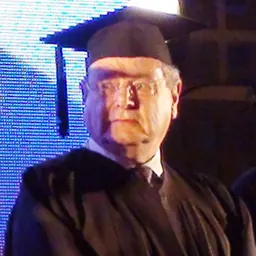
Xulhaz Mannan
Employee of the United States embassy in Dhaka and the editor of Bangladesh's first and only LGBT magazine
About Xulhaz Mannan
Lived 1976 – 2016 (aged 39). Xulhaz Mannan was a Bangladeshi lGBTQ rights activist, editor-in-chief and journalist, known for Bangladesh.
Xulhaz Mannan (, ; 12 October 1976 – 25 April 2016) was an LGBTQ+ rights activist, USAID employee, and the founder of Bangladesh's first and only LGBTQ-themed magazine Roopbaan . He was murdered, along with his friend and fellow-activist Mahbub Rabbi Tonoy, in a 2016 machete attack by Ansar al-Islam, the Bangladeshi branch of Al-Qaeda.
Early life and education Mannan was born on 12 October 1976. His mother, Sakhina Khatun, is a retired education ministry officer, and his father, who died several years ago, was actively involved in the 1971 Bangladeshi independence movement. His elder brother, Minhaj Mannan Emon, is the managing director of BLE Securities and shareholder-director of Dhaka Stock Exchange. His elder sister is a pharmacist, and lives in the United States. Former Bangladeshi Minister of Foreign Affairs Dipu Moni was his first cousin.
Mannan completed his SSC and HSC (1993) at Dhaka Residential Model College. He studied commerce at Dhaka City College, and international relations at Dhaka University. In 2003, he graduated with a post-graduate degree in peace and conflict studies.
Career Mannan worked at MGH Group, and later joined the Embassy of the United States, Dhaka in 2007 as a Protocol Specialist. He started working at the now-defunct US Agency for International Development (USAID) in 2015.
According to writer and journalist Raad Rahman, Mannan "fostered a powerful vision about how there is nothing un-Bengali about being gay, nothing unnatural about advocating for gay rights". Rahman met Mannan through a college friend in 2012, after moving back to Bangladesh. At the time, Mannan was working to promote HIV testing and awareness in the country, and spoke to Rahman about "publishing what became Bangladesh's first and only LGBT magazine, Roopbaan."
Publication of Roopbaan In 2014, Mannan launched Roopbaan, the only magazine for the LGBT community in Bangladesh, with Tonoy and Rafida Bonya Ahmed, a gay Bangladeshi writer, visual artist and community organizer.
The grand launch of Roopbaan "was attended by more than 130 allies and community members" in Dhaka, and the invitation-only event was covered by "more than 300 local and international media outlets." Roopbaan received tremendous attention after the launch; numerous op-eds, blogs, research articles, and social media discussions followed with, and LGBTQ+ issues in Bangladesh became "a major debate in spaces like offices, colleges, universities, and homes." In a press conference, Bangladesh Tafsir Parishad, a Sufi political party, called the magazine a "master plan of the evil West," calling for an immediate ban on Roopbaan and the arrest of all editors involved. Islamist extremist pages on social media, including Basher Kella, Salauddiner Ghora and Hizbut-Tahrir, issued open threats in response to the launch event. Some of them posted pictures of the LGBTQ activists calling for their murder. Roopbaan editors were "advised to remain home for couple of weeks."
The original plan to publish Roopbaan every three months was foiled as printers refused to engage with the editors due to the constant threats of violence. The second edition was released in August 2014. Out of the 700 printed versions, close to half were sent outside of Dhaka to people with "poor access to the internet and social media".
A blogger who worked with Mannan on the magazine at the time said that they expected the publication of the second edition to "be lot less complicated than the first" but instead they encountered hurdles at every step. "The printing press, which printed the first edition of Roopbaan magazine, told us the next day that they were unable to print the magazine in the future," he wrote, "I was literally heartbroken. Not that Roopbaan wouldn't be printed, but out of fear of the police. Hearing my doorbell, I would cringe in fear." According to him, Mannan stood by his editors during these "trying times," advising them to not "make any trouble if police come looking" for them. "Don't deny anything. Go to the police station with them. Tell them my name. Tell them that Xulhaz is the kingpin of this magazine," Mannan said.
Rahman, writing for The Guardian, confirmed that within the first week of Roopbaan 's inaugural publication, the printers received death threats "if collaborations continued." Mannan, "adamant that Roopbaan 's goal was to be a literary venture within a largely marginalised community," refused all interview requests from international media and assured his team that "keeping a low profile would ensure the magazine's survival." Roopbaan became the centre of discussion at a government cabinet meeting. The magazine was placed in front of the prime minister who was "obviously not happy to see it." A few days later, Bangladeshi newspaper Bhorer Kagoz reported that government intelligence was looking for the editors. The police outed the detainees to their parents, and released their names to the press. In December 2014, Roopbaan and BoB published a needs assessment report on the challenges faced by LGBTQ+ people in Bangladesh. The report, based on a community survey of 571 self-identified LGBTQ+ respondents, uncovered the different forms of harassment, including blackmail, physical assault, and sexual violence, people faced in their daily lives due to their sexual orientation. The report also found that members of the Bangladeshi LGBTQ+ community had no legal recourse to protect themselves, as a vast majority of the perpetrators of discrimination were friends and classmates. Roopbaan also conducted a Youth Leadership Program for LGBTQ+ people aged 16-24 years, comprising two-day workshops, seminars, and activities on issues affecting the lives of the target group. In 2019, the magazine published Iti Roopbaan, a collection of letters from the Bangladeshi LGBTQ+ community.
Murder
In the days leading up to the murder, Mannan had been receiving threatening phone calls. At the same time, an Islamist Facebook page entitled "Voice of Bangladesh" had issued direct threats to gay rights activists. A woman's rights campaigner told The Telegraph that Mannan had expressed concerns about his safety and that of his fellow-activists. "At one point Xulhaz made a joke that one of these days you will find me with my throat cut," she said. After law enforcement officials detained attendees of the 2016 rainbow rally, Mannan and others, expecting further harassment, were "reluctant" to approach the police about the death threats.
On 25 April 2016 around 5:00 PM, a group of five to seven men entered Mannan's first-floor Kalabagan apartment carrying machetes and murdered him along with his friend Mahbub Rabbi Tonoy. Tonoy was an LGBTQ-rights activist, and worked as a dramatist for Lok Natto-dal, an association of local playwrights. The assailants identified themselves as couriers delivering a parcel. Parvez Molla, one of the building's security guards, followed them up to Mannan's apartment where he lived with his 75-year-old mother, Sakhina Khatun. "Xulhaz opened the door when they knocked. He tried to shut the door once he saw them. But they tried to enter by force," Molla said. "I told them to go since [he] didn't let them in. Suddenly, they attacked me." As Molla fell down, the assailants forced themselves into the apartment and attacked Mannan and Tonoy. Sakhina, who was sleeping at the time of the attack, rushed to the living room after hearing commotion. When she tried to intervene, the assailants threw a chair at her and injured her leg. Molla, who sustained "a sharp weapon injury on the left side of his forehead" was later admitted to Dhaka Medical College Hospital (DMCH) by another security guard Sumon. Shibli Noman, Assistant Commissioner of Dhaka Metropolitan Police later confirmed that the assailants also stabbed an assistant sub-inspector (ASI), Momtaz, on their way out. In a tweet shared the same day, Ansar-al Islam said that Mannan and Tonoy were "pioneers of practicing and promoting homosexuality in Bangladesh" and were "working day and night to promote homosexuality among the people of this land since 1998 with the help of their masters, the US crusaders and its Indian allies."
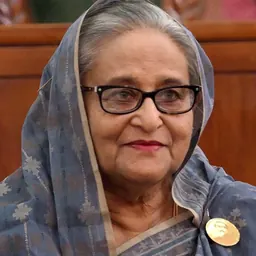
Ansar-al Islam's statement came to light hours after the then Bangladesh Prime Minister Sheikh Hasina blamed the murders on the opposition nexus of Bangladesh National Party and Bangladesh Jamaat-e-Islami. At a party meeting in Gonobhaban, Hasina's press secretary Ihsanul Karim said, "[The opposition] has been burning people dead and committing other terrorist acts to destabilize the country from the time of the last general election."
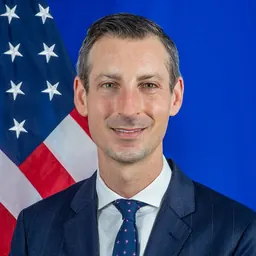
Reactions to the murders USAID published a statement condemning the attack, calling Mannan "a dedicated and courageous advocate for human rights". In a White House press release, the United States National Security Council spokesperson Ned Price condemned the "brutal murders" and said that Mannan "set an example of dignity, courage, and selflessness, and his legacy will live on in the causes he championed." U.S. Secretary of State John Kerry phoned prime minister Sheikh Hasina advocating for the arrest of Mannan's murderers.
United States ambassador to Bangladesh Marcia Stephens Bloom Bernicat condemned the "senseless act of violence" and urged the Bangladesh government "to apprehend the criminals behind these murders". In a Facebook post, Bernicat wrote that Mannan was "more than a colleague to those of us fortunate to work with him at the U.S. Embassy."
Implications for the LGBTQ+ community in Bangladesh A member of Roopbaan said that following the murders, most Bangladeshi LGBTQ+ activists went into hiding for survival. They stopped communicating through social media, switched off their phones, and moved out of their usual accommodations. Some of the "high-profile" activists confined themselves to two safe houses, and avoided opening or being seen near the windows. One such activist admitted to changing their location eight times over the next twelve months, seeking shelter in "creepy" hotels, deserted apartments, and mutual friends' homes. "To me, the definition of home and homeland has changed much over the past 12 months–I have started feeling as though I don't have a home anymore," they said. Another one said: "Even though I am free [not under arrest], I am so scared. I haven't even gone back to my house." Many of them suffered from depression, and became isolated even from the queer community due to the prevailing fear that extremists might target anyone found associating with activists whose identities had been revealed. Owing to all these factors, organising around LGBTQ+ issues became non-existent, with only one openly operational NGO primarily serving the hijra (third-gender) community. A separate case related to the attack on the policeman and the firearms confiscated, was also filed.
On 12 May 2019, more than three years after the attack, Counter Terrorism and Transnational Crime (CTTC) unit of Dhaka Metropolitan Police charged eight men for the double murder. CTTC inspector Mohammad Moniruzzaman, who led the investigation, turned in the charge sheet to the Dhaka Metropolitan Magistrate Court (DMMC). The court's General Recording Officer (GRO) sub-inspector Sharif Shafayet confirmed that Dhaka Metropolitan Magistrate Saiduzzaman Sharif had accepted the chargesheet. Haque was a former major in the Bangladeshi Army, who was fired after his involvement in a 2012 attempted coup.
Court proceedings and convictions The trial against eight accused, including Haque, began on 19 November 2019. Public prosecutor Golam Sarwar Khan, representing the state, produced 24 witnesses before the court. ABM Khairul Islam Liton and Nazrul Islam represented the accused.
Case records show that Haque was the mastermind behind the murders. One of the other accused Mozammel Hossain had received a death penalty for the 2015 murder of Avijit Roy, a Bangladeshi-American engineer, activist, and founder of the Mukto-Mona, an Internet blogging community for Bangladeshi freethinkers. In his confession, Mozammel mentioned that Haque told him about the rising LGBTQ activism in the country, and the Rainbow Rally Mannan was planning for April 2016. "Action had to be taken against them," Mozammel said.
Reactions to the verdict Mannan's brother told Al Jazeera that he was happy "law enforcers have been able to find my brother's killers." He said, "Though we are not going to get Xulhaz [Mannan] back, it's a consolation for us that the killers have been handed the maximum punishment."
Starting 2018, USAID honors a staff member "who shares Mannan's spirit of inclusion the USAID programs" through the Mannan Inclusive Development Award. Mannan was also added to the USAID memorial wall at the agency headquarters in downtown Washington, DC. The wall, comprising engraved tiles with the names of 99 USAID fallen contractors around the world, was removed in 2025 after the Trump administration dismantled USAID.
In 2021, Inclusive Bangladesh, a non-profit and transgender-led youth LGBTIQ+ human rights organisation, announced the Xulhaz Mannan Memorial Award of Diversity to honor Mannan's legacy and recognise local LBGTQ+ activists. In the same year, Association of LGBTI Journalists (France) announced the Xulhaz Mannan Award under the Foreign Press category of their annual Out d'Or Prize.
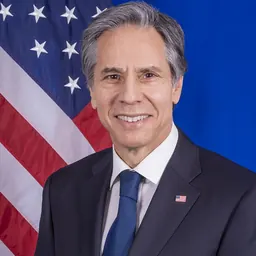
On the 5-year anniversary the killings USAID issued a statement remembering Mannan and demanding that his murderers be brought to justice. At the same time, the United States Secretary of State Antony Blinken issued a statement remembering Mannan's 9 years at the embassy before joining USAID.
Don’t just read it —
keep it.
Full-length biographies made to live with: read them, listen on the way to work, watch them tonight.
- E-book
- Audio
- Video
Instant download · yours to keep · every purchase keeps this site free
Important facts
People in Xulhaz Mannan's life
Named in this biography and alive at the same time




Related people
Same field, nearest in time

Contemporaries
People whose lives overlapped Xulhaz Mannan's

Frequently asked questions
Who was Xulhaz Mannan?
employee of the United States embassy in Dhaka and the editor of Bangladesh's first and only LGBT magazine
When was Xulhaz Mannan born?
Xulhaz Mannan was born on 13 October 1976.
When did Xulhaz Mannan die?
Xulhaz Mannan died on 25 April 2016 in Kalabagan.
What was Xulhaz Mannan's occupation?
Xulhaz Mannan was a lGBTQ rights activist, editor-in-chief and journalist.
What was Xulhaz Mannan known for?
Xulhaz Mannan was known for Bangladesh.
What nationality was Xulhaz Mannan?
Xulhaz Mannan was Bangladeshi.
Sources & further reading
Cite this page
APA: Biography.guide. (2026). Xulhaz Mannan. https://biography.guide/xulhaz-mannan/
MLA: "Xulhaz Mannan." Biography.guide, https://biography.guide/xulhaz-mannan/.
Chicago: "Xulhaz Mannan." Biography.guide. https://biography.guide/xulhaz-mannan/.
Data last updated: 2026-09-20 · Spot an error? Report a correction.
Page generated 2026-09-27 05:15 UTC